Quick facts on World War II covering causes, major powers, key battles, the Holocaust, and how the war ended, for students and teachers.
World War II reshaped nearly every country on Earth and set the political boundaries and alliances that defined the second half of the 20th century. This page gives the key facts on the war's causes, its main powers and fronts, the Holocaust, and how the conflict ended. The cards are short and direct, built for fast study and quick review. Start with Causes of World War II, European Theater of World War II, and Battle of the Bulge.
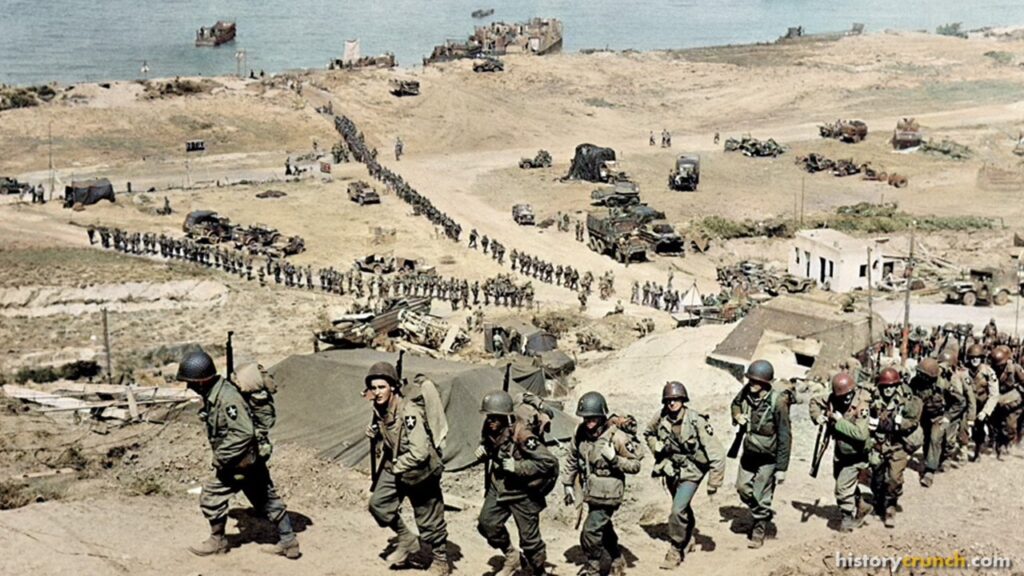
American soldiers in November of 1942 during Operation Torch in World War II. (Colorized by historycrunch.com)
The war did not begin on a single day with a single cause. A combination of unresolved tensions from World War I, economic collapse in the 1930s, and the rise of aggressive governments in Germany, Italy, and Japan pushed Europe and Asia toward open conflict across several years.
Hitler attended his first meeting of the German Workers' Party in Munich as a military spy and joined the group shortly after.
1920
February 24th, 1920
The German Workers' Party renamed itself the National Socialist German Workers' Party, known as the Nazi Party, and announced a 25-point political program.
1921
July 29th, 1921
Hitler took over as chairman of the Nazi Party, giving him full control over its direction and membership.
1924
December 20th, 1924
Hitler was released from Landsberg Prison after serving nine months of a five-year sentence for his role in the failed Beer Hall Putsch of 1923.
1930
September 14th, 1930
The Nazi Party won 107 seats in the Reichstag, making it the second-largest party in Germany and bringing Hitler national political power.
1934
August 2nd, 1934
President Paul von Hindenburg died, and Hitler merged the offices of chancellor and president, making himself Fuhrer and supreme commander of Germany.
Militarism is the belief that a country should maintain a strong military and use it as the main tool of national power and foreign policy. A government driven by militarism spends heavily on weapons, soldiers, and warships, and treats military strength as a top national goal. In the years before World War II, Japan and Germany both built up their armed forces far beyond what their economies could easily support.
"Japan's militarism in the 1930s led its government to expand the army and navy rapidly, giving military leaders strong influence over political decisions."
Several events during World War II shifted the balance of power between the Allies and the Axis.
These turning points changed which side held the advantage and shaped the final outcome.
The war ran from 1939 to 1945 and touched nearly every part of the globe.
1940
Fall of FranceGermany defeated France in six weeks, forcing a British withdrawal at Dunkirk and leaving Germany in control of Western Europe.
1942
Battle of MidwayAmerican naval forces sank four Japanese aircraft carriers in June, stopping Japanese expansion in the Pacific.
1943
German Defeat at StalingradGerman forces surrendered at Stalingrad on February 2nd, 1943, ending a months-long battle and marking the first major German defeat on the Eastern Front.
1943
Allied Landings in SicilyIn July 1943, Allied forces invaded Sicily, opening a southern route into Europe and pushing Italy toward surrender.
1944
Liberation of ParisAllied and Free French forces entered Paris on August 25th, 1944, marking a major step in pushing Germany out of Western Europe.
February 2nd, 1943
Date Germany surrendered at Stalingrad
91,000
German soldiers captured at Stalingrad
38 days
Time it took Allied forces to secure Sicily in 1943
The Allied powers and Germany signed the Treaty of Versailles, which forced Germany to accept blame for World War I and pay heavy financial penalties.
1921
July 29th, 1921
Adolf Hitler became the leader of the National Socialist German Workers' Party, known as the Nazi Party, in Munich.
1933
March 23rd, 1933
The German parliament passed the Enabling Act, giving Hitler the power to make laws without parliamentary approval and ending democratic rule in Germany.
1935
March 16th, 1935
Germany brought back military conscription, requiring men to serve in a rebuilt German army in direct violation of the Treaty of Versailles.
1935
September 15th, 1935
Germany passed the Nuremberg Laws, which stripped Jewish Germans of citizenship and banned marriage between Jews and non-Jewish Germans.
1938
September 30th, 1938
Britain, France, Germany, and Italy signed the Munich Agreement, allowing Germany to take the Sudetenland region of Czechoslovakia in exchange for a promise of no further territorial demands.
You can imagine what a bitter blow it is to me that all my long struggle to win peace has failed. Yet I cannot believe that there is anything more or anything different that I could have done and that would have been more successful.
Neville Chamberlain · Cabinet Room, 10 Downing Street, London · September 3rd, 1939
British Prime Minister Neville Chamberlain spoke these words in a radio broadcast at 11:15 a.m. on the 3rd of September, 1939, two days after Germany invaded Poland. Earlier that morning, Britain had demanded that Germany pull its troops out of Poland, and Germany gave no answer, so Britain was now at war. In this passage Chamberlain admits that his years of work to keep the peace, including his policy of appeasement, had failed.
The Treaty of Versailles, signed on June 28th, 1919, required Germany to pay heavy reparations, give up territory in Europe and overseas, and sharply limit its army to 100,000 soldiers.
Effects
German reparations payments, set at 132 billion gold marks in 1921, placed severe strain on the German economy and fueled public anger toward the Weimar government.
Widespread economic hardship and national humiliation made many German voters open to radical political parties, helping the Nazi Party gain seats in the Reichstag through the early 1930s.
Germany's forced territorial losses, including the Rhineland demilitarization and the separation of East Prussia from the rest of Germany by the Polish Corridor, gave Hitler popular grievances to exploit.
Hitler used public resentment of the treaty to justify rebuilding the German military in open violation of Versailles limits starting in 1935, and other powers did not stop him.
The harsh terms of the Treaty of Versailles did not guarantee another war, but they created economic stress and political anger in Germany that made the rise of extremist leaders much easier. Those conditions shaped the political environment that brought Adolf Hitler to power as Chancellor on January 30th, 1933.
What Caused World War II? Four Key Numbers Show How Germany Collapsed Before Hitler Took Power
German industrial output drop, 1928 to 1932
50% fallNazi Party vote share, July 1932 election
37% of votesGerman unemployment rate by 1932
~25% of workersGerman territory lost under the 1919 Treaty of Versailles
~13% of land
Each of these numbers points to a different cause of World War II. The Great Depression cut German industrial output in half between 1928 and 1932, wiping out jobs and savings. That crisis helped the Nazi Party grow from about 3 percent of the vote in 1928 to 37 percent by July 1932, giving Hitler the political base he needed to take power in January 1933 and begin the chain of events that led to war.
Germany Sends 60 Divisions Into Poland, Opening World War II in Europe
Germany launched its invasion of Poland before dawn on September 1st, 1939, deploying 60 divisions and close to 1.5 million soldiers along the border. The attacking force included more than 2,000 tanks and nearly 900 bombers, which struck Polish airfields and cities from the first hours of the assault. Poland's army was not fully mobilized and was heavily outnumbered, and its air force of roughly 300 planes was largely destroyed within the first few days of fighting.
German and Soviet troops hosting a joint parade following the invasion of Poland. (Colorized by historycrunch.com)
Anschluss refers to the political union of Austria with Germany, which took place in March 1938. Adolf Hitler, who was Austrian-born, pushed for this merger as part of his goal to bring all German-speaking people under one government. The union was completed on March 12th, 1938, when German troops entered Austria and the country was absorbed into the Third Reich without armed resistance.
"After the Anschluss, Austrian citizens were required to carry German identity papers and follow German law."
Adolf Hitler crosses the border into Austria in March of 1938. (Colorized by historycrunch.com)
Adolf Hitler moved from an unknown political agitator to the ruler of Germany between 1919 and 1933.
This early phase covers how he built a party, attempted a coup, rebuilt his movement, and finally gained power through legal means.
Each step narrowed the path toward World War II.
1919
Hitler Joins the DAPHitler attends a meeting of the German Workers' Party in Munich and joins as member number 555.
1923
Beer Hall PutschHitler leads a failed attempt to seize power in Munich on November 8th and 9th; he is arrested and sentenced to five years in prison.
1924
Mein Kampf WrittenWhile serving time at Landsberg Prison, Hitler dictates his political book outlining his views on race and German expansion.
1928
Nazi Party Wins 2.6%The NSDAP receives only about 2.6% of the vote in the May 1928 Reichstag elections, showing how small the party still was.
1933
Hitler Named ChancellorPresident Paul von Hindenburg appoints Hitler as Chancellor of Germany on January 30th, giving him legal control of the government.
2.6%
Nazi vote share in May 1928, just five years before Hitler took power
13.7 million
Votes cast for the Nazi Party in the July 1932 Reichstag elections, its peak share before January 1933
9 months
Time Hitler actually served of his five-year sentence after the 1923 putsch
They were cheering for one thing and one thing only. They were cheering for peace.
WN
W. N. EwerBritish journalist for the Daily Herald who watched the crowds in Munich, Dispatch from Munich, late September 1938
Why it matters
Ewer saw German crowds cheer Chamberlain, not Hitler, after the Munich Agreement was signed, and his eyewitness report shows how strongly ordinary people on both sides hoped the deal meant peace.
Germany publicly announced the existence of the Luftwaffe, its air force, breaking a key military limit set by the Versailles Treaty.
1935
March 16th, 1935
Hitler brought back military conscription in Germany, rebuilding the army to a size the Versailles Treaty had forbidden.
1936
March 29th, 1936
German voters approved Hitler's remilitarization of the Rhineland in a national referendum, with the government reporting over 98 percent in favor.
1938
September 30th, 1938
Britain, France, Italy, and Germany signed the Munich Agreement, giving Germany the Sudetenland region of Czechoslovakia in exchange for a promise of no further territorial demands.
1939
March 15th, 1939
German forces occupied the remainder of Czechoslovakia, breaking the promise Hitler had made at Munich six months earlier.
1939
August 25th, 1939
Britain and Poland signed a formal mutual defense treaty, committing Britain to defend Poland if it was attacked.
Germany's invasion of PolandSeptember 1st, 1939, the day World War II began in Europe
Britain's declaration of war on GermanySeptember 3rd, 1939, two days after the invasion of Poland
France's declaration of war on GermanySeptember 3rd, 1939, the same day as Britain
Polish military strength in 1939About 1 million soldiers mobilized to defend the country
German troops in the invasion of PolandAbout 1.5 million soldiers crossed the Polish border
Soviet invasion of PolandSeptember 17th, 1939, under a secret pact with Germany signed in August 1939
Poland's resistance endedBy early October 1939, after fighting on two fronts for about five weeks
Key takeaways
Germany invaded Poland on September 1st, 1939, and Britain and France declared war two days later, turning a regional conflict into a wider European war. Poland fought both Germany and the Soviet Union at the same time, facing about 1.5 million German troops from the west and Soviet forces from the east. The country fell within five weeks, and Germany and the Soviet Union divided Polish territory between them under the terms of their August 1939 pact.
key Nazi goal★ living spaceled to Eastern conquestskey term!
Lebensraum
(noun)
Lebensraum is a German word meaning 'living space.' Nazi leaders used it to argue that Germany needed to conquer land in Eastern Europe to feed and house its growing population.
in a sentence: Hitler used Lebensraum to justify invading Poland and the Soviet Union.
Hitler rose from a failed art student and World War I corporal to become the dictator of Germany, leading the country into World War II and directing the Holocaust. His decisions as supreme military commander, including the invasion of the Soviet Union in June 1941 and the declaration of war on the United States in December 1941, shaped the course of the entire conflict.
Nazi GermanyWorld War II CommanderHolocaust ArchitectThird Reich
Adolf Hitler in 1938. (Colorized by historycrunch.com)
Appeasement is the policy of giving in to the demands of an aggressive country in order to prevent a war. Britain and France used this policy toward Adolf Hitler in the 1930s, allowing Germany to take territory such as Austria in March 1938 and the Sudetenland in October 1938, hoping each concession would satisfy Hitler and stop further expansion.
American poster highlighting the member nations of the Allied Powers of World War II.
Germany remilitarized the Rhineland in March 1936 and annexed Austria in March 1938, both moves that violated the Treaty of Versailles, yet Britain and France allowed them without military response. That policy of giving in to demands, known as appeasement, encouraged further German expansion and made a general European war harder to prevent.
Which event is generally marked as the start of World War II in Europe?
Tap an option.
ExplanationGermany invaded Poland on September 1st, 1939, and Britain and France declared war on Germany two days later, on September 3rd. That sequence is the point historians use to mark the start of World War II in Europe.
Appeasement at Munich in 1938 was the single decision that made World War II inevitable.
Myth or fact? Tap your call.
The truthHistorians point to several causes working together, including the harsh terms of the Treaty of Versailles signed on June 28th, 1919, the global economic collapse of the Great Depression, German rearmament throughout the 1930s, and the failure of the League of Nations to enforce collective security. Appeasement contributed, but removing it alone would not have guaranteed peace.
The two sides in the war were not fixed from the start. Countries entered, switched sides, or collapsed under occupation as the conflict grew, so understanding which nations fought together and why shows how the war shifted from a regional conflict into a truly global one.
Signing of the Tripartite Pact by Germany, Japan, and Italy on September 27th, 1940 in Berlin. Together they formed the Axis Powers of World War II. (Colorized by historycrunch.com)
What specific roles did the major Allied Powers play in World War II?
The U.S. entered the war after Japan attacked Pearl Harbor on December 7th, 1941. American factories produced tanks, aircraft, and ships at a scale that supplied Allied forces across both the Pacific and European theaters.
Britain fought from the very first day of the war in September 1939 and held out against German air attacks during the Battle of Britain in 1940. British forces fought in North Africa, Italy, and Western Europe, and Britain served as the main staging base for the D-Day invasion on June 6th, 1944.
The Soviet Union joined the Allies after Germany invaded Soviet territory on June 22nd, 1941. Soviet forces fought the largest land battles of the war on the Eastern Front, including the decisive Battle of Stalingrad, which ended with a German surrender in February 1943. | swords
China had been at war with Japan since 1937, before the wider conflict began. Nationalist Chinese forces tied down large numbers of Japanese troops on the Asian mainland throughout the war, reducing Japanese pressure in the Pacific.
Third, they respect the right of all peoples to choose the form of government under which they will live; and they wish to see sovereign rights and self-government restored to those who have been forcibly deprived of them.
Franklin D. Roosevelt and Winston Churchill · at sea off Newfoundland · August 14th, 1941
The Atlantic Charter was a statement of principles agreed to by President Roosevelt and Prime Minister Churchill at their first wartime conference, held aboard naval vessels anchored in Placentia Bay, off the coast of Newfoundland. It listed eight common principles that the United States and Great Britain promised to support in the postwar world, and the third point, quoted here, backed self-government for all peoples. Churchill and many members of his Cabinet were alarmed by this point, since it acknowledged the right of colonial subjects, including those in the British Empire, to seek independence.
Franklin D. Roosevelt served as the 32nd President of the United States during World War II.
Who Were the Axis Powers in World War II? Germany, Italy, and Japan Sign the Tripartite Pact in Berlin
On September 27th, 1940, officials from Germany, Italy, and Japan met in Berlin and signed the Tripartite Pact, formally creating the Axis alliance. The three signatories were German Foreign Minister Joachim von Ribbentrop, Italian Foreign Minister Galeazzo Ciano, and Japan's Ambassador to Germany, Saburo Kurusu. The pact promised that each country would give the others full military, political, and economic support if any of them were attacked by a nation not already at war in Europe or in the conflict between Japan and China, a clause aimed squarely at keeping the United States out of the war.
The Soviet Union suffered roughly 27 million deaths during World War II, more than any other Allied nation, including about 8.7 million military personnel and around 19 million civilians.
Soviet losses came from combat, German occupation, mass shootings, famine, and forced labor. The scale was so large that roughly one in seven Soviet citizens died during the war. Historians estimate that the Allied nations as a whole accounted for about 85 percent of all World War II deaths, with Soviet losses making up the largest single share.
Countries That Fought in World War II: The Allies Grew to About 49 Nations, Six Times More Than the 8 Axis States
Allied nations by 1945
49Neutral nations during the war
~20Axis nations (Tripartite Pact members)
8Axis core powers (Germany, Italy, Japan)
3
The Allied side began in 1939 with France, Poland, and the United Kingdom, but grew steadily as more countries entered the war. The 8 Axis states that signed the Tripartite Pact included the 3 core powers, Germany, Italy, and Japan, plus Hungary, Romania, Bulgaria, Slovakia, and Croatia. For comparison, the 49 Allied nations is close to the number of countries that could fit into a single large continent's worth of UN seats today.
Led democratic governments answerable to elected legislatures
Coordinated strategy closely, meeting at Casablanca in January 1943 and at Tehran in November 1943
Roosevelt died on April 12th, 1945, before Germany surrendered; Churchill lost the British election in July 1945
Both relied on public support and free press coverage of the war
Stalin
Ruled the Soviet Union as a one-party dictatorship with no elected check on his power
Made decisions largely alone, purging his own senior generals in the late 1930s before the war
Remained in power until his death on March 5th, 1953, long after the war ended
Controlled all Soviet press and kept war losses secret from the public
VS
Roosevelt and Churchill led governments where voters and legislatures could shape war policy, while Stalin held total personal authority over the Soviet state and military with no comparable oversight.
The Allied nations produced about 227,000 military aircraft combined from 1942 to 1944, with the U.S. alone building roughly 96,000 planes in 1944.
VS
Axis Powers
Germany, Japan, and Italy combined produced roughly 67,000 military aircraft in 1944, less than a third of Allied output that year.
Aircraft production gave the Allies a decisive edge by 1944, allowing them to replace losses far faster than the Axis could. Germany and Japan both ran short of trained pilots before they ran short of planes, while Allied pilot training programs kept pace with factory output.
The Allied Powers were the group of countries that fought together against the Axis nations during World War II. The core members were the United States, the United Kingdom, the Soviet Union, and China, though more than 50 nations eventually joined the alliance. Each member contributed soldiers, supplies, or industrial output toward the shared goal of defeating Germany, Italy, and Japan.
"When the United States entered the war in December 1941, it joined the Allied Powers and helped shift the balance of military strength against the Axis nations."
The Axis Powers were the group of countries that fought against the Allied nations in World War II. Germany, Italy, and Japan formed the core of the Axis after signing a series of agreements, including the Tripartite Pact on September 27th, 1940. Hungary, Romania, and Bulgaria later joined the Axis as well.
German SS soldiers during the Warsaw Ghetto Uprisisng. (Colorized by historycrunch.com)
When Hungary joined the Axis on November 20th, 1940, it became one of several smaller European nations that aligned with Germany and Italy, giving the Axis powers a network of allies across central and southeastern Europe. Romania and Slovakia joined within days of Hungary, expanding Axis influence well before the United States entered the war.
The Soviet Union fought on the Allied side for the entire duration of World War II.
ExplanationThe Soviet Union was not part of the Allied side at the start of the war. It had signed the Nazi-Soviet Pact with Germany in August 1939 and invaded Poland alongside Germany in September 1939. The Soviet Union joined the Allies only after Germany launched Operation Barbarossa and invaded Soviet territory on June 22nd, 1941.
ExplanationFrance, the United States, the Soviet Union, and Australia all fought for the Allied Powers, while Japan, Italy, Hungary, and Romania joined the Axis. Hungary and Romania both signed the Tripartite Pact in November 1940, formally aligning with Germany, Japan, and Italy.
Fighting in Europe unfolded across several distinct fronts, from Western France to the Soviet Union to North Africa. The decisions made by military commanders and political leaders on each front directly shaped how the war developed and how long it lasted.
Hitler invaded the Soviet Union in 1941 primarily because he believed that conquering Soviet territory would give Germany food, oil, and living space for German settlers, a goal he called Lebensraum. He also wanted to destroy Soviet communism, which he saw as a threat tied to what he called a Jewish conspiracy, and he expected the Soviet military to collapse quickly under a fast German attack. A third reason was that controlling Soviet resources would allow Germany to outlast Britain and any future American involvement in the war.
Why Germany Turned West: The Opening Trigger of the 1940 Campaign
1
Germany's military planners worried that Britain and France would move troops through neutral Belgium and the Netherlands to cut off German supply lines from the north.
2
On April 9th, 1940, Germany launched Operation Weserübung, seizing Denmark in a single day and beginning the fight for Norway, which secured German access to Swedish iron ore shipped through Norwegian ports.
3
Britain and France responded by sending troops to Norway, leaving their own border defenses stretched and focused on Scandinavia.
4
Germany used that distraction as its moment. On May 10th, 1940, German forces crossed into Belgium, the Netherlands, and Luxembourg, opening the full western offensive.
5
French and British commanders moved their best troops north into Belgium to meet the attack, exactly as German planners had hoped, leaving the Ardennes sector weakly held.
Germany's decision to secure Scandinavia first was not separate from the western campaign. It drew Allied attention north and set up the conditions that made the rapid collapse of France possible in the weeks that followed.
The German surrender at Stalingrad on February 2nd, 1943, marked the first time a full German field army was forced to capitulate on the Eastern Front, proving that the Wehrmacht could be decisively defeated.
Germany committed roughly 300,000 troops to the Stalingrad pocket, and fewer than 91,000 survived to surrender, including Field Marshal Friedrich Paulus and 24 other generals. That loss stripped Germany of an entire army group it could not replace.
Before Stalingrad, Germany had held the initiative in the East since its invasion in June 1941. After February 1943, German strategy shifted permanently to holding ground rather than seizing new territory, giving Soviet forces the ability to plan large offensive operations.
The defeat badly damaged German public confidence. The Nazi government declared four days of national mourning after the surrender, the first such acknowledgment of a major military loss, which made the scale of the disaster clear to ordinary Germans.
Soviet forces encircled the German Sixth Army in November 1942 during Operation Uranus, trapping it before winter set in. That encirclement showed Soviet commanders had developed the planning and coordination needed to outmaneuver German forces at a large scale, a skill they used repeatedly through 1944 and 1945.
The Phoney War was a period of about eight months, from September 1939 to May 1940, when Britain and France were officially at war with Germany but almost no major fighting happened on the Western Front. After Germany invaded Poland, the Western Allies declared war but held back from launching large attacks, and Germany focused on securing Poland rather than pushing west. The quiet period ended in April and May 1940 when Germany invaded Denmark, Norway, the Netherlands, Belgium, and France in quick succession.
Never give in, never give in, never, never, never, never, in nothing, great or small, large or petty, never give in except to convictions of honour and good sense. Never yield to force. Never yield to the apparently overwhelming might of the enemy.
Winston Churchill
Prime Minister of the United Kingdom, speech at Harrow School, October 29th, 1941
Churchill spoke these words to students at Harrow, the school he had attended as a boy. Britain had survived heavy German bombing, and he told the students that refusing to quit was the reason the country was still standing.
Winston Churchill, who served as Prime Minister of the United Kingdom during World War II.
The Battle of France lasted only 46 days, yet it ended with France defeated, Paris occupied, and the entire Allied position in Western Europe collapsed.
46 Days
Duration of the battle
~90,000
French troops killed
~1.8 Million
French troops captured
~27,000
German troops killed
2,233
Allied aircraft lost
1,236
German aircraft lost
Germany launched its attack on May 10th, 1940, and France signed an armistice on June 22nd, 1940. In those 46 days, Germany lost roughly one killed soldier for every three French soldiers killed, yet France ended the battle with nearly 1.8 million men captured or missing.
Even repeated by the announcer, it sent shivers (not of fear) down my spine.
VS
Vita Sackville-WestEnglish writer and poet, wife of member of Parliament Harold Nicolson, June 4th, 1940
Why it matters
Churchill did not repeat the speech on live radio that evening, so a BBC newsreader read extracts on the news broadcast, and this reaction in a letter to her husband shows how the words reached listeners at home.
How Big Was the Operation Barbarossa Invasion Force in World War II? The Axis Fielded More Troops Than the Entire U.S. Army Times Eight
Total Axis invasion force
3,800,000Army Group Centre alone
1,180,000Army Group South alone
1,000,000Army Group North alone
680,000Entire U.S. Army today (active)
452,000
The National WWII Museum notes that about 3.5 million German troops and nearly 700,000 allied Axis soldiers from Romania, Finland, Hungary, Italy, and Slovakia took part in the opening phase. Germany committed 138 of its own divisions, split across three Army Groups aimed at Leningrad, Moscow, and Kiev. The full Axis force was roughly eight times larger than the entire active-duty U.S. Army today.
June 22nd, 1941 — Operation Barbarossa Germany launched a massive invasion of the Soviet Union along a 1,800-mile (2,900 km) front. About 3 million German and Axis troops crossed the border, making it the largest land invasion in history.
September 19th, 1941 — Fall of Kiev German forces captured Kiev after encircling Soviet armies in the region. The battle resulted in roughly 600,000 Soviet soldiers captured or killed, one of the largest encirclements of the war.
October 2nd, 1941 — Battle of Moscow Begins Germany launched Operation Typhoon, aiming to capture Moscow before winter. Soviet forces, aided by harsh temperatures that dropped below minus 20 degrees Fahrenheit (minus 29 degrees Celsius), halted the German advance by December.
August 23rd, 1942 — Battle of Stalingrad Begins German forces began their assault on Stalingrad, the industrial city on the Volga River. Fighting lasted until February 2nd, 1943, and resulted in about 800,000 Axis casualties.
November 19th, 1942 — Operation Uranus Soviet forces launched a major counteroffensive designed to encircle German troops at Stalingrad. Two Soviet army groups linked up at Kalach on November 23rd, 1942, trapping roughly 300,000 Axis soldiers inside the pocket.
February 2nd, 1943 — German Surrender at Stalingrad Field Marshal Friedrich Paulus surrendered what remained of German Sixth Army at Stalingrad. About 91,000 German soldiers were taken prisoner, including 24 generals, marking a major turning point on the Eastern Front.
July 5th, 1943 — Battle of Kursk Begins Germany launched Operation Citadel to cut off a large Soviet salient near Kursk. The battle involved roughly 6,000 tanks on both sides and became the largest armored engagement of the war.
June 22nd, 1941 — Operation BarbarossaGermany launched a massive invasion of the Soviet Union along a 1,800-mile (2,900 km) front. About 3 million German and Axis troops crossed the border, making it the largest land invasion in history.
September 19th, 1941 — Fall of KievGerman forces captured Kiev after encircling Soviet armies in the region. The battle resulted in roughly 600,000 Soviet soldiers captured or killed, one of the largest encirclements of the war.
October 2nd, 1941 — Battle of Moscow BeginsGermany launched Operation Typhoon, aiming to capture Moscow before winter. Soviet forces, aided by harsh temperatures that dropped below minus 20 degrees Fahrenheit (minus 29 degrees Celsius), halted the German advance by December.
August 23rd, 1942 — Battle of Stalingrad BeginsGerman forces began their assault on Stalingrad, the industrial city on the Volga River. Fighting lasted until February 2nd, 1943, and resulted in about 800,000 Axis casualties.
November 19th, 1942 — Operation UranusSoviet forces launched a major counteroffensive designed to encircle German troops at Stalingrad. Two Soviet army groups linked up at Kalach on November 23rd, 1942, trapping roughly 300,000 Axis soldiers inside the pocket.
February 2nd, 1943 — German Surrender at StalingradField Marshal Friedrich Paulus surrendered what remained of German Sixth Army at Stalingrad. About 91,000 German soldiers were taken prisoner, including 24 generals, marking a major turning point on the Eastern Front.
July 5th, 1943 — Battle of Kursk BeginsGermany launched Operation Citadel to cut off a large Soviet salient near Kursk. The battle involved roughly 6,000 tanks on both sides and became the largest armored engagement of the war.
from military usage: 'D' stands for the day an operation begins, keeping the exact date secret during planning
D-Day is a military code term for the first day of a planned attack or operation. Commanders used it so that orders could be written before a final date was chosen, since the calendar date was kept secret until close to the launch. The most famous D-Day in history was June 6th, 1944, when Allied forces landed on the beaches of Normandy, France, to begin the liberation of Western Europe from German control.
"Because planners used the term D-Day in their orders for the Normandy invasion, soldiers knew exactly when to move without the date being spelled out in documents that might fall into enemy hands."
American troops approaching Omaha Beach during the events of the Normandy Invasion in June of 1944. (Colorized by historycrunch.com)
The Allied siege of Leningrad lasted from September 8th, 1941, to January 27th, 1944, making it one of the longest sieges in modern warfare. Soviet civilians inside the city endured nearly 900 days of German blockade, with food supplies so low that the city's death toll from starvation alone reached roughly 800,000 people.
Soldiers in the trenches on the Leningrad Front before an offensive. (Colorized by historycrunch.com)
Image failed to load
Test Yourself
World War II
During the Battle of Britain, the Luftwaffe never achieved air superiority over southern England, which led Germany to postpone its planned invasion indefinitely.
Tap an option.
ExplanationGermany's invasion plan, called Operation Sea Lion, depended on the Luftwaffe defeating the Royal Air Force first. The RAF held on, and by September 17th, 1940, Hitler postponed Operation Sea Lion indefinitely, effectively ending the invasion threat.
The Pacific theater involved vast distances of ocean, island chains, and supply lines stretching thousands of miles. Control of the sea and air was central to every major campaign, which made the fighting there different in character from the war in Europe.
Roughly 500 American prisoners died during the Bataan Death March in April 1942, along with approximately 2,500 Filipino prisoners, before the survivors even reached Camp O'Donnell.
The march began on April 9th, 1942, after about 75,000 Filipino and American soldiers surrendered on the Bataan Peninsula in the Philippines. Japanese forces gave the prisoners almost no food or water during the roughly 65-mile (105 km) march in tropical heat, and guards beat or killed those who could not keep up. The deaths during the march itself do not count the thousands more who died from disease and abuse in the camps afterward.
USMC uniform lettering The letters 'USMC' are visible on the right soldier's shirt, confirming these are United States Marines. The Marine Corps played a major role in Pacific island-hopping campaigns during World War II, fighting Japanese forces across dozens of islands.
Rifles held at rest Both soldiers are holding their rifles loosely rather than at the ready, showing this is a brief pause between active fighting. Marines in the Pacific carried rifles constantly because combat could resume at any moment on contested islands.
Camouflage helmet covers Both men wear cloth covers over their steel helmets. The U.S. military issued these covers in the Pacific theater to break up the helmet's shine and silhouette in jungle terrain, reducing the chance of being spotted by enemy forces.
Destroyed landscape in background The background shows shattered tree trunks, rubble, and completely torn-up ground with no standing vegetation. This level of destruction was typical of Pacific island battles where artillery, naval gunfire, and air strikes stripped entire areas bare before and during ground assaults.
American marines on Peleliu in September of 1944 during the Pacific Theater of World War II. (Colorized by historycrunch.com)
forces under command at the peak of the Pacific War
At the height of the Pacific War in 1944 and 1945, Admiral Chester Nimitz commanded roughly 1.3 million Navy and Marine personnel across the Central Pacific theater, while General Douglas MacArthur commanded approximately 750,000 Army and Allied ground troops in the Southwest Pacific theater. The two commands operated under separate chains of authority and often competed for ships, troops, and resources, a division that shaped which island campaigns were fought and in what order.
'US Army soldiers wave at Makin Atoll (35119484575)' by Cassowary Colorizations (2017). (Photo: Cassowary Colorizations, CC BY 2.0, via Wikimedia Commons)
US Army Soldiers Wading Ashore at Makin Atoll, World War II, November 1943
LOOK CLOSELY
Dozens of soldiers move through shallow, bright blue water toward a low, tree-lined shore. They carry rifles above their heads or at their chests to keep them dry. Dark smoke rises from fires burning on the island ahead of them.
THE CONTEXT
The photo was taken during Operation Galvanic, the American assault on Makin Atoll in the Gilbert Islands on November 20th, 1943. US Army soldiers of the 165th Infantry Regiment landed on Butaritari Island to take it from a Japanese garrison of roughly 300 combat troops. The battle ended on November 23rd, 1943, with the atoll secured by American forces.
THE DETAIL
A military vehicle, likely an amphibious craft, is visible at the far right edge of the frame, showing that the assault used both wading infantry and motorized support at the same time.
WHY IT MATTERS
This photo is one of the few colorized images showing Army infantry on foot during the Gilbert Islands campaign, making the scale and conditions of a Pacific island assault easy for students to see clearly.
Japanese Troops Arriving on Guadalcanal, World War II, 1942
Look closely
A large group of soldiers moves along a narrow coastal strip, carrying rifles and heavy packs.
Tall palm trees frame the scene, and a hilly island is visible across the water in the background.
The soldiers are shown in silhouette, moving in a loose column away from the shoreline.
The context
Japan landed troops on Guadalcanal in the Solomon Islands in mid-1942 and began building an airstrip there.
American forces landed on August 7th, 1942, to stop that effort, starting a campaign that lasted roughly six months.
Both sides poured reinforcements onto the island and into the surrounding waters throughout the rest of 1942.
What it tells us
The photo shows that Japanese forces moved across Guadalcanal on foot through difficult coastal terrain, which helps explain why supply and movement were major problems for both sides during the campaign.
Images like this were used after the war to document Japanese military operations in the Pacific.
The tropical setting visible in the photo, with dense vegetation and a coastline, helps students understand the physical environment soldiers on both sides had to work in.
December 7th, 1941 — Pearl Harbor Attacked Japan launched a surprise air attack on the U.S. naval base at Pearl Harbor, Hawaii, killing 2,403 Americans and wounding about 1,178 more.
December 8th, 1941 — U.S. Declares War on Japan Congress voted to declare war on Japan the day after the Pearl Harbor attack. Only one member of Congress, Representative Jeannette Rankin of Montana, voted against the declaration.
December 10th, 1941 — Guam Falls Japanese forces captured the U.S. territory of Guam just three days after Pearl Harbor. The island's small garrison of about 500 American troops could not hold against a force of roughly 5,900 Japanese soldiers.
December 23rd, 1941 — Wake Island Falls U.S. Marines and civilian contractors on Wake Island surrendered to Japanese forces after a 15-day defense. American forces had repelled one earlier Japanese landing attempt before being overwhelmed.
February 15th, 1942 — Singapore Surrenders British forces surrendered Singapore to Japan, and about 85,000 Allied troops became prisoners of war. It was one of the largest British military surrenders in history.
April 9th, 1942 — Bataan Death March About 75,000 Filipino and American prisoners were forced to march roughly 65 miles (105 km) under brutal conditions after the fall of Bataan in the Philippines. Thousands died from violence, disease, and exhaustion along the route.
May 7th, 1942 — Battle of the Coral Sea The U.S. and Japanese navies fought the first carrier-versus-carrier battle in history in the Coral Sea. Japan was turned back from an amphibious operation targeting Port Moresby, New Guinea.
December 7th, 1941 — Pearl Harbor AttackedJapan launched a surprise air attack on the U.S. naval base at Pearl Harbor, Hawaii, killing 2,403 Americans and wounding about 1,178 more.
December 8th, 1941 — U.S. Declares War on JapanCongress voted to declare war on Japan the day after the Pearl Harbor attack. Only one member of Congress, Representative Jeannette Rankin of Montana, voted against the declaration.
December 10th, 1941 — Guam FallsJapanese forces captured the U.S. territory of Guam just three days after Pearl Harbor. The island's small garrison of about 500 American troops could not hold against a force of roughly 5,900 Japanese soldiers.
December 23rd, 1941 — Wake Island FallsU.S. Marines and civilian contractors on Wake Island surrendered to Japanese forces after a 15-day defense. American forces had repelled one earlier Japanese landing attempt before being overwhelmed.
February 15th, 1942 — Singapore SurrendersBritish forces surrendered Singapore to Japan, and about 85,000 Allied troops became prisoners of war. It was one of the largest British military surrenders in history.
April 9th, 1942 — Bataan Death MarchAbout 75,000 Filipino and American prisoners were forced to march roughly 65 miles (105 km) under brutal conditions after the fall of Bataan in the Philippines. Thousands died from violence, disease, and exhaustion along the route.
May 7th, 1942 — Battle of the Coral SeaThe U.S. and Japanese navies fought the first carrier-versus-carrier battle in history in the Coral Sea. Japan was turned back from an amphibious operation targeting Port Moresby, New Guinea.
You have taken me out of the jaws of death, and I won't forget it.
GD
General Douglas MacArthurU.S. Army general and commander of United States forces in the Far East, March 13th, 1942, on reaching Mindanao
Why it matters
MacArthur said this to Lieutenant John Bulkeley after Bulkeley's PT boats carried him about 560 miles (900 km) through Japanese-patrolled seas away from the fall of the Philippines.
U.S. and Japanese carrier forces clashed in the Battle of the Philippine Sea, and American pilots shot down about 300 Japanese aircraft in a single day.
1944
October 23rd, 1944
The Battle of Leyte Gulf began near the Philippines, becoming the largest naval battle of World War II by the number of ships involved.
1945
February 23rd, 1945
U.S. Marines raised the American flag on Mount Suribachi during the Battle of Iwo Jima, a moment captured in a widely published photograph.
1945
March 9th, 1945
U.S. B-29 bombers dropped incendiary bombs on Tokyo in a single night raid that destroyed about 16 square miles (41 square kilometers) of the city.
1945
April 1st, 1945
U.S. and Allied forces landed on Okinawa in Operation Iceberg, beginning one of the last and largest amphibious assaults of the Pacific War.
1945
August 15th, 1945
Emperor Hirohito announced Japan's acceptance of the Potsdam Declaration in a recorded radio address, signaling the end of fighting in the Pacific.
During the Battle of Iwo Jima from February 19th to March 26th, 1945, 19,217 U.S. service members were wounded in action, and another 6,821 were killed.
The total of roughly 26,000 American casualties — killed and wounded combined — was higher than the total casualties suffered by the Japanese defenders, making Iwo Jima unusual among Pacific War battles fought by the Marines. Of the approximately 21,000 Japanese troops on the island, only 216 were taken prisoner; nearly all the rest were killed.
'Raising the Flag on Iwo Jima' Photograph by Joe Rosenthal. (Colorized by historycrunch.com)
pilots flew one-way missions★ kamikaze~3,800 kamikaze pilots diedkey term!
Kamikaze
(noun)
A kamikaze was a Japanese pilot in World War II who deliberately crashed his plane, loaded with explosives, into an Allied warship. The goal was to cause as much damage as possible by turning the aircraft itself into a weapon.
in a sentence: Kamikaze attacks sank or damaged hundreds of Allied ships during the Battle of Okinawa in 1945.
Island-hopping was the Allied strategy in the Pacific War of capturing some Japanese-held islands while bypassing others, cutting off enemy troops and moving air bases closer to Japan. The U.S. military used this approach from 1943 onward, advancing through chains such as the Solomon Islands and the Marianas to bring American bombers within range of the Japanese home islands.
American forces raised the flag on Iwo Jima on February 23rd, 1945, after some of the deadliest fighting of the Pacific War. The island's capture gave the United States airfields within 760 miles (1,220 kilometers) of the Japanese mainland.
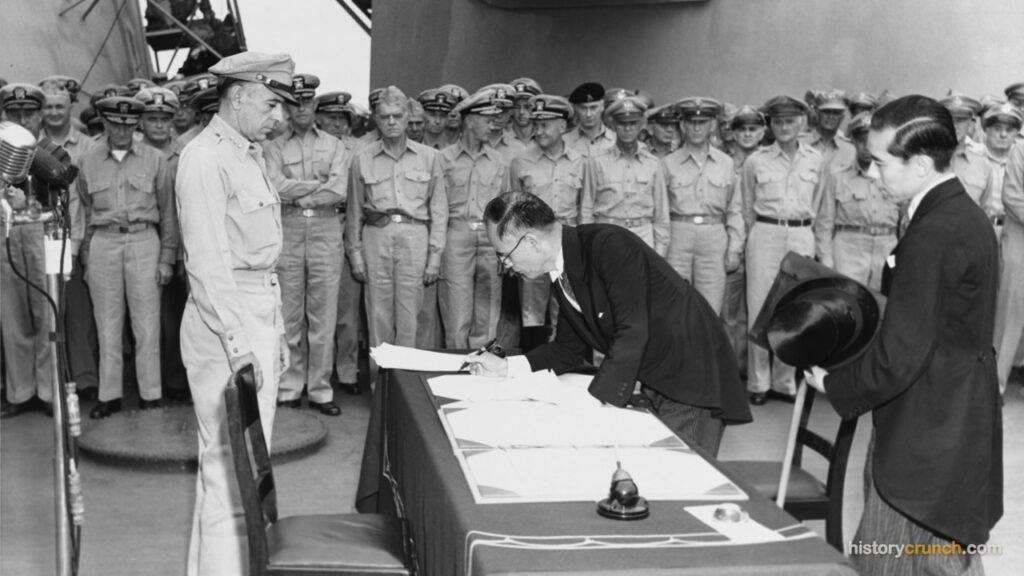
In this photograph of the Japanese surrender ceremony ending World War II aboard the USS Missouri, what does the microphone standing beside the signing table reveal about how the Allies planned the event?
Tap an option.
ExplanationGeneral Douglas MacArthur opened the ceremony with short remarks that radio networks carried live around the world. The Allies designed the event as a public, formal moment so that people in every Allied nation could hear Japan accept defeat, which is why the microphone stands ready beside the signing table.
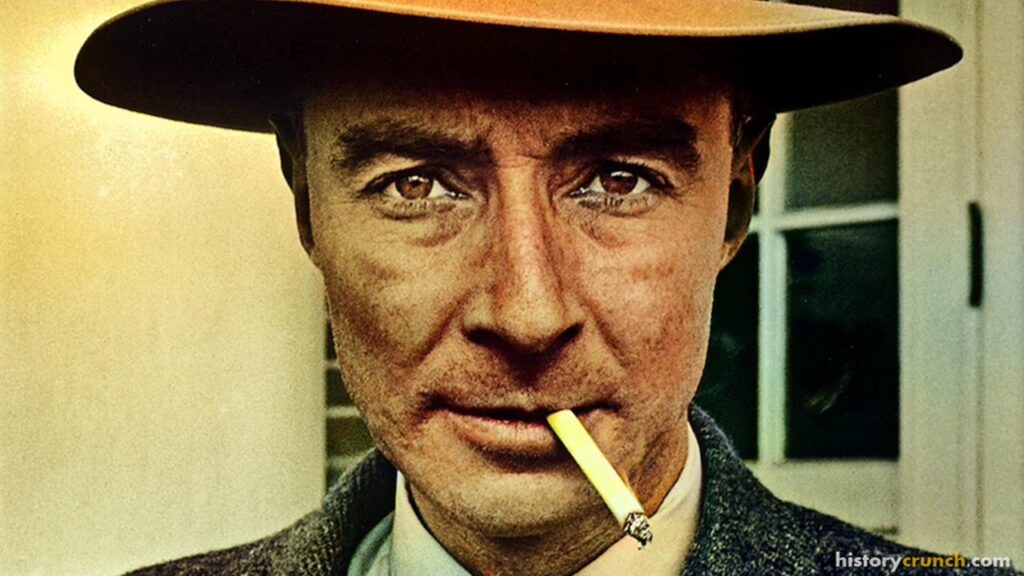
It is late July 1945, and you are J. Robert Oppenheimer, scientific director of the Manhattan Project during World War II. The first atomic bomb test at Trinity, New Mexico, was completed on July 16th, 1945, and military planners are pressing for the weapon to be used against Japan. You have seen what the bomb can do, and senior officials want your technical advice on target selection and the likely scale of destruction before the final order is given.
History turned on this choice. What would you have done?
How should you advise U.S. leaders on using the atomic bomb to end World War II in the Pacific?
Choose a path. Each choice opens a different future.
Your move
Pick option A, B, or C to walk down that path.
If you choose A
The bomb causes massive casualties and shocks Japan's leadership, but civilian deaths draw lasting international criticism and ethical debate about the decision.
If you choose B
Japan might not be convinced to surrender, the small bomb supply could be wasted, and the war in the Pacific continues with heavy losses on both sides.
If you choose C
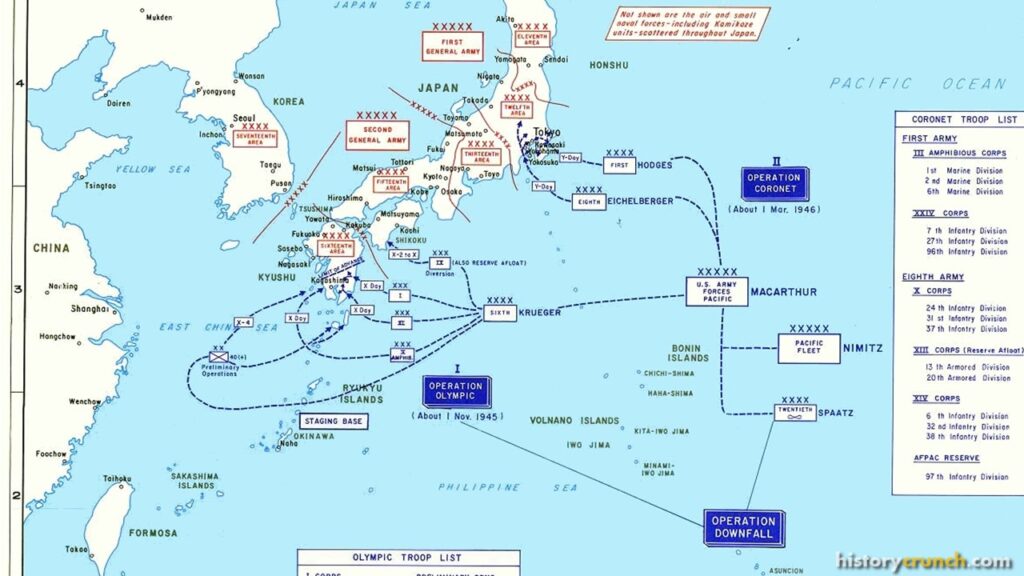
U.S. leaders likely override your advice, and a costly land invasion of the Japanese home islands remains the planned alternative, with projected casualties running into the hundreds of thousands.
What really happened
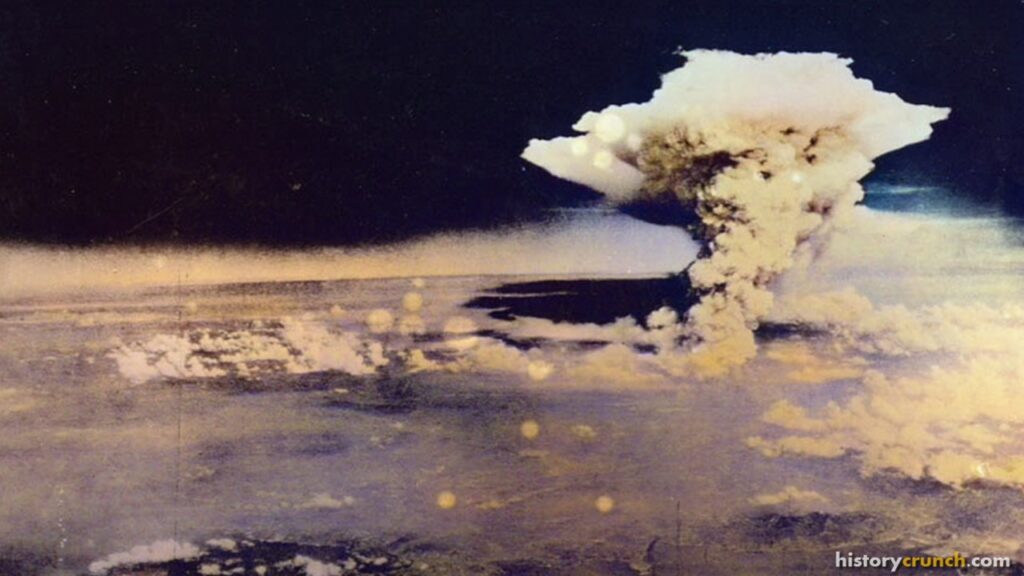
Oppenheimer and the scientific committee advised that the bomb be used against a war-production city without prior warning, reasoning that a dramatic strike was most likely to force a swift Japanese surrender. Hiroshima was bombed on August 6th, 1945, and Nagasaki on August 9th, 1945. Japan announced its surrender on August 15th, 1945, ending World War II in the Pacific. The decision remains one of the most debated in modern history, with scholars still arguing over whether the bombings were necessary or whether other paths could have ended the war.
Nazi Germany carried out a deliberate, state-organized program to murder Jewish people and other groups it targeted, including Roma, people with disabilities, and political opponents. The cards in this section document the policies, sites, and scale of that genocide.
In spite of everything I still believe that people are really good at heart.
AF
Anne FrankJewish girl who hid from the Nazis with her family in Amsterdam, July 15th, 1944
Why it matters
Anne wrote these hopeful words in her diary about three weeks before police discovered the secret annex on August 4th, 1944, and her published diary later carried this belief in human goodness to millions of readers.
Anne Frank in May of 1942, just two months before her family went into hiding. (Colorized by historycrunch.com)
On January 20th, 1942, fifteen senior Nazi officials met at a villa in the Wannsee suburb of Berlin and agreed on a coordinated plan to systematically murder every Jewish person in Europe, which they called the 'Final Solution to the Jewish Question.'
Before
Nazi Germany had been killing Jewish people through shootings and early camps, but no single coordinated government-wide plan existed across all occupied territories
After
All major German agencies were now formally committed to a Europe-wide program of genocide, accelerating the construction and operation of dedicated killing centers such as Auschwitz-Birkenau, Treblinka, and Sobibor
How did bystander responsibility during the Holocaust look to those who claimed they did not know versus historians who documented widespread awareness?
Many ordinary Germans and Europeans said after the war that they had no knowledge of the mass killing of Jews and other groups. They pointed to wartime secrecy, Nazi coded language in official communications, and the distance of the camps from everyday life as reasons they could not have known. For many, this claim became a way to separate themselves from personal moral responsibility for what happened.
Historians have gathered evidence showing that awareness of Nazi persecution spread widely across German society well before the war ended. Train deportations moved through town centers, neighbors watched Jews lose their homes and jobs under the Nuremberg Laws of 1935, and soldiers wrote letters home describing mass shootings in Eastern Europe. Researchers such as Robert Gellately have argued that the broad outline of Nazi violence against Jews was visible to millions of people who chose not to act.
Nazi Camps and Ghettos Across Europe: More Than 44,000 Sites, a Number Larger Than All McDonald's Restaurants in the World
Nazi camps and ghettos in Europe
44,000McDonald's restaurants worldwide
40,000U.S. post offices
31,000U.S. public libraries
17,000
Researchers at the United States Holocaust Memorial Museum documented more than 44,000 Nazi camps and ghettos operating across Europe between 1933 and 1945. The network included concentration camps, forced labor sites, transit camps, ghettos, and killing centers spread from France to Russia. The total is far larger than most people expect, and it shows how deeply the system of persecution was built into everyday life across occupied Europe.
The Nazis killed approximately 6 million Jewish people during the Holocaust, which took place between 1933 and 1945. Beyond Jewish victims, the Nazis also killed millions of others, including roughly 250,000 people with disabilities, around 500,000 Roma, and hundreds of thousands of Soviet prisoners of war, Polish civilians, and political opponents. Scholars at the United States Holocaust Memorial Museum estimate the total number of people murdered by the Nazi regime and its collaborators at between 11 million and 17 million.
Of the roughly 230,000 children and young people deported to Auschwitz during the Holocaust, no more than 650 survived until Soviet forces liberated the camp.
Because children were generally too young for forced labor, Nazi authorities sent the vast majority directly to the gas chambers on arrival. Children who were healthy enough to work were often assigned dangerous or pointless jobs in the camp, and many died from those conditions. Along with the elderly, children had the lowest survival rate of any group sent to the killing centers.
Wannsee Conference Protocol: Language and Euphemism Assessment
The Wannsee Conference Protocol, dated January 20th, 1942, recorded a meeting of fifteen senior Nazi officials held at a villa in the Berlin suburb of Wannsee. The document was drafted by Reinhard Heydrich, who chaired the meeting, and was circulated afterward to the attending agencies. The protocol used careful bureaucratic language throughout, referring to the mass murder of European Jews as the "Final Solution of the Jewish Question" rather than naming the killing directly. Officials at the meeting discussed the coordination of deportations across occupied Europe, covering a figure of eleven million Jews whom Nazi planners counted as targets. The document was not discovered by Allied investigators until 1947, when a single copy was found among German Foreign Office files.
Tap the black bars to declassify.
Evidence Photo
The euphemistic language was deliberate, designed to obscure the true purpose of the policy from any outsider who read the file.
Evidence Tag
SubjectWannsee Conference Protocol: Language and Euphemism Assessment
It's a wonder I haven't abandoned all my ideals, they seem so absurd and impractical. Yet I cling to them because I still believe, in spite of everything, that people are truly good at heart.
AF
Anne FrankJewish diarist, age 15, hiding in the Secret Annex in Amsterdam, July 15th, 1944
Why it matters
Anne Frank wrote these words about three weeks before German police found the hiding place and arrested everyone in it, and after her father Otto Frank published the diary in 1947 the line became the best-known statement of hope to survive the Holocaust.
DiedOctober 9th, 1974, in Hildesheim, West Germany
RoleGerman industrialist and humanitarian who saved approximately 1,200 Jewish workers during the Holocaust
Tap a heading to open the note.
Early Career
Schindler joined the Nazi Party in 1939 and arrived in Kraków, Poland, hoping to profit from the war by running a factory.
The Enamelware Factory
He took over a cookware plant called Deutsche Emailwarenfabrik, known as Emalia, and employed Jewish workers from the Kraków ghetto as forced laborers.
Shifting Motives
By 1942, after witnessing the violent liquidation of the Kraków ghetto, Schindler began working to protect his Jewish workers rather than simply profit from them.
Schindler's List
In late 1944, Schindler and his accountant Itzhak Stern compiled a list of roughly 1,200 Jewish workers to transfer to a new factory in Brünnlitz, in his home region of Moravia, keeping them out of the death camps.
After the War
Schindler spent his postwar years moving between Argentina and West Germany, struggling financially, and was largely supported by donations from the Jewish survivors he had saved, known as Schindlerjuden.
Yad Vashem Recognition
In 1963, Israel's Holocaust memorial authority Yad Vashem named Schindler Righteous Among the Nations, one of the earliest recipients of that honor, and he is buried in Jerusalem.
Auschwitz was not one camp but a network of 45 sub-camps, and the largest sub-camp, Auschwitz III-Monowitz, was built and partly funded by the German chemical company IG Farben to supply forced labor for its synthetic rubber plant.
IG Farben signed agreements with the SS to use prisoners as workers at Monowitz, paying the SS a daily fee per prisoner. After the war, 24 IG Farben executives were tried at Nuremberg in 1947 and 1948, and 13 were convicted for using slave labor at the camp.
April 1st, 1933 — Boycott Begins The Nazi government organized a one-day boycott of Jewish-owned businesses across Germany. SA soldiers stood outside shops to stop customers from entering.
September 15th, 1935 — Nuremberg Laws The Reich Citizenship Law stripped Jewish people of German citizenship. A second law banned marriage between Jews and non-Jewish Germans.
November 9th, 1938 — Kristallnacht Nazi stormtroopers and civilians attacked Jewish synagogues, homes, and businesses across Germany and Austria in a single night. About 30,000 Jewish men were arrested and sent to concentration camps.
September 21st, 1939 — Ghettos Ordered Reinhard Heydrich issued orders to concentrate Polish Jews into sealed urban ghettos. The Warsaw Ghetto, established in 1940, eventually held over 400,000 people in crowded conditions.
January 20th, 1942 — Wannsee Conference Senior Nazi officials met at a villa in Wannsee, near Berlin, to coordinate the systematic murder of all Jews in Europe. Heydrich chaired the meeting, which covered plans affecting an estimated 11 million people.
March 17th, 1942 — Operation Reinhard Begins The Nazis opened Belzec extermination camp in occupied Poland, the first site built specifically to kill Jews on a large scale under Operation Reinhard. Sobibor and Treblinka camps followed within months.
August 1942 — Treblinka at Peak Treblinka extermination camp in occupied Poland reached its highest killing rate, with thousands of people murdered each day. Treblinka killed an estimated 700,000 to 900,000 people total between July 1942 and August 1943.
April 1st, 1933 — Boycott BeginsThe Nazi government organized a one-day boycott of Jewish-owned businesses across Germany. SA soldiers stood outside shops to stop customers from entering.
September 15th, 1935 — Nuremberg LawsThe Reich Citizenship Law stripped Jewish people of German citizenship. A second law banned marriage between Jews and non-Jewish Germans.
November 9th, 1938 — KristallnachtNazi stormtroopers and civilians attacked Jewish synagogues, homes, and businesses across Germany and Austria in a single night. About 30,000 Jewish men were arrested and sent to concentration camps.
September 21st, 1939 — Ghettos OrderedReinhard Heydrich issued orders to concentrate Polish Jews into sealed urban ghettos. The Warsaw Ghetto, established in 1940, eventually held over 400,000 people in crowded conditions.
January 20th, 1942 — Wannsee ConferenceSenior Nazi officials met at a villa in Wannsee, near Berlin, to coordinate the systematic murder of all Jews in Europe. Heydrich chaired the meeting, which covered plans affecting an estimated 11 million people.
March 17th, 1942 — Operation Reinhard BeginsThe Nazis opened Belzec extermination camp in occupied Poland, the first site built specifically to kill Jews on a large scale under Operation Reinhard. Sobibor and Treblinka camps followed within months.
August 1942 — Treblinka at PeakTreblinka extermination camp in occupied Poland reached its highest killing rate, with thousands of people murdered each day. Treblinka killed an estimated 700,000 to 900,000 people total between July 1942 and August 1943.
Warsaw Ghetto Roundup, World War II, 1943: Civilians Forced Out at Gunpoint
Look closely
A young boy in a cap and long coat stands at the front of the crowd with both hands raised above his head.
Behind him, women and older children also hold their hands up while armed German SS soldiers stand to the right with weapons ready.
Several people carry bags and bundles, suggesting they were pulled from their homes with little warning.
The context
By April 1943, German forces had already deported the large majority of Warsaw Ghetto residents to the Treblinka extermination camp.
On April 19th, 1943, SS commander Juergen Stroop launched a major operation to clear the remaining roughly 50,000 residents.
Soldiers moved block by block, forcing civilians out of hiding places, bunkers, and buildings.
What it tells us
The image became one of the most reproduced photographs documenting Nazi persecution of Jewish civilians during the Holocaust.
The child with raised hands came to represent the treatment of the most vulnerable during the German occupation of Poland.
Stroop himself included this photograph in a bound report he sent to Heinrich Himmler, which meant the perpetrators deliberately preserved it as a record of their own actions.
non-Jewish Polish people killed at Auschwitz, 1940 to 1945
Non-Jewish Polish prisoners were the second largest group of victims at Auschwitz, after Jewish victims. The Nazis sent Poles to the camp mainly as political prisoners, resistance members, and civilians from mass arrests beginning in 1940.
Jewish prisoners arrive at Auschwitz during the Holocaust. (Colorized by historycrunch.com)
Went into hiding: July 6th, 1942, Amsterdam, Netherlands
Arrested: August 4th, 1944
Died: February or March 1945, Bergen-Belsen, Germany
Anne Frank kept a diary while hiding with her family for more than two years in a concealed apartment in Amsterdam during the German occupation of the Netherlands. Her diary, published after the war by her father Otto Frank, became one of the most widely read personal accounts of life under Nazi persecution and is used in classrooms around the world.
Holocaust victimWorld War II NetherlandsThe Secret AnnexDiarist
From Greek: 'holos' (whole) + 'kaustos' (burnt); used in English since the 1940s to name this event
The Holocaust was the systematic, state-sponsored murder of six million Jews by the German Nazi government and its collaborators between 1933 and 1945. The Nazi regime also killed millions of others, including Roma, people with disabilities, Soviet civilians, and Polish people. The killings were organized and carried out across occupied Europe through a network of ghettos, forced labor sites, and killing facilities.
"When students study the Holocaust, they learn that the Nuremberg Laws of 1935 were an early step in stripping Jewish people of their citizenship and legal rights in Germany."
Starved prisoners, nearly dead from hunger, pose in Nazi concentration camp in Ebensee, Austria. (Colorized by historycrunch.com)
Genocide is the deliberate killing of a large group of people because of their race, religion, ethnicity, or nationality. During World War II, Nazi Germany carried out the Holocaust, which killed approximately 6 million Jewish people along with hundreds of thousands of Roma, disabled people, and others targeted for who they were.
Genocide is defined as a mass killing of a certain group of people based on their religion, ethnicity or cultural background.
The Holocaust's documented death counts by group and place show the full scale of Nazi killing across Europe.
About 1 Million
Jewish victims at Auschwitz alone
About 3 Million
Polish Jews killed (half of all Holocaust victims)
About 2.8 Million
Soviet POWs killed in German captivity, 1941 to 1942
Over 250,000
Romani people killed by the Nazis
About 70,000
Disabled people killed under the Action T4 program
6
Extermination camps built in occupied Poland
Historians built these figures from Nazi records, postwar population studies, and camp logs. Poland held the largest Jewish community in Europe before the war, with about 3.3 million Jews living there in 1939.
The Nuremberg trials, held from November 20th, 1945, to October 1st, 1946, put 24 senior Nazi leaders on trial for war crimes and crimes against humanity. The trials were the first international proceedings of their kind and resulted in 12 death sentences.
Can you name this mystery person before the photo develops? Click through the hints and lock in your guess.
Unknown subjectOskar Schindler
Evidence
Nazi Party
bribing SS officials
about 1,200 Jews
I was a member of the Nazi Party before the war began.I ran an enamelware factory in Krakow, Poland, and used it as cover to protect my workers.I spent nearly my entire personal fortune bribing SS officials to keep my workers alive.By the end of the war, the list of workers I protected had grown to about 1,200 Jews.I am best known for saving Jewish workers from Nazi death camps during World War II.
Hint 1 of 5
1I was a member of the Nazi Party before the war began.
2I ran an enamelware factory in Krakow, Poland, and used it as cover to protect my workers.
3I spent nearly my entire personal fortune bribing SS officials to keep my workers alive.
4By the end of the war, the list of workers I protected had grown to about 1,200 Jews.
5I am best known for saving Jewish workers from Nazi death camps during World War II.
Identified
Oskar Schindler
German industrialist, wartime rescuer
Case closed
Why it mattersAfter the war, many of the people he saved helped support him financially, because he had spent everything he had to protect them.
The United States did not enter the war at its start and spent the early years supplying Allied nations rather than fighting directly. Its eventual entry in December of 1941 shifted the balance of resources and manpower available to the Allied side on multiple fronts at once.
No matter how long it may take us to overcome this premeditated invasion, the American people in their righteous might will win through to absolute victory.
Franklin D. Roosevelt · Joint Session of Congress, Washington, D.C. · December 8th, 1941
Roosevelt prepared this World War II speech mostly by himself, and he added this sentence near the end of the text during his revisions, since two of his usual speechwriters were away in New York City. Congress acted fast: the Senate voted 82 to 0 for war just 21 minutes after the speech, and the House agreed 12 minutes later, 388 to 1. Representative Jeannette Rankin of Montana, a pacifist, cast the single no vote.
President Franklin D. Roosevelt signs the Social Security Act on August 14th, 1935, one of the most significant examples of democratic socialism in American history, establishing a government program to provide financial security for elderly and unemployed citizens. (Colorized by historycrunch.com)
Congress declared war on Japan on December 8th, 1941, the day after Japan's surprise attack on the American naval base at Pearl Harbor, Hawaii, killing more than 2,400 Americans and destroying or damaging much of the Pacific Fleet. Germany and Italy then declared war on the United States on December 11th, 1941, pulling the country into the European war as well. Although the United States had been supplying weapons and materials to Britain and the Soviet Union before that point, the Pearl Harbor attack ended the debate at home over whether to enter the fighting directly.
The German Government, consequently, discontinues diplomatic relations with the United States of America and declares that under these circumstances brought about by President Roosevelt Germany too, as from today, considers herself as being in a state of war with the United States of America.
German Government note, signed Joachim von Ribbentrop · Berlin · December 11th, 1941
This note ended official peace between Germany and the United States on December 11th, 1941, four days after the Japanese attack on Pearl Harbor. Foreign Minister Joachim von Ribbentrop read the declaration to Leland B. Morris, the top American diplomat in Berlin, and Hitler defended the decision in a speech to the Reichstag that same day. Congress answered within hours and declared war on Germany without a single vote against it.
Adolf Hitler announcing the declaration of war against the United States on December 11th, 1941. (Colorized by historycrunch.com)
We must be the great arsenal of democracy. For us this is an emergency as serious as war itself. We must apply ourselves to our task with the same resolution, the same sense of urgency, the same spirit of patriotism and sacrifice as we would show were we at war.
Franklin D. Roosevelt
President of the United States, radio address, December 29th, 1940
Roosevelt spoke while the United States was still neutral and Britain faced Nazi Germany with little help. He argued that American factories should build weapons for the nations fighting Hitler, an idea that became the Lend-Lease program in March 1941.
President Franklin D. Roosevelt signs the Lend-Lease bill to give aid to Britain and China. (March of 1941) (Colorized by historycrunch.com)
Notwithstanding the provisions of any other law, the President may, from time to time, when he deems it in the interest of national defense, authorize the Secretary of War, the Secretary of the Navy, or the head of any other department or agency of the Government...
United States Congress · Washington, D.C. · March 11th, 1941
This line opens Section 3 of the Lend-Lease Act, the part of the World War II law that gave President Roosevelt new power to send war supplies abroad. Congress numbered the bill H.R. 1776 to give it a patriotic feel, and it passed by votes of 60 to 31 in the Senate and 317 to 71 in the House. The program went on to provide more than $50 billion in aid to fifty nations and helped win the war.
When Did the United States Enter World War II? Congress Declares War on Germany and Italy
On December 11th, 1941, Germany and Italy declared war on the United States, and Congress responded the same day. The House voted 393 to 0 to go to war with Germany and 399 to 0 to go to war with Italy. These votes brought the United States fully into the European war, joining the conflict in the Pacific it had entered three days earlier, and turning two separate regional wars into a single global conflict.
Women in the United States and other Allied countries took on a wide range of jobs during the war, including working in factories to build aircraft, tanks, and weapons while men served overseas. In the United States alone, around 6 million women entered the defense workforce between 1940 and 1945, filling roles that had previously been closed to them. Many women also served in military support units, such as the Women's Army Corps and the Navy's WAVES program, handling jobs like communications, logistics, and nursing.
English compound noun; 'home' refers to the civilian side of a nation at war
The home front is the part of a country where ordinary civilians live and work during a war, as opposed to the battlefield where soldiers fight. During World War II, governments organized civilians to support the war effort through factory work, growing food, and accepting limits on everyday goods. The home front was a key part of how nations kept their armies supplied and operating.
"In the United States during World War II, women entered factories in large numbers to build aircraft and ships, showing how the home front directly shaped the outcome of the fighting overseas."
It was obvious to me that Roosevelt was having a dreadful time just accepting the idea that the navy could be caught unaware.
FP
Frances PerkinsU.S. Secretary of Labor and eyewitness at the emergency White House cabinet meeting, The night of the Pearl Harbor attack, 1941, recalled in her oral history
Why it matters
Perkins recorded this observation at the evening meeting where Roosevelt told his cabinet and congressional leaders that he had drafted his war address, then read the draft aloud, so her words show the shock behind the speech he gave to Congress the next day, the one remembered for the phrase a date which will live in infamy.
American shipyards produced 2,710 Liberty ships between 1941 and 1945, an average of three ships every two days.
Each Liberty ship could carry more than 10,000 tons of cargo, enough to hold 2,840 jeeps, 440 light tanks, or 230 million rounds of rifle ammunition. Early in the program it took around 230 days to finish a single ship, but by the end of 1943 that time had dropped to fewer than 50 days as yards adopted assembly-line methods and pre-built sections. By the autumn of 1943 all Allied shipping lost since 1939 had already been replaced by new American output.
This 1943 poster by J. Howard Miller shows a woman in a blue work shirt and red polka-dot headband flexing her arm, and was used to encourage women to take factory jobs during World War II.
We must be the great arsenal of democracy... We must apply ourselves to our task with the same resolution, the same sense of urgency, the same spirit of patriotism and sacrifice as we would show were we at war.
Franklin D. Roosevelt
32nd President of the United States, radio speech to the nation, late December 1940
Britain was fighting Nazi Germany almost alone, and Roosevelt wanted American factories to build the planes, ships, and guns the Allies needed while the United States stayed out of the fighting. The speech prepared the public for the Lend-Lease Act, which Roosevelt signed on March 11th, 1941, and which sent billions of dollars in war supplies to the Allies.
President Franklin D. Roosevelt signs the Lend-Lease bill to give aid to Britain and China. (March of 1941) (Colorized by historycrunch.com)
Americans Who Served in World War II: 16 Million People, Equal to the Combined 1940 Populations of New York, Pennsylvania, and Ohio
Americans who served in WWII
16,000,000New York State population, 1940
13,479,000Pennsylvania population, 1940
9,900,000Ohio population, 1940
6,908,000Today's active U.S. military
1,400,000
About 16 million Americans served in the U.S. armed forces during World War II, which was 12 percent of the entire U.S. population at the time. To picture that number, it is close to the total number of people living in New York, Pennsylvania, and Ohio combined in 1940. By contrast, today's active U.S. military is roughly 1.4 million, less than one-tenth that size.
passed before U.S. entered the war!★ programSoviet Union was a major recipientkey term!
Lend-Lease
(noun)
Lend-Lease was a U.S. government program that supplied Allied nations with food, weapons, and equipment during World War II without requiring immediate payment. Congress passed the Lend-Lease Act on March 11th, 1941, allowing President Franklin D. Roosevelt to send supplies to any country whose defense he judged vital to U.S. security.
in a sentence: Under Lend-Lease, the United States sent about $50 billion in aid to Allied nations by 1945.
Isolationism is the foreign policy belief that a country should avoid involvement in the conflicts and alliances of other nations. In the United States during the 1930s, isolationist sentiment was strong enough that Congress passed a series of Neutrality Acts between 1935 and 1937, which banned arms sales and loans to countries at war, limiting U.S. support for nations resisting Nazi Germany and Imperial Japan before the attack on Pearl Harbor on December 7th, 1941.
How did the United States convert its civilian economy into a war machine between 1941 and 1945?
A woman wearing an inspector's armband checks wiring components at a U.S. defense plant during World War II, when millions of American women took on factory jobs to support the war effort.
Pearl Harbor Triggers Action
After Japan attacked Pearl Harbor on December 7th, 1941, Congress declared war within days, and President Roosevelt immediately called on American industry to shift toward producing weapons, ships, and aircraft.
War Production Board
In January 1942, Roosevelt created the War Production Board to direct factories away from consumer goods. Automakers stopped building cars for civilians and retooled assembly lines to make tanks, jeeps, and bombers.
Women Enter the Workforce
As millions of men entered military service, women took over factory jobs in large numbers. By 1944, women made up about one third of all workers in defense industries, filling roles that had previously been closed to them.
Record Output by 1944
American factories reached peak production by 1944, turning out roughly 96,000 aircraft that year alone. The United States produced more war equipment than Germany, Japan, and Italy combined during the war.
Price Controls and Rationing
The Office of Price Administration set limits on prices and rationed everyday goods such as gasoline, rubber, meat, and sugar. These controls kept inflation from rising out of control while factories focused on military needs.
GDP and the War's End
The shift to war production pushed American gross domestic product from about 105 billion dollars in 1940 to roughly 224 billion dollars by 1945. When the war ended, factories gradually converted back to civilian production, fueling a postwar economic boom.
The United States rationed everyday goods like rubber, gasoline, and meat during World War II so that military needs came first. By 1943, the Office of Price Administration had issued ration books to nearly every American household.
All Japanese Americans sent to internment camps during World War II had their property returned to them when they were released.
Myth or fact? Tap your call.
The truthMost families lost homes, farms, and businesses while imprisoned and never recovered those assets after their release. The Civil Liberties Act of 1988 provided a formal government apology and $20,000 payments to survivors, but that came more than four decades later and could not replace what was lost.
How many Japanese Americans were held in internment camps during World War II?
Take your best guess. Tap a range.
The real numberabout 120,000 peopleOver 120,000 people of Japanese descent were held in ten War Relocation Authority camps across the western United States. More than two-thirds of them were American citizens, and many were children.
The war ended at different times in different parts of the world, with Germany surrendering months before Japan did. The final stages involved some of the most destructive events of the entire conflict, including the firebombing of cities and the use of atomic weapons.
I had dinner with Churchill that night in Casablanca and he was very much upset that this had been sprung on him without consideration.
HH
Harry HopkinsPresident Roosevelt's chief adviser and a firsthand witness at the Casablanca Conference, January 1943, on the day of the unconditional surrender announcement
Why it matters
Hopkins was one of the few people close to both leaders, and his account shows that Churchill was privately angry even though he backed the policy in public.
World War II ended in two stages: Germany surrendered on May 7th, 1945, and Japan formally surrendered on September 2nd, 1945, aboard the USS Missouri in Tokyo Bay. Germany's surrender came after Soviet forces captured Berlin and Adolf Hitler died by suicide on April 30th, 1945. Japan's formal signing ceremony on September 2nd, 1945, marked the official close of the war.
Why Did the US Drop the Atomic Bomb? The Interim Committee Recommends Its Use on Japan
On June 1st, 1945, a secret US government panel called the Interim Committee met in Washington and agreed that the atomic bomb should be used against Japan as soon as possible, without prior warning. Secretary of War Henry Stimson had created the committee in May 1945, with members drawn from government, science, and industry, to advise President Harry Truman on how and whether to use the new weapon. Their recommendation, along with a supporting report from a Scientific Panel that included physicists J. Robert Oppenheimer and Enrico Fermi, set the formal process in motion that led directly to the bombing of Hiroshima on August 6th, 1945.
Image of the Mushroom cloud of the 'Gadget' during the Trinity Test. (July 16th, 1945)
people still displaced in Europe when Germany surrendered in May 1945
World War II uprooted millions through combat, forced labor, and ethnic expulsions. Allied forces worked to return the displaced persons, repatriating roughly 5.25 million of them at a rate of 80,000 people per day between May and June 1945.
Douglas MacArthurU.S. Army general and Supreme Commander for the Allied Powers, September 2nd, 1945, Japanese surrender ceremony, Tokyo Bay
Why it matters
The ceremony aboard the deck of the USS Missouri lasted 23 minutes and was broadcast throughout the world, so these closing words told radio listeners everywhere that World War II was finally over.
Germany lost World War II because it ran out of the resources, manpower, and industrial capacity needed to fight the United States, Britain, and the Soviet Union at the same time. The Allied bombing campaign from 1943 onward steadily destroyed German factories, oil refineries, and transportation lines, cutting off fuel and weapons from the front. By early 1945, Soviet forces were closing in from the east while American and British forces pushed in from the west, leaving Germany with no realistic path to victory.
April 16th, 1945 — Oder-Neisse Assault Marshal Georgy Zhukov's 1st Belorussian Front attacked across the Oder River at 3:00 AM, supported by over 140 searchlights meant to blind German defenders on the Seelow Heights.
April 17th, 1945 — Seelow Heights Stalled German Army Group Vistula, commanded by General Gotthard Heinrici, held the Seelow Heights longer than Soviet planners expected, costing Zhukov roughly 30,000 casualties in two days.
April 19th, 1945 — Heights Taken Soviet forces finally broke through the Seelow Heights defenses on April 19th after Marshal Ivan Konev's 1st Ukrainian Front pushed north to outflank the German line.
April 20th, 1945 — Hitler's Birthday Shelling Soviet artillery fired on central Berlin on April 20th, Adolf Hitler's 56th birthday, as Red Army units closed to within 10 miles (16 km) of the city center.
April 21st, 1945 — Berlin Encirclement Begins Konev's and Zhukov's forces began linking up north and south of Berlin, starting to trap the German Ninth Army under General Theodor Busse east of the city.
April 23rd, 1945 — Urban Fighting Opens Soviet rifle units entered the outer Berlin districts and began block-by-block fighting against roughly 45,000 regular German troops plus Volkssturm militia and Hitler Youth defenders.
April 25th, 1945 — Ring Closes Around Berlin Soviet spearheads met west of Berlin on April 25th, completing the encirclement and cutting off all German escape routes into the city.
April 16th, 1945 — Oder-Neisse AssaultMarshal Georgy Zhukov's 1st Belorussian Front attacked across the Oder River at 3:00 AM, supported by over 140 searchlights meant to blind German defenders on the Seelow Heights.
April 17th, 1945 — Seelow Heights StalledGerman Army Group Vistula, commanded by General Gotthard Heinrici, held the Seelow Heights longer than Soviet planners expected, costing Zhukov roughly 30,000 casualties in two days.
April 19th, 1945 — Heights TakenSoviet forces finally broke through the Seelow Heights defenses on April 19th after Marshal Ivan Konev's 1st Ukrainian Front pushed north to outflank the German line.
April 20th, 1945 — Hitler's Birthday ShellingSoviet artillery fired on central Berlin on April 20th, Adolf Hitler's 56th birthday, as Red Army units closed to within 10 miles (16 km) of the city center.
April 21st, 1945 — Berlin Encirclement BeginsKonev's and Zhukov's forces began linking up north and south of Berlin, starting to trap the German Ninth Army under General Theodor Busse east of the city.
April 23rd, 1945 — Urban Fighting OpensSoviet rifle units entered the outer Berlin districts and began block-by-block fighting against roughly 45,000 regular German troops plus Volkssturm militia and Hitler Youth defenders.
April 25th, 1945 — Ring Closes Around BerlinSoviet spearheads met west of Berlin on April 25th, completing the encirclement and cutting off all German escape routes into the city.
God bless you all. This is your victory! It is the victory of the cause of freedom in every land. In all our long history we have never seen a greater day than this.
Winston Churchill
Prime Minister of the United Kingdom, V-E Day, 1945
After Germany surrendered, Churchill spoke to a huge crowd from the Ministry of Health balcony in Whitehall, London. He gave the credit to ordinary British people, and many in the crowd shouted back, "No, it is yours."
Winston Churchill in December of 1941. (Colorized by historycrunch.com)
German Instrument of Surrender: Effective Date, Time, and Ceasefire Terms Assessment, May 1945
The German Instrument of Surrender required all German military forces to stop fighting at one minute past midnight on May 9th, 1945, Central European Time. The first signing took place at Reims, France, on May 7th, 1945, where German General Alfred Jodl signed on behalf of the German High Command. A second, more formal signing followed at Berlin-Karlshorst to satisfy Soviet demands that the document be signed on German soil. The surrender applied to all German forces across every theater of war, including forces still holding positions in Norway, Denmark, and parts of the Eastern Front. Field Marshal Wilhelm Keitel signed for Germany at the Berlin ceremony, while Soviet Marshal Georgy Zhukov accepted the surrender on behalf of the Allied powers.
Tap the black bars to declassify.
Evidence Photo
VE Day declared May 8th in the West; Soviet calendar puts the victory on May 9th, creating two separate commemoration dates still used today.
Evidence Tag
SubjectGerman Instrument of Surrender: Effective Date, Time, and Ceasefire Terms Assessment, May 1945
V-E Day, short for Victory in Europe Day, marks the date when Nazi Germany officially surrendered to the Allied Powers, ending World War II in Europe. It is observed on May 8th, 1945, the day the surrender took effect and Allied nations declared the fighting in Europe over.
American soldiers in November of 1942 during Operation Torch in World War II. (Colorized by historycrunch.com)
World War II ran for six years and one day, touching more nations and involving more military personnel than any conflict before it.
6 Years, 1 Day
September 1st, 1939, to September 2nd, 1945
100+ Million
Military personnel mobilized by all sides
30+
Nations involved across both alliances
4
Continents where fighting or direct occupation occurred
5 Years, 8 Months
Length of the European war alone, from September 1st, 1939, to V-E Day on May 8th, 1945
8 Years
Length of the Pacific war, from Japan's invasion of China on July 7th, 1937, to September 2nd, 1945
The European war ended on May 8th, 1945, when Germany surrendered, but fighting in the Pacific continued until Japan signed surrender documents aboard the USS Missouri on September 2nd, 1945. More than 30 countries formally declared war, and over 100 million men and women served in uniform across all nations combined.
Dropping atomic bombs on Hiroshima and Nagasaki, 1945
American military leaders
Many American commanders, including General Douglas MacArthur's planners, estimated that a land invasion of Japan's home islands could cost hundreds of thousands of American lives and potentially over a million Japanese casualties. Secretary of War Henry Stimson and others argued that the bombs shortened the war quickly and avoided that invasion entirely. They saw the decision as a painful but necessary act to end the war as fast as possible.
Japanese survivors (hibakusha)
Survivors of the bombings, known in Japan as hibakusha, described immediate destruction of entire city districts, severe burns, radiation sickness, and the deaths of tens of thousands of civilians within days. Many felt that targeting densely populated cities without warning treated ordinary people as acceptable losses. For decades after the war, hibakusha testified that the bombings represented an act that no civilian population should ever face, regardless of any military reasoning.
Why did the United States drop atomic bombs on Japan in 1945, and were the stated reasons the whole story?
Official War-Ending JustificationPresident Truman publicly stated the bombs were dropped to end the war quickly and avoid a land invasion of Japan that military planners estimated could cost hundreds of thousands of American lives.
Estimated Invasion Casualties U.S. planners projected Operation Downfall, the planned invasion of the Japanese home islands, could produce American casualties ranging from 250,000 to over one million, depending on the estimate and the source.
Soviet Pressure and TimingThe Soviet Union declared war on Japan on August 8th, 1945, two days after the first bomb fell on Hiroshima. Some historians argue the United States wanted to end the Pacific war before the Soviets could claim major influence over Japan's postwar settlement.
Japan's Known Peace Signals American intelligence had intercepted Japanese diplomatic messages in mid-1945 showing some officials were seeking a negotiated peace, though Japan's military leadership still refused unconditional surrender at that time.
Postwar Power and Demonstration Effect Some historians, including Gar Alperovitz in his 1965 study, argued the bombs also served to demonstrate American atomic power to the Soviet Union at the start of the Cold War rivalry, a point the U.S. government has never officially acknowledged.
Stimson's Conditions WarningSecretary of War Henry Stimson advised in July 1945 that keeping Japan's emperor in place might speed surrender, but this condition was left out of the Potsdam Declaration issued on July 26th, 1945, which demanded unconditional surrender.
Tap a layer to read its detail.
Official War-Ending JustificationPresident Truman publicly stated the bombs were dropped to end the war quickly and avoid a land invasion of Japan that military planners estimated could cost hundreds of thousands of American lives.
Estimated Invasion CasualtiesU.S. planners projected Operation Downfall, the planned invasion of the Japanese home islands, could produce American casualties ranging from 250,000 to over one million, depending on the estimate and the source.
Soviet Pressure and TimingThe Soviet Union declared war on Japan on August 8th, 1945, two days after the first bomb fell on Hiroshima. Some historians argue the United States wanted to end the Pacific war before the Soviets could claim major influence over Japan's postwar settlement.
Japan's Known Peace SignalsAmerican intelligence had intercepted Japanese diplomatic messages in mid-1945 showing some officials were seeking a negotiated peace, though Japan's military leadership still refused unconditional surrender at that time.
Postwar Power and Demonstration EffectSome historians, including Gar Alperovitz in his 1965 study, argued the bombs also served to demonstrate American atomic power to the Soviet Union at the start of the Cold War rivalry, a point the U.S. government has never officially acknowledged.
Stimson's Conditions WarningSecretary of War Henry Stimson advised in July 1945 that keeping Japan's emperor in place might speed surrender, but this condition was left out of the Potsdam Declaration issued on July 26th, 1945, which demanded unconditional surrender.
Germany Launches Operation Citadel at Kursk, Starting the Largest Tank Battle of World War II
On July 5th, 1943, Germany opened Operation Citadel, a pincer attack against a Soviet-held bulge in the front line near Kursk in western Russia. The Soviets had learned of the plan in advance and built deep defensive lines stretching about 190 miles (300 km) back, with minefields, anti-tank positions, and over 1.3 million troops ready to absorb the blow. Germany could not break through, and on July 12th, 1943, the two sides clashed in the massive tank engagement at Prokhorovka. By August 23rd, 1943, the battle ended in a Soviet victory that took away Germany's ability to launch large offensives on the Eastern Front for the rest of the war.
gap in days between each victory and the formal surrender ceremony
Germany surrendered on May 7th, 1945, and the formal V-E Day celebration followed on May 8th, just one day later. Japan's Emperor Hirohito announced surrender on August 15th, 1945, but the formal signing ceremony on the USS Missouri did not take place until September 2nd, 1945, a gap of 18 days.
Soviet tanks and self-propelled guns lost during the Battle of Berlin, April 16th to May 2nd, 1945
Declassified Soviet archival records list about 1,997 tanks and self-propelled guns lost by the Red Army during the Berlin operation. The Soviet force committed more than 6,000 tanks to the offensive, and the losses came largely from intense urban street fighting and the German defenses at the Seelow Heights.
Let there be no mistake; we shall completely destroy Japan's power to make war. ... Their leaders promptly rejected that ultimatum. If they do not now accept our terms they may expect a rain of ruin from the air, the like of which has never been seen on this earth.
HS
Harry S. TrumanPresident of the United States, 1945 to 1953, August 6th, 1945, White House statement on the bombing of Hiroshima
Why it matters
The statement was drafted before Truman left the Potsdam Conference, and Secretary of War Henry Stimson was authorized to release it once the bomb was dropped; it unveiled the top secret Manhattan Project and warned Japan that more atomic attacks would follow if it did not surrender.
Japan's Emperor Hirohito announced his country's surrender on August 15th, 1945, citing the atomic bombings of Hiroshima on August 6th and Nagasaki on August 9th as a key reason the war could not continue. The Soviet Union's declaration of war against Japan on August 8th, 1945, also played a major role, because it eliminated any hope that the Soviets might help broker a negotiated peace. Japan signed the formal surrender documents aboard the USS Missouri on September 2nd, 1945, ending World War II.
August 2nd, 1945 — Potsdam Order Signed General Carl Spaatz received written orders authorizing the use of the atomic bomb against Japan. The order named Hiroshima, Kokura, Niigata, and Nagasaki as target cities.
August 6th, 1945 — Hiroshima Bombed At 8:15 AM local time, the B-29 bomber Enola Gay, piloted by Colonel Paul Tibbets, dropped a uranium bomb called Little Boy on Hiroshima. The blast killed an estimated 70,000 people instantly and destroyed roughly 4.7 square miles (12 square kilometers) of the city.
August 8th, 1945 — Soviet Union Declares War The Soviet Union declared war on Japan and launched an invasion of Japanese-held Manchuria early on August 9th. This fulfilled a promise Joseph Stalin had made to the Allied leaders at the Yalta Conference in February 1945.
August 9th, 1945 — Nagasaki Bombed A B-29 named Bockscar, commanded by Major Charles Sweeney, dropped a plutonium bomb called Fat Man on Nagasaki at 11:02 AM local time. The explosion killed an estimated 40,000 people immediately.
August 10th, 1945 — Japan Offers to Surrender The Japanese government sent a message through neutral Switzerland offering to surrender, on the condition that Emperor Hirohito keep his position. The Allies replied that the emperor could remain but must answer to the Allied Supreme Commander.
August 12th, 1945 — Allies Send Final Terms The United States, Britain, the Soviet Union, and China formally transmitted their reply to Japan, confirming the surrender terms. Allied bombing missions over Japan were briefly paused while Japan's leaders debated the offer.
August 15th, 1945 — Emperor Announces Surrender Emperor Hirohito made a recorded radio address to the Japanese people at noon local time, announcing that Japan would accept the Allied surrender terms. It was the first time most Japanese citizens had ever heard his voice.
August 2nd, 1945 — Potsdam Order SignedGeneral Carl Spaatz received written orders authorizing the use of the atomic bomb against Japan. The order named Hiroshima, Kokura, Niigata, and Nagasaki as target cities.
August 6th, 1945 — Hiroshima BombedAt 8:15 AM local time, the B-29 bomber Enola Gay, piloted by Colonel Paul Tibbets, dropped a uranium bomb called Little Boy on Hiroshima. The blast killed an estimated 70,000 people instantly and destroyed roughly 4.7 square miles (12 square kilometers) of the city.
August 8th, 1945 — Soviet Union Declares WarThe Soviet Union declared war on Japan and launched an invasion of Japanese-held Manchuria early on August 9th. This fulfilled a promise Joseph Stalin had made to the Allied leaders at the Yalta Conference in February 1945.
August 9th, 1945 — Nagasaki BombedA B-29 named Bockscar, commanded by Major Charles Sweeney, dropped a plutonium bomb called Fat Man on Nagasaki at 11:02 AM local time. The explosion killed an estimated 40,000 people immediately.
August 10th, 1945 — Japan Offers to SurrenderThe Japanese government sent a message through neutral Switzerland offering to surrender, on the condition that Emperor Hirohito keep his position. The Allies replied that the emperor could remain but must answer to the Allied Supreme Commander.
August 12th, 1945 — Allies Send Final TermsThe United States, Britain, the Soviet Union, and China formally transmitted their reply to Japan, confirming the surrender terms. Allied bombing missions over Japan were briefly paused while Japan's leaders debated the offer.
August 15th, 1945 — Emperor Announces SurrenderEmperor Hirohito made a recorded radio address to the Japanese people at noon local time, announcing that Japan would accept the Allied surrender terms. It was the first time most Japanese citizens had ever heard his voice.
Enduring the unendurable and suffering what is insufferable.
Emperor Hirohito
Emperor of Japan, radio broadcast, August 15th, 1945
In this recorded radio message, Hirohito told the Japanese people that Japan would accept the Allied surrender terms, ending World War II. It was the first time most ordinary Japanese citizens had ever heard their emperor's voice, and this phrase asked them to accept defeat and rebuild.
Hitler's Political Testament: Blame, Succession, and Final Orders, April 29th, 1945
Adolf Hitler dictated his Political Testament in the early hours of April 29th, 1945, in his underground bunker beneath the Reich Chancellery in Berlin. In the document, he blamed the Jewish people for starting World War II and denied any personal responsibility for the war's destruction. He expelled Hermann Goering and Heinrich Himmler from the Nazi Party, accusing both men of acting without his authority during the final weeks of the war. Hitler named Grand Admiral Karl Doenitz as his successor and appointed Joseph Goebbels as the new Reich Chancellor, a position Goebbels held for less than two days before taking his own life. The testament was witnessed and signed by Martin Bormann and two others, then smuggled out of Berlin in three copies before Soviet forces completed their encirclement of the city.
Tap the black bars to declassify.
Evidence Photo
Successor appointments made hours before Hitler's suicide on April 30th, 1945, ending the Nazi chain of command.
Evidence Tag
SubjectHitler's Political Testament: Blame, Succession, and Final Orders, April 29th, 1945
Unconditional surrender is the complete defeat of an enemy in which the losing side gives up all its armed forces and accepts whatever terms the winning side sets, with no conditions or bargaining allowed. President Franklin D. Roosevelt announced this as the Allied goal at the Casablanca Conference in January 1943, meaning Germany, Italy, and Japan had to stop fighting entirely before any peace terms were discussed.
V-J Day, short for Victory over Japan Day, marks the date when Japan announced its surrender in World War II, ending the war in the Pacific. Japan's Emperor Hirohito broadcast the surrender announcement on August 15th, 1945, and the formal signing took place aboard the USS Missouri in Tokyo Bay on September 2nd, 1945.
All I can remember was a pale lightening flash for two or three seconds. Then, I collapsed.
YKYoshitaka Kawamoto, 13-year-old student in Hiroshima, later director of the Hiroshima Peace Memorial Museum
Context
Kawamoto was in his classroom about 0.5 miles (0.8 kilometers) from the hypocenter when the atomic bomb exploded over Hiroshima on August 6th, 1945, and he described that moment in a recorded survivor testimony for the Hiroshima Witness program.
World War II lasted just over six years, but the fighting in Europe and the Pacific did not begin or end at the same time, and the numbers behind each theater tell a more exact story.
~2,076 Days
Duration of the European Theater
~1,365 Days
U.S. Pacific War Duration (Dec. 7th, 1941, to Sept. 2nd, 1945)
70+
Nations involved across both theaters
100+ Million
Military personnel mobilized worldwide
117 Days
Days between Germany's surrender and Japan's surrender
4
Continents where fighting took place
Germany surrendered on May 8th, 1945, ending the war in Europe about four months before Japan signed surrender documents on September 2nd, 1945, aboard the USS Missouri in Tokyo Bay. The Pacific War, measured from the attack on Pearl Harbor on December 7th, 1941, lasted nearly three years and nine months on its own.
We, acting by command of and in behalf of the Emperor of Japan, the Japanese Government and the Japanese Imperial General Headquarters, hereby accept the provisions set forth in the declaration issued by the heads of the Governments of the United States, China and Great Britain on 26 July 1945 at Potsdam...
Japanese Instrument of Surrender · USS Missouri, Tokyo Bay · September 2nd, 1945
This is the opening paragraph of the document that formally ended World War II, in which Japan accepted the terms of the Potsdam Declaration issued on July 26th, 1945. Foreign Minister Mamoru Shigemitsu signed for the Emperor and the Japanese government, and General Yoshijiro Umezu signed for the Imperial General Headquarters. The full document ran only eight short paragraphs, and the signing ceremony on the deck of the battleship USS Missouri lasted about 23 minutes.
A Japanese official signs the surrender document aboard the USS Missouri as American military officers look on, ending World War II in the Pacific.
A Japanese official signs the surrender document aboard the USS Missouri as American military officers look on, ending World War II in the Pacific.
Japanese Surrender Signing Aboard the USS Missouri, World War II, September 2nd, 1945
LOOK CLOSELY
A man in a dark civilian suit leans over a table covered with large documents and signs the surrender papers. An American military officer in a light uniform stands to his left, watching closely. Behind them, dozens of Allied military officers in light uniforms stand in tight rows on the deck.
THE CONTEXT
Japan's formal surrender was signed aboard the American battleship USS Missouri anchored in Tokyo Bay on September 2nd, 1945. The ceremony involved representatives from nine Allied nations, including the United States, Britain, China, and the Soviet Union. General Douglas MacArthur presided over the ceremony as Supreme Commander for the Allied Powers.
THE DETAIL
The man standing to the right of the signer holds a black top hat at his side, showing that Japan sent civilian diplomats, not just military officers, to sign the documents. Foreign Minister Mamoru Shigemitsu signed on behalf of the Japanese government.
WHY IT MATTERS
This photograph records the moment World War II officially ended, nearly four years after Japan attacked Pearl Harbor. The image shows both military and civilian figures from two sides completing a legal act that formally closed the war.
BornSeptember 16th, 1891, in Gruenau bei Berlin, Brandenburg, Germany
DiedDecember 24th, 1980, in Aumuhle, West Germany
RoleCommander of the German U-boat fleet, later Grand Admiral and briefly Head of State of Germany
Tap a heading to open the note.
U-Boat Commander
Donitz took command of Germany's submarine force in 1936 and built it from a small fleet into the primary naval weapon Germany used against Allied shipping in the Atlantic.
Wolf Pack Tactic
He developed a strategy called the wolf pack, in which groups of U-boats coordinated attacks on Allied convoys, making it far harder for escort ships to defend cargo vessels.
Battle of the Atlantic
Under his direction, German U-boats sank roughly 2,779 Allied ships during World War II, threatening Britain's ability to receive food and war supplies from North America.
Grand Admiral
Hitler promoted Donitz to Grand Admiral and commander of all German naval forces on January 30th, 1943, after dismissing Erich Raeder from that post.
Final Head of State
Hitler named Donitz as his successor in his political testament before dying on April 30th, 1945. Donitz served as Germany's head of state for about three weeks until the government collapsed.
Nuremberg Sentence
The International Military Tribunal at Nuremberg convicted Donitz of war crimes in 1946 and sentenced him to ten years in prison. He was released from Spandau Prison on October 1st, 1956.
33rd President of the United States, Commander in Chief
Born: May 8th, 1884, Lamar, Missouri
Became President: April 12th, 1945, Washington, D.C.
Ordered Hiroshima bombing: August 6th, 1945
Ordered Nagasaki bombing: August 9th, 1945
Died: December 26th, 1972, Kansas City, Missouri
Truman took command of the United States military at the final stage of World War II after the death of Franklin Roosevelt, and he made the decision to use atomic bombs against Japan in August 1945, ending the war in the Pacific. He also led the United States delegation at the Potsdam Conference in late July 1945, where Allied leaders set the terms for postwar Germany and issued a final warning to Japan.
Commander in ChiefPotsdam ConferenceAtomic Bomb DecisionPostwar Policy
Portrait of President Harry S. Truman by Greta Kempton. (1947)
Despite Hiroshima having a military garrison of roughly 24,000 troops, about 90 percent of the people killed there were civilians.
The atomic bomb dropped on Hiroshima on the 6th of August, 1945, killed an estimated 90,000 to 166,000 people within the first two to four months. The bomb dropped on Nagasaki on the 9th of August, 1945, killed an estimated 60,000 to 80,000. Because exact counts were impossible after such total destruction, all figures remain estimates with wide ranges.
American soldiers in November of 1942 during Operation Torch in World War II. (Colorized by historycrunch.com)
Germany's unconditional surrender took effect on May 8th, 1945, a date now called V-E Day, marking the end of the war in Europe. Fighting in the Pacific continued until Japan's formal surrender ceremony aboard the USS Missouri on September 2nd, 1945, which ended World War II completely.
Which event directly caused Germany to formally surrender on May 8th, 1945?
Tap an option.
ExplanationMay 8th, 1945 is V-E Day because German military leaders signed the instrument of surrender, the official legal document ending the war in Europe. Hitler's death and the fall of Berlin came before the signing and made the surrender possible, but the signing itself was the act that made it formal.
Victory in 1945 left the Allied powers in control, but the costs and rewards were not shared equally among them. The outcome reshaped national borders, toppled governments, and set the conditions for a new international order that lasted through the rest of the 20th century.
The United States alone produced about 88,000 tanks and self-propelled guns between 1939 and 1945, giving Allied forces a steady supply of equipment that Axis factories could not match.
Lend-Lease Aid
The United States shipped roughly 17.5 million tons of supplies to Allied nations through the Lend-Lease program, providing Soviet, British, and other forces with vehicles, food, and weapons they needed to keep fighting.
Soviet Manpower
The Soviet Union fielded about 12.5 million troops at its peak strength in 1945, absorbing and grinding down the bulk of German ground forces on the Eastern Front over four years of combat.
Coalition Coordination
Allied leaders held major conferences at Tehran in late 1943 and at Yalta in February 1945 to align military strategy across three continents, something the Axis powers never achieved at a comparable level.
Air Superiority
By 1944, Allied air forces had gained control of the skies over Western Europe, allowing ground commanders to move troops and supplies with far less risk from enemy attack.
Axis Strategic Overreach
Germany fought a two-front land war after June 1941 while Japan fought across the entire Pacific, stretching both nations thin and preventing either from concentrating enough force to hold key positions.
The Iron Curtain descended across Europe in 1945 and 1946 as Soviet forces that had occupied Eastern Europe during the war remained in place and installed communist governments in Poland, Czechoslovakia, Hungary, Romania, and Bulgaria.
Soviet-backed governments took power in six Eastern European countries by 1948, cutting those nations off from Western aid and democratic elections.
Germany's former ally Japan was placed under American occupation beginning in September 1945, and General Douglas MacArthur oversaw the writing of a new Japanese constitution adopted on November 3rd, 1946, which stripped the emperor of political power.
China's civil war, which had been paused during the fight against Japan, restarted in 1946, and the communist forces led by Mao Zedong defeated the Nationalist government, founding the People's Republic of China on October 1st, 1949.
The United States and Soviet Union emerged as the world's two dominant powers, turning wartime cooperation into a long rivalry that shaped the overall political order for the next four decades.
Korea, which Japan had controlled since 1910, was divided at the 38th parallel in 1945 between a Soviet-backed north and an American-backed south, a split that led directly to the Korean War in 1950.
A superpower is a country with such great military strength, economic size, and political influence that it can shape events in many parts of the world at once. After World War II ended in 1945, the United States and the Soviet Union emerged as the two dominant superpowers, replacing the older European empires that the war had weakened.
Who Won World War II? The Allied Powers Mobilized About 87 Million Troops, More Than Two-Thirds of All Soldiers Who Fought.
Allied Powers total
87 millionAxis Powers total
40 millionSoviet Union alone
34 millionGerman Army total
13.6 million
The Allied Powers mobilized roughly 87 million troops across the war, while the Axis Powers mobilized about 40 million combined. The Soviet Union alone put about 34 million people into uniform, more than twice the total size of the German Army, which enrolled about 13.6 million soldiers from 1939 to 1945. That lopsided gap in manpower, along with Allied industrial output, gave the winning side an advantage that grew larger each year after 1942.
The Allied powers defeated the Axis in both major theaters of the war. The Soviet Union accepted Germany's formal surrender at a second signing ceremony in Berlin on May 8th, 1945, ensuring both Western and Eastern Allied commands recognized the war in Europe as over.
Which Allied turning point battle stopped the German advance into the Soviet Union for good, ending in a decisive Soviet victory in early 1943?
Tap an option.
ExplanationThe Battle of Stalingrad, fought from August 1942 to February 2nd, 1943, ended with the surrender of Germany's Sixth Army and marked the point where Soviet forces permanently stopped the German push eastward.
The death toll from World War II is the largest of any conflict in recorded history, and it included far more civilians than soldiers. The numbers vary by country and are still debated by historians, in part because record-keeping collapsed in many occupied regions during the fighting.
Germany lost soldiers and civilians in massive, documented numbers across six years of war, and the breakdown by category reveals the full scale of the loss.
5.5 to 6.9 Million
Total German war dead (all causes)
5.3 Million
German military dead and missing (Overmans study)
7.25 Million
German soldiers wounded across all fronts
353,000 to 500,000
Civilians killed by Allied strategic bombing
200,000
Civilians killed under the Nazi euthanasia program
22,000
German civilians killed in the Battle of Berlin
The Overmans study, published in 2000 with the support of Germany's Federal Ministry of Defense, found that the German High Command's own wartime records undercounted military deaths, especially in the final months of the war. Civilian losses came from multiple causes, including Allied bombing, the Nazi euthanasia program, and the fighting inside Germany itself in 1945.
During the Siege of Leningrad, civilian deaths peaked at roughly 100,000 per month in January and February 1942, mostly from starvation.
German and Finnish forces encircled Leningrad beginning on September 8th, 1941, cutting off food and fuel supplies to a city of more than 2.5 million people. At the worst point of the first winter, the daily bread ration for non-working civilians fell to just 125 grams, a portion made partly from sawdust and other fillers. The siege lasted until January 27th, 1944, a total of 872 days, and killed an estimated one million or more civilians overall.
Chinese civilians and soldiers killed in World War II
China lost an estimated 15 to 20 million people during the war, most of them civilians killed in Japanese-occupied territories between 1937 and 1945. That loss represented roughly 1 in every 14 people living in China at the time.
Total deaths (military and civilian combined)Approximately 70 to 85 million people worldwide
Soviet Union deathsAbout 27 million, the highest of any single country
Chinese deathsAbout 15 to 20 million, most of them civilians killed during the Japanese occupation
Jewish civilians killed in the HolocaustAbout 6 million, roughly two-thirds of all Jews in Europe
Polish population lostAbout 6 million people, close to 17 percent of Poland's pre-war population
Japanese military deathsAbout 2.1 million soldiers and sailors killed in combat or from disease
German military deathsAbout 5.5 million soldiers killed across all fronts
Key takeaways
Civilian deaths in World War II outnumbered military deaths, making it the deadliest conflict in recorded history for non-combatants.
The Soviet Union and China together account for more than half of all deaths worldwide, reflecting the scale of fighting and occupation in Eastern Europe and Asia.
Countries in Eastern Europe and East Asia suffered the highest losses as a share of their total populations, with Poland losing nearly one in five of its people.
World War II's total death toll reached 70 to 85 million, and the breakdown by type of death shows how different this war was from any before it.
70 to 85 Million
Total deaths, all causes
50 to 55 Million
Civilian deaths
21 to 25 Million
Military deaths, all causes
About 5 Million
Prisoner of war deaths in captivity
About 85 Percent
Allied share of total deaths
Roughly 4 Times More
Deaths vs. World War I total
Civilian deaths outnumbered military deaths for the first time in a major war, driven by genocide, strategic bombing, famine, and forced labor across occupied territories. About 85 percent of all deaths fell on the Allied side, mainly because the Soviet Union and China each lost tens of millions of people.
What Share of Its Population Did Poland Lose in World War II? About 1 in 6 Polish Citizens Died, the Highest Rate in Europe
Poland (~17%)
5.6–6M of 35.1M peopleSoviet Union (~14%)
~27M of ~194M peopleGermany (~10%)
~7.4M of ~70M peopleFrance (~1.5%)
~600K of ~40M peopleUnited States (~0.3%)
~420K of ~132M people
Scholars estimate that between 5.5 and 6 million Polish citizens died during World War II, out of a prewar population of about 35.1 million. More than 90 percent of those deaths were civilian, not military. Poland's losses as a share of its total population were higher than those of any other European country.
The Soviet Union lost an estimated 8.7 million military personnel in World War II, more than any other country, based on a 1993 study led by Colonel General Grigory Krivosheev using declassified Soviet Defense Ministry archives.
Germany, the next highest, lost about 5.3 million military personnel. The largest group within the Soviet military dead were ethnic Russians at roughly 5.7 million, followed by ethnic Ukrainians at about 1.3 million. These figures remain debated, as Russia's Central Defense Ministry Archive lists the names of roughly 14 million dead and missing service members.
Allied Powers: Britain, France, Russia, Italy, and later the United States
Central Powers: Germany, Austria-Hungary, the Ottoman Empire, and Bulgaria
Italy started on the Central Powers side in 1882 but switched to the Allies in 1915
The Ottoman Empire joined the Central Powers in late 1914, opening fronts in the Middle East
World War II Alliances
Allied Powers: Britain, France, the Soviet Union, the United States, and China
Axis Powers: Germany, Italy, and Japan, formalized by the Tripartite Pact on September 27th, 1940
Italy switched sides again, joining the Allies after its armistice on September 8th, 1943
Japan's entry made the Pacific a major theater, spreading the war across two oceans
VS
In both wars, the two main blocs shifted as countries changed sides or joined late. Italy switched alliances in both conflicts, and the entry of the United States in each war helped tip the balance toward the Allied side.
The Soviet Union suffered the largest military losses of any single nation in World War II, with Red Army deaths estimated at roughly 8 to 9 million soldiers. Japan lost approximately 2.1 million military personnel, while Germany lost an estimated 4.4 million soldiers killed in combat or from wounds.
In World War II, rank these countries from highest to lowest total deaths (military and civilian combined). Sort each country into the correct position: top half (roughly 6 million deaths or more) or bottom half (roughly under 3 million deaths)?
Read the item in the dashed box, then tap the column where it belongs.
SORT THIS ITEM1 / 8
United States
Soviet Union
Japan
Poland
Germany
China
United States
France
United Kingdom
Sort all 8 to see your score
United StatesSoviet UnionFranceJapanPolandGermanyUnited KingdomChina
ExplanationThe Soviet Union suffered the highest total deaths, estimated at around 27 million, followed by China and Poland. The United States, United Kingdom, and France each lost far fewer people, generally under 600,000 combined military and civilian deaths.
The cards here track the turning points that changed the direction of the war rather than simply listing every event in order. Knowing when key shifts happened, and in what sequence, shows how a conflict that began in Europe grew to involve nearly every region of the world.
When Was D-Day? Allied Airborne Troops Begin the Normandy Invasion Just After Midnight
D-Day was first set for June 5th, 1944, but RAF Group Captain James Martin Stagg warned General Dwight D. Eisenhower that a storm was moving in over the English Channel, and Eisenhower postponed the invasion by 24 hours. Just after midnight on June 6th, 1944, thousands of American, British, and Canadian airborne troops dropped behind German lines in Normandy to secure roads and bridges ahead of the beach landings. The amphibious assault on five beaches, Utah, Omaha, Gold, Juno, and Sword, followed at 6:30 in the morning, with Allied forces suffering around 10,300 total casualties that day.
American troops during the Normandy Invasion of World War II. (Colorized by historycrunch.com)
A global conflict fought from September 1st, 1939, to September 2nd, 1945, pulling in nations from every major continent and reshaping the political world.
Why it started
Adolf Hitler's Germany invaded Poland on September 1st, 1939, and Britain and France declared war two days later; years of unchecked German expansion triggered the outbreak.
Turning points
The Soviet victory at Stalingrad on February 2nd, 1943, stopped Germany's eastward push; the Battle of Midway in June 1942 halted Japan's advance in the Pacific.
How it ended
Germany surrendered on May 7th, 1945; the United States dropped atomic bombs on Hiroshima on August 6th, 1945, and Japan signed the formal surrender on September 2nd, 1945.
Why it matters
The war reshaped every continent's borders and governments, created the United Nations, and opened the Cold War era that defined the next four decades.
Germany attacked Poland on September 1st, 1939, pulling Britain and France into the war two days later. Over the next two years, Germany moved rapidly across Western Europe and into North Africa. These dates mark the key turning points of that opening phase.
September 3rd, 1939
Britain and France Declare WarBoth countries declared war on Germany after its invasion of Poland, formally starting the European war.
April 9th, 1940
Germany Invades Denmark and NorwayGerman forces occupied Denmark in hours and began a two-month campaign to take Norway, securing northern supply routes.
May 10th, 1940
Germany Attacks Western EuropeGermany launched a rapid assault through the Netherlands, Belgium, and Luxembourg, outflanking Allied defenses.
June 22nd, 1940
France Signs Armistice with GermanyFrance agreed to a ceasefire, leaving Germany in control of northern France and putting Britain alone against Germany in the west.
March 30th, 1941
Germany Begins Pushing into North AfricaGerman General Erwin Rommel launched his first offensive in Libya, opening a new front against British forces in North Africa.
9 months
Time from Poland's fall to France's surrender
22
Countries at war by the end of 1941
6 weeks
Time Germany needed to defeat France and the Low Countries
The Allied powers met at the Yalta Conference from February 4th to February 11th, 1945, where Franklin Roosevelt, Winston Churchill, and Joseph Stalin agreed on how to divide and govern Germany after the war ended.
Reference pointD-Day, the Allied landings in Normandy (June 6th, 1944)
The Fall of France, when France signed an armistice with Germany
ExplanationFrance signed an armistice with Germany on June 22nd, 1940, nearly four years before D-Day. Germany had invaded France in May 1940 and quickly overran French and Allied defenses, forcing France out of the war.
The war accelerated the development of weapons and military technology at a pace rarely seen before or since. Many systems first used between 1939 and 1945, from jet aircraft to radar to nuclear weapons, went on to define military strategy and international politics for decades afterward.
LARGEST SINGLE SHERMAN-PRODUCING PLANT IN WORLD WAR II
The Fisher Body Grand Blanc plant in Grand Blanc, Michigan, built more Sherman tanks than any other single factory, turning out over 11,350 Shermans in six different variants during World War II.
American factories produced a total of 49,324 Sherman tanks across 11 plants between 1942 and 1945. The Grand Blanc plant, run by General Motors' Fisher Body division, was built in 1942 specifically to meet wartime demand and went on to produce Patton tanks after the war ended. The only tank built in greater numbers during the war than the Sherman was the Soviet T-34.
Soviet factories built roughly 35,000 T-34 tanks in 1943 alone, while Germany produced about 3,000 Panzer IVs that same year. The Soviet Union's ability to outproduce Germany by more than ten to one gave Red Army commanders the numbers to absorb heavy losses and still advance.
The Japanese battleship Yamato displaced nearly 72,000 long tons (73,000 metric tons) at full load, making her the heaviest battleship ever constructed.
Yamato carried nine 18.1-inch (460 mm) Type 94 guns, the largest naval guns ever mounted on a warship. Each three-gun turret weighed roughly 2,774 tons, more than most destroyers of the time. Her keel was laid at Kure Naval Arsenal on November 4th, 1937, under a canvas canopy to hide her from view, and she was commissioned on December 16th, 1941. On April 7th, 1945, U.S. carrier aircraft sank her during Operation Ten-Go, killing 2,498 of her 2,700 crew members.
The Mitsubishi A6M Zero outmaneuvered American fighters early in the Pacific War, but by 1944 the F6F Hellcat had reversed the situation sharply. In recorded combat, Hellcat pilots achieved a kill ratio of roughly 19 to 1 against the Zero, accounting for over 5,000 Japanese aircraft destroyed.
Each V-2 Rocket Used Against Britain in World War II Stood as Tall as a Four-Story Building
V-2 rocket
46 ft (14 m)4-story building
40 ft (12 m)Utility pole
35 ft (11 m)Two-story house
20 ft (6 m)Adult giraffe
18 ft (5.5 m)
The V-2 stood 46 feet (14 meters) tall and weighed about 28,000 pounds (12,700 kilograms) at launch. Germany fired these rockets at Britain from September 1944 onward, and about 1,054 struck England before the attacks ended on March 27th, 1945. Each rocket carried roughly one ton of high explosive and arrived without warning because it traveled faster than the speed of sound.
LARGEST EXPLOSIVE YIELD FROM LEAST FISSIONED MATERIAL
The Little Boy bomb dropped on Hiroshima on August 6th, 1945, held 141 pounds (64 kg) of enriched uranium, yet less than 1 kilogram (2.2 pounds) of that uranium actually fissioned to produce a blast equal to roughly 15,000 tons of TNT.
The bomb used a gun-type design in which one piece of uranium was fired down a barrel into a second piece, combining them into a critical mass. Despite its deep inefficiency, the energy released leveled most of Hiroshima and left a mushroom cloud rising above 40,000 feet (12 km). It was the first nuclear weapon ever used in combat.
The American M4 Sherman required a crew of five men, while the German Tiger I also used five, but the Tiger weighed roughly 56 tons (51 metric tons) compared to the Sherman's 33 tons (30 metric tons), meaning the Allies could ship and produce far more Shermans for the same resources needed to field one Tiger.
General Leslie Groves served as the military director of the Manhattan Project during World War II and is shown here in his U.S. Army major general's uniform.
RoleU.S. Army general who directed the Manhattan Project
Tap a heading to open the note.
Early Career
Before leading the Manhattan Project, Groves oversaw construction of the Pentagon building in Arlington, Virginia, completing it in January 1943.
Appointed to Lead
In September 1942, the U.S. Army assigned Groves to run the Manhattan Project, the secret program to build an atomic bomb.
Managing the Scientists
Groves selected J. Robert Oppenheimer to direct the bomb design laboratory at Los Alamos, New Mexico, in late 1942.
Trinity Test
Groves supervised the first test of an atomic bomb, called Trinity, at Alamogordo, New Mexico, on July 16th, 1945.
Scale of the Project
By 1945 the Manhattan Project employed roughly 130,000 people across facilities in several states, including Oak Ridge, Tennessee, and Hanford, Washington.
After the War
Groves received the Distinguished Service Medal in 1945 and was promoted to lieutenant general in 1948 before retiring from the Army that same year.
America's Share of World War II Aircraft Production: The U.S. Built More Military Aircraft Than Any Other Nation, About 43 Percent of All Major-Power Output Combined
United States ~300,000
300,000Germany ~119,000
119,000Soviet Union ~112,000
112,000United Kingdom ~95,000
95,000Japan ~76,000
76,000
The United States produced roughly 300,000 military aircraft during World War II, more than Germany, the Soviet Union, Britain, and Japan put together produced for either side. American factories also sent thousands of planes to Allied nations, including about 14,000 aircraft delivered to the Soviet Union under Lend-Lease. By the end of the war, more than half of all industrial output in the world came from the United States.
The Enigma machine was an electromechanical device used by Nazi Germany to encrypt military communications during World War II. It used a series of rotating wheels called rotors to turn plain text into coded messages, and German operators believed the code was unbreakable, but Allied codebreakers at Bletchley Park in England cracked it, helping the Allies anticipate German military moves.
Blitzkrieg was a military method used by Germany in World War II that combined fast-moving tanks, motorized infantry, and close air support to break through enemy lines quickly. The goal was to move so fast that the enemy could not organize a defense or move troops in time. Germany used this method to defeat Poland in about five weeks in 1939 and France in about six weeks in 1940.
"When German forces swept into France in May 1940, the speed and coordination of Blitzkrieg left Allied commanders unable to respond before large parts of the French army were cut off."
Tanks and mechanized infantry of the 24th Panzer Division advancing through Ukraine in June of 1942. (Colorized by historycrunch.com)
The Enigma machine scrambled German military messages into unreadable code during World War II, and Allied codebreakers at Bletchley Park in England broke that code by finding patterns the machine's design could not avoid.
1
An Enigma operator typed a letter on the keyboard, and three or more rotating wheels called rotors each shifted the electrical signal to a different letter before it lit up on a display board, making the output look random.
2
Each rotor could be set to one of 26 starting positions, and a plugboard at the front swapped pairs of letters before and after the rotors, pushing the total number of possible settings into the hundreds of quadrillions.
3
German operators sent the scrambled messages by radio, and a receiver with an Enigma machine set to the same daily starting settings could type the coded letters and watch the original message appear, because the machine worked the same way in reverse.
4
Polish mathematicians, including Marian Rejewski, had broken earlier Enigma versions in the 1930s and shared their methods with Britain before the war, giving Bletchley Park a critical head start.
5
At Bletchley Park, codebreakers including Alan Turing and Gordon Welchman improved an electro-mechanical machine called the Bombe, which tested thousands of rotor settings rapidly by looking for short predictable phrases, called cribs, that German operators routinely used in messages.
6
Once the Bombe found a matching setting, analysts could decode that day's German traffic before the settings changed at midnight, giving Allied commanders advance knowledge of German naval, air, and army plans throughout the war.
Which technologies in World War II belonged to only one side, and which did both the Allies and the Axis develop independently?
Tap an item to read its detail.
Proximity Fuze American engineers at the Johns Hopkins Applied Physics Laboratory perfected the radio proximity fuze by 1942. It let artillery shells detonate near a target without a direct hit, greatly improving anti-aircraft fire.
Napalm Harvard chemists developed napalm in 1942 for the U.S. military. Allied aircraft used it in incendiary bombs across the Pacific theater from 1944 onward.
LST Landing ShipsThe Allies built more than 1,000 Landing Ship, Tank vessels to carry armor and troops directly onto beaches. No Axis power produced a comparable fleet of large amphibious landing ships.
Loran NavigationThe U.S. Navy introduced Long Range Navigation, called LORAN, in 1942. It used radio signals from shore stations to help ships and aircraft fix their positions across wide ocean areas.
Rocket Artillery (Katyusha)The Soviet Union deployed the BM-13 Katyusha multiple rocket launcher from July 1941. It could fire 16 rockets in seconds and was produced in large numbers by Soviet factories.
Jet AircraftBoth Germany and Britain flew operational jet aircraft before the war ended. Germany's Me 262 entered service in 1944, and Britain's Gloster Meteor flew combat missions that same year.
Radar Britain, the United States, and Germany all developed radar independently before 1939. Each side used it to detect aircraft, direct anti-aircraft guns, and guide night fighters.
Submarine Warfare Germany relied on U-boats, while the Allies operated their own submarine fleets in both the Atlantic and Pacific. All major naval powers used submarines to attack enemy shipping.
Encryption Machines Germany used the Enigma cipher machine; the Allies built dedicated code-breaking machines in response. Both sides invested heavily in mechanical encryption and signals intelligence.
Self-Sealing Fuel Tanks Aircraft designers on both sides fitted self-sealing rubber fuel tanks to reduce fire risk when a round punctured the tank. The technology appeared in British Spitfires and German Bf 109s alike.
Synthetic RubberBoth Allied and Axis chemists produced synthetic rubber after natural rubber supplies were cut off or became scarce. Germany's Buna-S rubber program and American government-funded plants ran in parallel.
V-2 Ballistic MissileGermany's A-4, known as the V-2, was the world's first operational ballistic missile. It was fired against targets in Britain and Belgium from September 8th, 1944 onward. No Allied nation fielded a comparable weapon during the war.
Akula Sonar Decoys Germany equipped U-boats with the Bold decoy, a canister that released bubbles to mimic a submarine's sonar return and mislead Allied destroyers hunting by sound.
Me 163 KometGermany's Messerschmitt 163 was the only rocket-powered fighter aircraft to fly combat missions in World War II. It entered limited service with the Luftwaffe in mid-1944.
Human Torpedoes (Kaiten) Japan developed the Kaiten, a manned torpedo intended to be steered directly into enemy ships by its pilot. The Imperial Japanese Navy deployed them from late 1944.
Flakhelfer AA Fire Control Germany developed the Kommandogeraet 40 gun-data computer to automatically calculate anti-aircraft firing solutions and feed settings to batteries of 88 mm guns. Allied forces had no equivalent integrated system in field use at that scale.
Proximity FuzeAmerican engineers at the Johns Hopkins Applied Physics Laboratory perfected the radio proximity fuze by 1942. It let artillery shells detonate near a target without a direct hit, greatly improving anti-aircraft fire.
NapalmHarvard chemists developed napalm in 1942 for the U.S. military. Allied aircraft used it in incendiary bombs across the Pacific theater from 1944 onward.
LST Landing ShipsThe Allies built more than 1,000 Landing Ship, Tank vessels to carry armor and troops directly onto beaches. No Axis power produced a comparable fleet of large amphibious landing ships.
Loran NavigationThe U.S. Navy introduced Long Range Navigation, called LORAN, in 1942. It used radio signals from shore stations to help ships and aircraft fix their positions across wide ocean areas.
Rocket Artillery (Katyusha)The Soviet Union deployed the BM-13 Katyusha multiple rocket launcher from July 1941. It could fire 16 rockets in seconds and was produced in large numbers by Soviet factories.
Jet AircraftBoth Germany and Britain flew operational jet aircraft before the war ended. Germany's Me 262 entered service in 1944, and Britain's Gloster Meteor flew combat missions that same year.
RadarBritain, the United States, and Germany all developed radar independently before 1939. Each side used it to detect aircraft, direct anti-aircraft guns, and guide night fighters.
Submarine WarfareGermany relied on U-boats, while the Allies operated their own submarine fleets in both the Atlantic and Pacific. All major naval powers used submarines to attack enemy shipping.
Encryption MachinesGermany used the Enigma cipher machine; the Allies built dedicated code-breaking machines in response. Both sides invested heavily in mechanical encryption and signals intelligence.
Self-Sealing Fuel TanksAircraft designers on both sides fitted self-sealing rubber fuel tanks to reduce fire risk when a round punctured the tank. The technology appeared in British Spitfires and German Bf 109s alike.
Synthetic RubberBoth Allied and Axis chemists produced synthetic rubber after natural rubber supplies were cut off or became scarce. Germany's Buna-S rubber program and American government-funded plants ran in parallel.
V-2 Ballistic MissileGermany's A-4, known as the V-2, was the world's first operational ballistic missile. It was fired against targets in Britain and Belgium from September 8th, 1944 onward. No Allied nation fielded a comparable weapon during the war.
Akula Sonar DecoysGermany equipped U-boats with the Bold decoy, a canister that released bubbles to mimic a submarine's sonar return and mislead Allied destroyers hunting by sound.
Me 163 KometGermany's Messerschmitt 163 was the only rocket-powered fighter aircraft to fly combat missions in World War II. It entered limited service with the Luftwaffe in mid-1944.
Human Torpedoes (Kaiten)Japan developed the Kaiten, a manned torpedo intended to be steered directly into enemy ships by its pilot. The Imperial Japanese Navy deployed them from late 1944.
Flakhelfer AA Fire ControlGermany developed the Kommandogeraet 40 gun-data computer to automatically calculate anti-aircraft firing solutions and feed settings to batteries of 88 mm guns. Allied forces had no equivalent integrated system in field use at that scale.
The opening day of the Battle of Kursk, July 5th, 1943, produced more aircraft shot down than any other single day in the history of aerial warfare.
Germany launched Operation Citadel that morning with around 777,000 troops and 2,451 tanks and assault guns, while the Soviet side had massed roughly 1,300,000 troops and 3,600 tanks to defend the Kursk salient. Both air forces threw enormous numbers of planes into the fight at once: the Luftwaffe put around 1,800 aircraft into the battle and Soviet air forces fielded roughly 2,400, leading to air combat losses on a scale never seen in a single day before or since. The battle as a whole ran from July 5th to August 23rd, 1943, and ended in a Soviet victory that permanently shifted the initiative on the Eastern Front.
During the Battle of Britain in the summer of 1940, the Supermarine Spitfire Mk I reached a top speed of roughly 355 mph (571 km/h) at 19,000 feet (5,791 m), while the Messerschmitt Bf 109E reached about 348 mph (560 km/h) at a similar altitude, making the two fighters closely matched in speed but differing in range, with the Bf 109 limited to only about 25 minutes of combat time over London due to fuel capacity. The Spitfire's slightly better turn radius gave British pilots an advantage in close-range dogfights, while the Bf 109's fuel-injected engine let it dive away without the engine cutting out, something the Spitfire's carbureted engine could not do at that stage of the war.
Albert Einstein in 1947. (Colorized by historycrunch.com)
The Manhattan Project began in 1939 when scientists warned President Roosevelt that Germany might be building an atomic bomb. The United States launched a secret research and development program that grew to involve more than 130,000 workers. These early steps set the project on a path toward the first nuclear weapons.
1939
Einstein Writes to RooseveltAlbert Einstein signed a letter to President Roosevelt on August 2nd, 1939, warning that nuclear chain reactions could produce weapons of enormous destructive power.
1941
Project Officially AuthorizedRoosevelt authorized full federal funding for atomic bomb research on December 6th, 1941, one day before Japan attacked Pearl Harbor.
1942
Manhattan Engineer District FormedThe U.S. Army officially established the Manhattan Engineer District on August 13th, 1942, placing it in charge of all atomic bomb development work.
1942
First Controlled Chain ReactionOn December 2nd, 1942, a team led by Enrico Fermi achieved the first controlled nuclear chain reaction at the University of Chicago.
1943
Los Alamos Laboratory OpensJ. Robert Oppenheimer opened the Los Alamos Laboratory in New Mexico in April 1943 to centralize bomb design and testing work.
130,000
Workers employed by the Manhattan Project at its peak
$2 Billion
Total cost of the Manhattan Project from 1939 to 1945 (roughly $30 billion today)
30
Sites across the United States and Canada involved in Manhattan Project work
Certain aspects of the situation which has arisen seem to call for watchfulness and, if necessary, quick action on the part of the Administration. I believe therefore that it is my duty to bring to your attention the following facts and recommendations.
Albert Einstein · Peconic, Long Island, New York · August 2nd, 1939
Physicist Leo Szilard drafted this letter and Einstein signed it at his summer home at Nassau Point on Long Island. Economist Alexander Sachs hand delivered it to President Roosevelt on October 11th, 1939, after the invasion of Poland delayed the meeting. Roosevelt then set up the Advisory Committee on Uranium, an early step toward the Manhattan Project.
Albert Einstein in 1947. (Colorized by historycrunch.com)
Oppenheimer studied chemistry at Harvard University and earned his PhD in physics from the University of Göttingen, Germany, in 1927.
Los Alamos
In 1943, Oppenheimer became director of the newly built Los Alamos Laboratory in New Mexico, where scientists worked to design the first atomic bomb.
Trinity Test
On July 16th, 1945, the first atomic bomb was tested at the Trinity site in the New Mexico desert, 210 miles (338 kilometers) south of Los Alamos.
Hiroshima and Nagasaki
The bombs dropped on Hiroshima on August 6th, 1945, and on Nagasaki on August 9th, 1945, used designs developed under Oppenheimer's leadership at Los Alamos.
Security Hearing
In 1954, the U.S. Atomic Energy Commission revoked Oppenheimer's security clearance after a hearing that examined his past political associations, ending his official government work.
Fermi Award
In December 1963, President Lyndon B. Johnson presented Oppenheimer with the Enrico Fermi Award, partly as a public acknowledgment of his scientific contributions.
How Big Was the Hiroshima Atomic Bomb's Destruction Zone in World War II? Fire Wiped Out 4.4 Square Miles in Seconds
Hiroshima fire destruction zone: 4.4 sq mi (11.4 sq km)
100Heavy blast damage radius: 3 mi (4.8 km) wide
68Central Park, New York City: 1.3 sq mi (3.4 sq km)
30National Mall, Washington D.C.: 0.14 sq mi (0.36 sq km)
3
The bomb called Little Boy detonated over Hiroshima on August 6th, 1945, and the resulting firestorm burned out roughly everything within a 4.4-square-mile (11.4 sq km) circle in a matter of minutes. The Manhattan Engineer District's post-war survey confirmed that heavy damage extended outward to a radius of 3 miles (4.8 km) from the blast point. By comparison, all of Central Park fits about three times inside that fire zone, and the full length of the National Mall in Washington, D.C. sat well within the range where glass broke.
First Navajo Code Talkers recruited29 men, recruited by the U.S. Marine Corps in 1942
Total Navajo Code Talkers who servedAbout 420 men served during World War II
Age of youngest recruitsSome were as young as 15 years old, enlisting with falsified ages
Code words developedThe original group created a code of about 200 terms; it grew to over 400 terms by war's end
Branch of serviceAll Navajo Code Talkers served in the U.S. Marine Corps
Congressional Gold Medal recipientsThe original 29 recruits received the Congressional Gold Medal on December 21st, 2000
Years the program stayed classifiedThe program remained secret for 23 years, declassified in 1968
Key takeaways
The Navajo language was chosen because it had no written alphabet and was spoken by very few people outside Navajo communities, making the code extremely hard for enemy forces to break.
Navajo Code Talkers served in every major Marine operation in the Pacific from 1942 to 1945, sending and receiving thousands of messages under combat conditions.
The U.S. government kept the program classified after the war in case the code was needed again, so the men could not speak publicly about their service until 1968.
Dr. Oppenheimer, on whom had rested a very heavy burden, grew tenser as the last seconds ticked off. He scarcely breathed. He held on to a post to steady himself. For the last few seconds, he stared directly ahead and then when the announcer shouted "Now!" and there came this tremendous burst of light followed shortly thereafter by the deep growling roar of the explosion, his face relaxed into an expression of tremendous relief.
BG
Brigadier General Thomas F. FarrellU.S. Army officer and deputy to General Leslie Groves on the Manhattan Project, July 18th, 1945, describing the Trinity test of July 16th, 1945
Why it matters
Farrell stood in the control shelter about 10,000 yards (9,100 m) from the blast, watching Oppenheimer at the exact moment the physicist later described with a line he recited from the Bhagavad Gita.
Records show that 24 people died in fatal accidents at Los Alamos during the Manhattan Project, from 1943 through the end of the war.
Most of the deaths came from construction and motor vehicle accidents, since roughly half of the Manhattan Project's 130,000 workers were employed in construction. Two deaths stood out: physicist Harry Daghlian died on September 15th, 1945, and physicist Louis Slotin died on May 30th, 1946, both from radiation exposure after criticality accidents with the same plutonium core. The overall project cost nearly $2 billion, yet workplace safety records were kept secret, and many workers had no idea what they were building.
A U-boat, short for Unterseeboot, was a German military submarine used to attack Allied ships in the Atlantic Ocean during World War II. Germany had about 1,100 U-boats built over the course of the war, and they sank roughly 3,500 Allied and neutral merchant ships, seriously threatening the supply lines that kept Britain and the Soviet Union in the fight.
The American soldier who fired the first U.S. Army artillery shell in World War II was Sergeant Alex Raymond McKinley, who pulled the lanyard of a 75mm gun in the Philippines on December 8th, 1941, just hours after the attack on Pearl Harbor.
McKinley was serving with the 23rd Field Artillery Regiment on Luzon when Japanese forces struck the Philippines. His shot is recorded as the first American artillery round fired in the ground war against Japan. The weapon he used, the M1897A4 field gun, was a modified French design from World War I still in service with U.S. forces in 1941.
Map of Operation Downfall, which was the proposed Allied invasion of the Empire of Japan in World War II. (Public Domain)
estimated explosive yield of the Hiroshima atomic bomb, "Little Boy," on August 6th, 1945
The bomb released energy equal to roughly 15,000 tons of TNT, far more than any conventional weapon used in World War II. The largest conventional bombs of the war carried only about 10 tons of TNT, making Little Boy roughly 1,500 times more powerful than the biggest standard bombs of the era.
Smoke from the fires and destruction of Hiroshima following the use of the atomic bomb. (Colorized by historycrunch.com)
An aircraft carrier is a large warship with a flat deck that allows military planes to take off and land at sea. In World War II, carriers replaced battleships as the most important type of warship in naval combat, especially in the Pacific Ocean.
Germany used fast-moving armor, motorized infantry, and air support together to break through enemy lines quickly.
Panzer divisions advanced dozens of miles in a single day, bypassing strongpoints rather than stopping to fight them.
The goal was to surround and cut off enemy forces before they could regroup or resupply.
Germany used Blitzkrieg to defeat France in about six weeks in May and June 1940.
Trench Warfare
Armies on the Western Front in World War I dug networks of trenches stretching roughly 440 miles (708 kilometers) from Belgium to Switzerland.
Both sides faced each other across a narrow strip called no man's land, often only a few hundred yards wide.
Attacking forces crossed open ground under machine gun and artillery fire, gaining very little ground at enormous cost.
Front lines barely moved for months or years at a time, making the conflict a slow war of attrition.
VS
Trench warfare locked World War I into a nearly static stalemate where territory was measured in yards. Blitzkrieg was developed partly in response to that experience, using speed and coordination to prevent a static front from forming at all.
from the Manhattan Engineer District, the U.S. Army unit that oversaw it
The Manhattan Project was the secret U.S. government research program that developed the first nuclear weapons during World War II. Scientists, engineers, and military staff worked at sites across the United States and Canada from 1942 to 1946. The project brought together physicists from many countries, including refugees from Europe, under tight government secrecy.
"The Manhattan Project employed more than 130,000 people at its peak, yet most workers did not know they were helping to build a nuclear weapon."
saved lives in the Battle of Britain!★ radio wavesChain Home = first national radar systemkey term!
Radar
(noun)
Radar is a system that sends out radio waves and measures how they bounce back to detect the location and speed of distant objects like aircraft or ships. During World War II, radar gave military forces early warning of incoming attacks, making it a key part of air defense.
in a sentence: Britain's Chain Home radar network detected German aircraft approaching in 1940, giving RAF pilots time to respond.
The proximity fuze, developed by American engineers and first used in combat in January 1943, allowed artillery shells and anti-aircraft rounds to explode automatically when they passed close to a target, without needing to make direct contact. This made Allied anti-aircraft guns far more effective against Japanese aircraft in the Pacific.
Which World War II technology most directly changed naval warfare in the Pacific Theater?
Tap an option.
ExplanationCarrier-based aircraft made the aircraft carrier the dominant warship in the Pacific. Battles like Coral Sea in May 1942 and Midway in June 1942 were decided entirely by planes launched from carriers, with the opposing surface ships never coming within sight of each other.
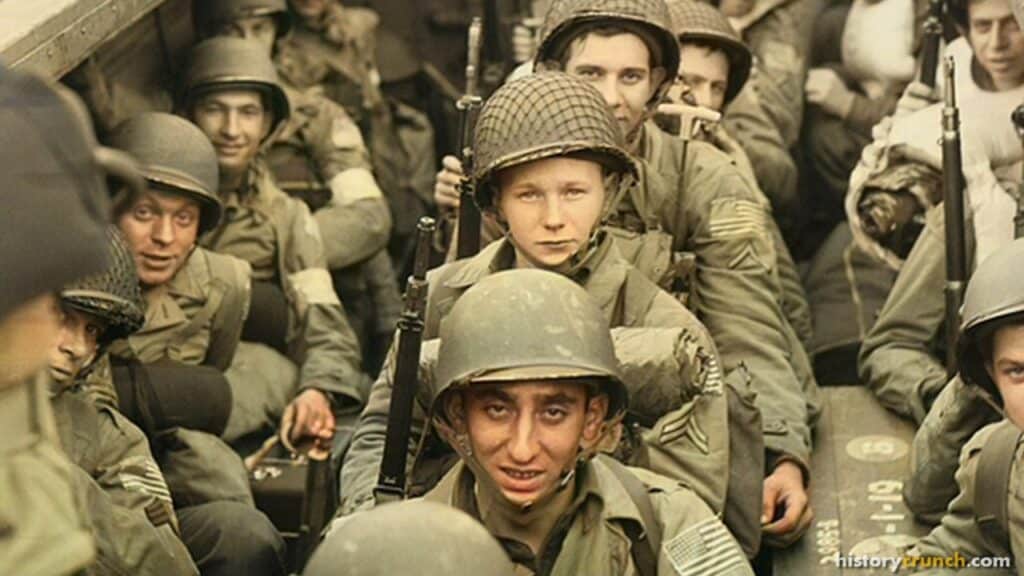
 FactsthatCrunch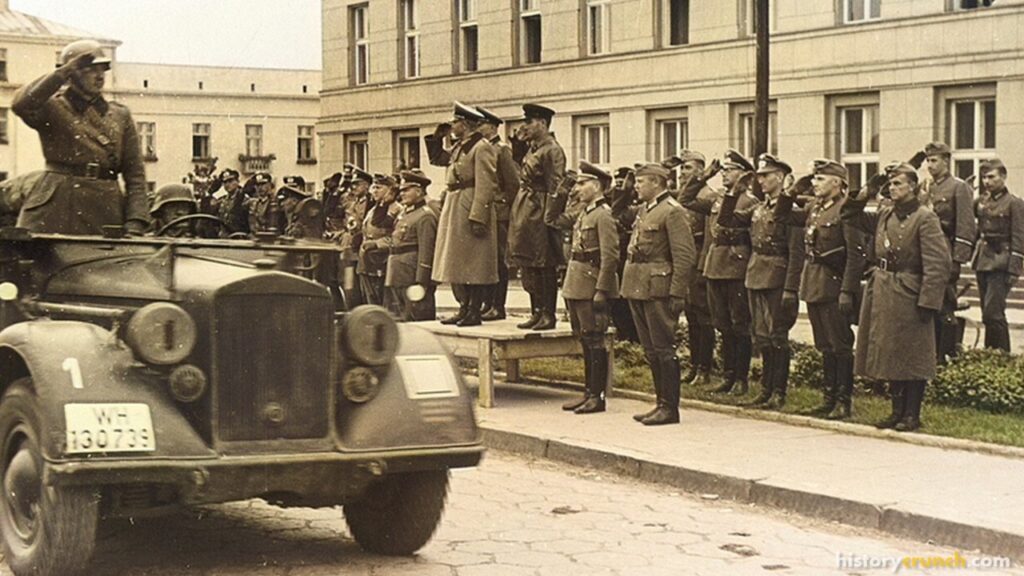
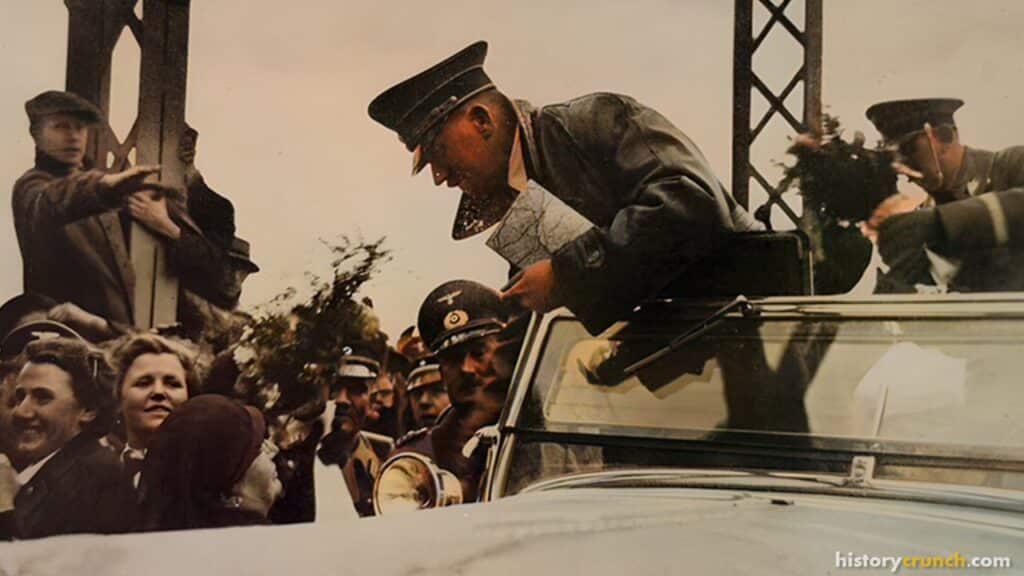
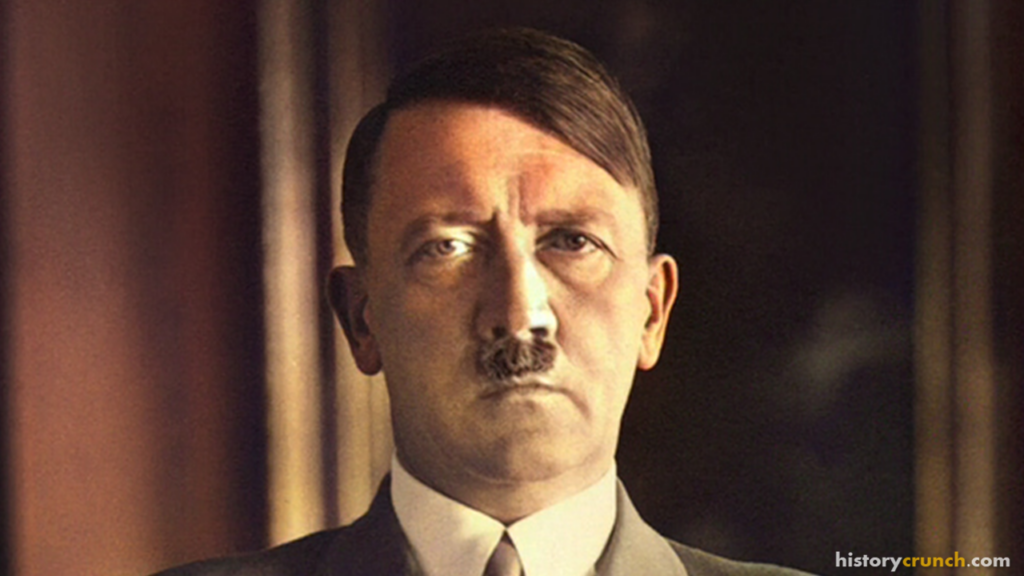
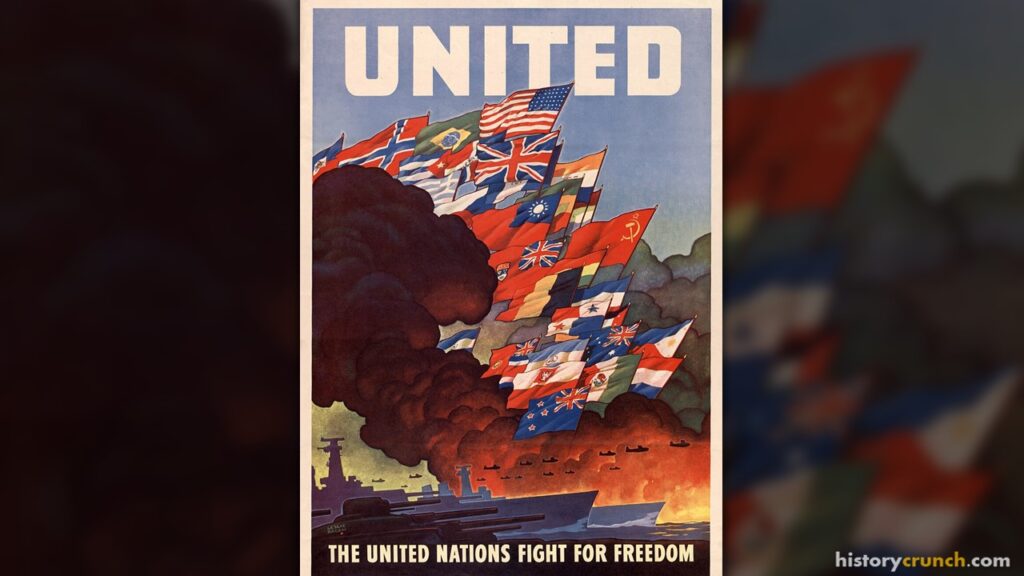
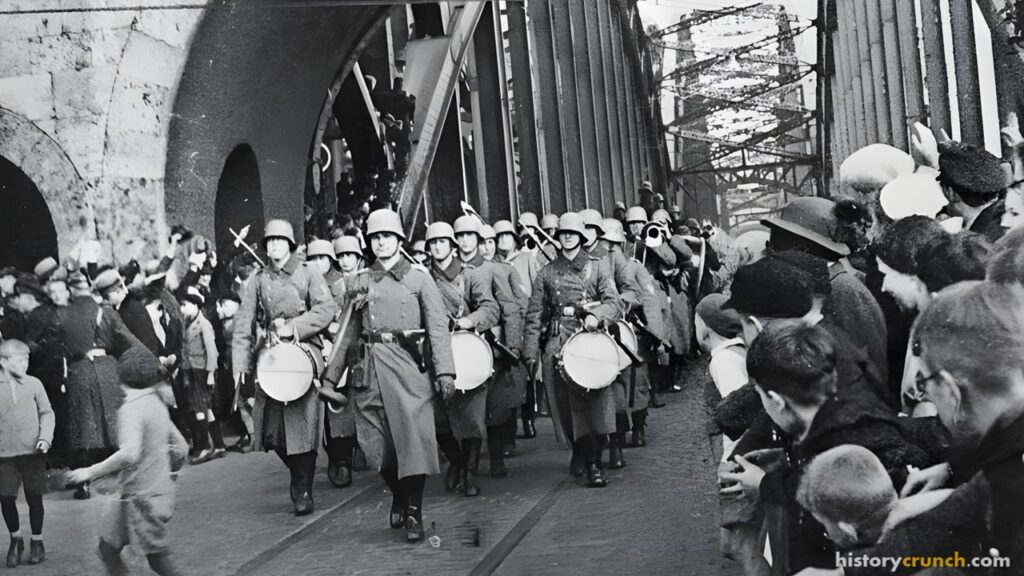
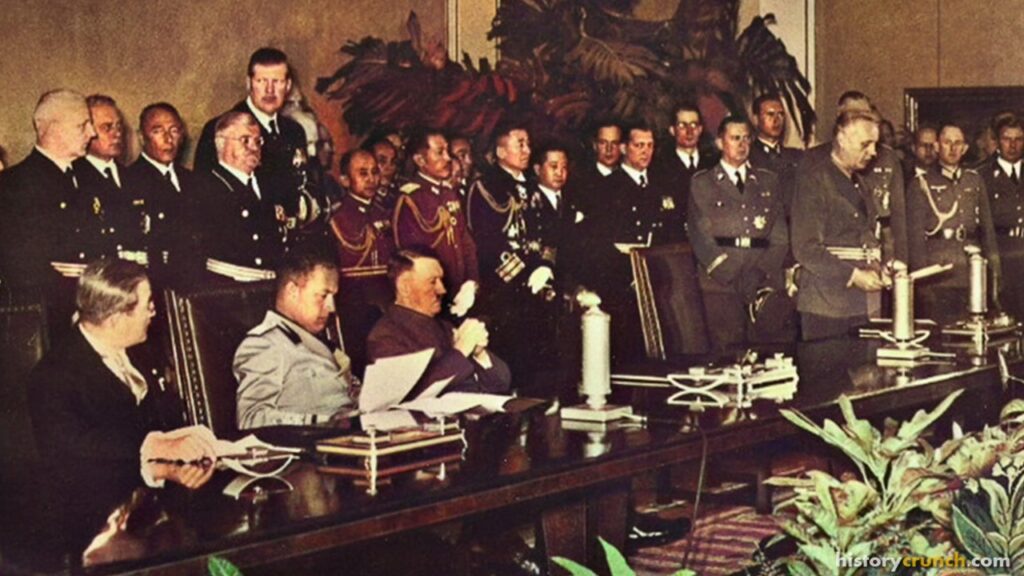 Black & whiteColour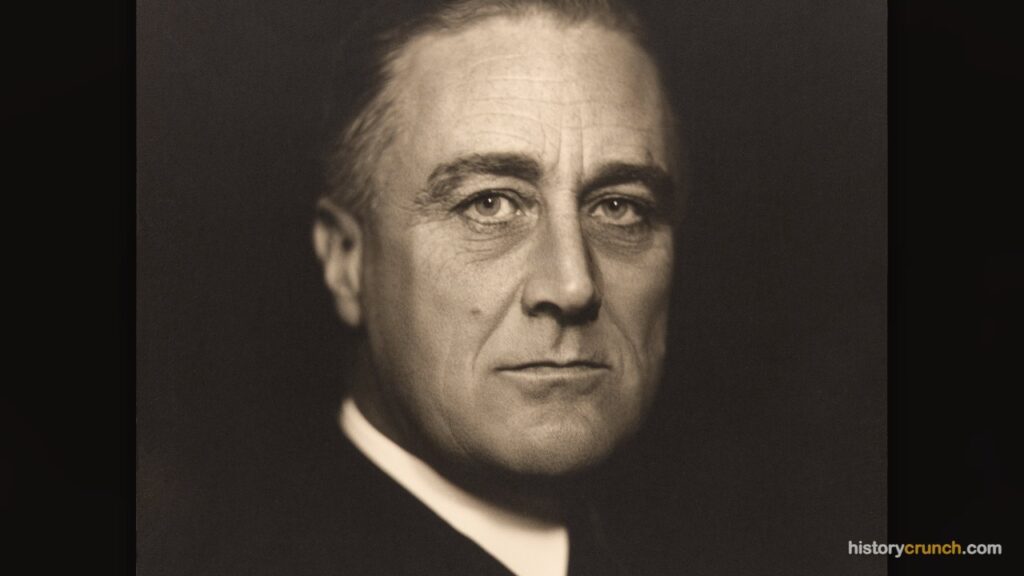
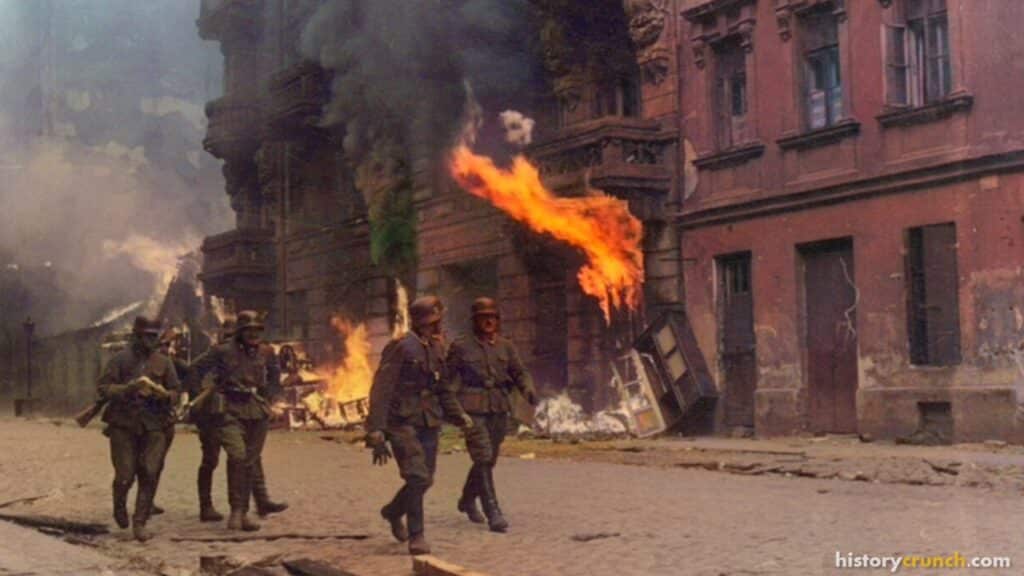
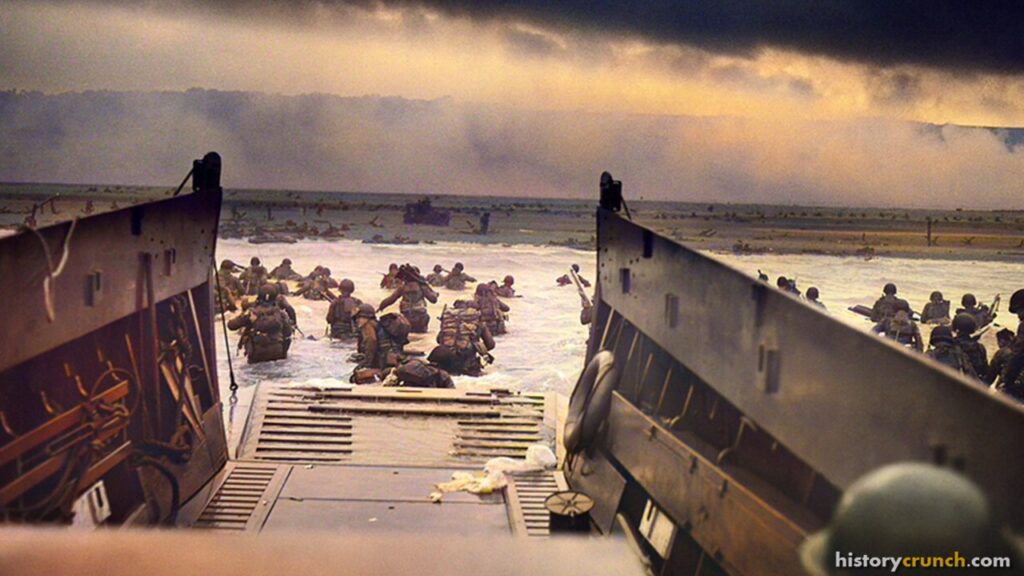 Black & whiteColour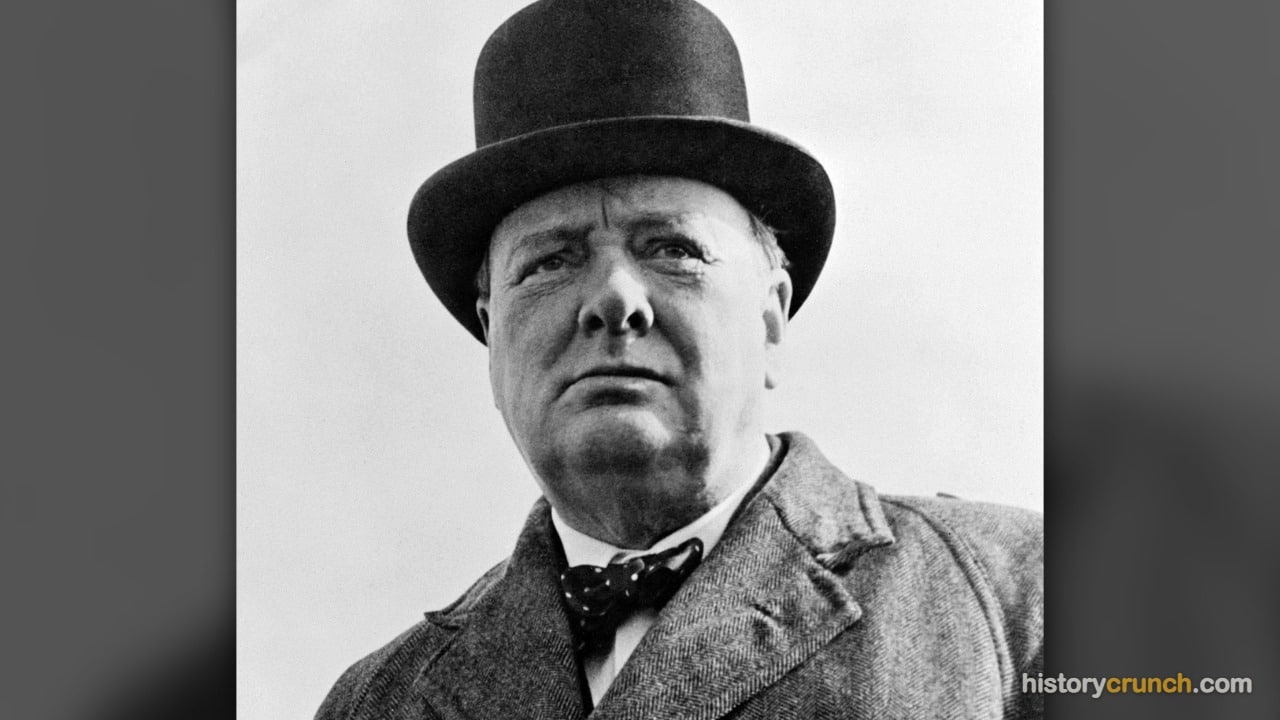
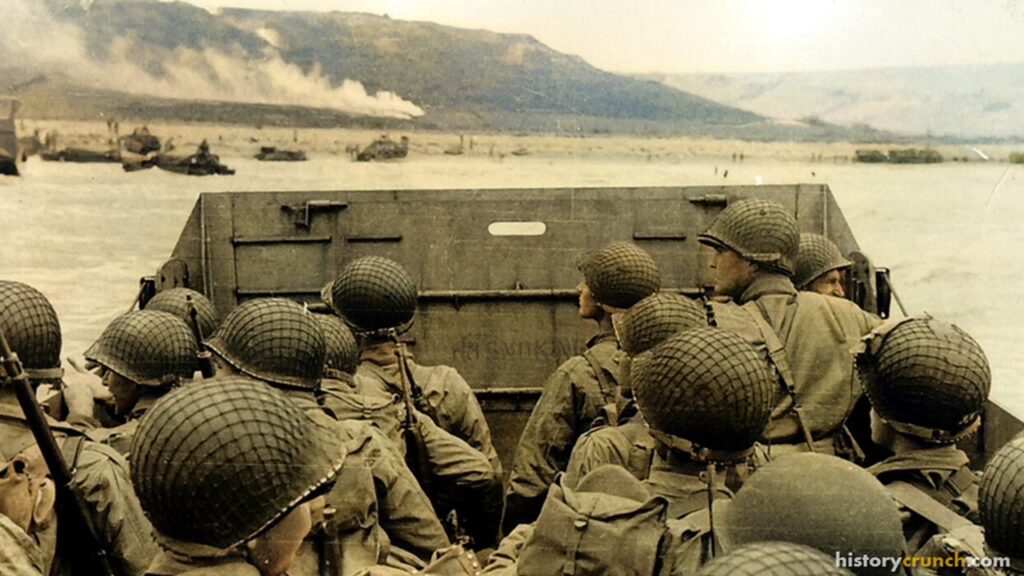
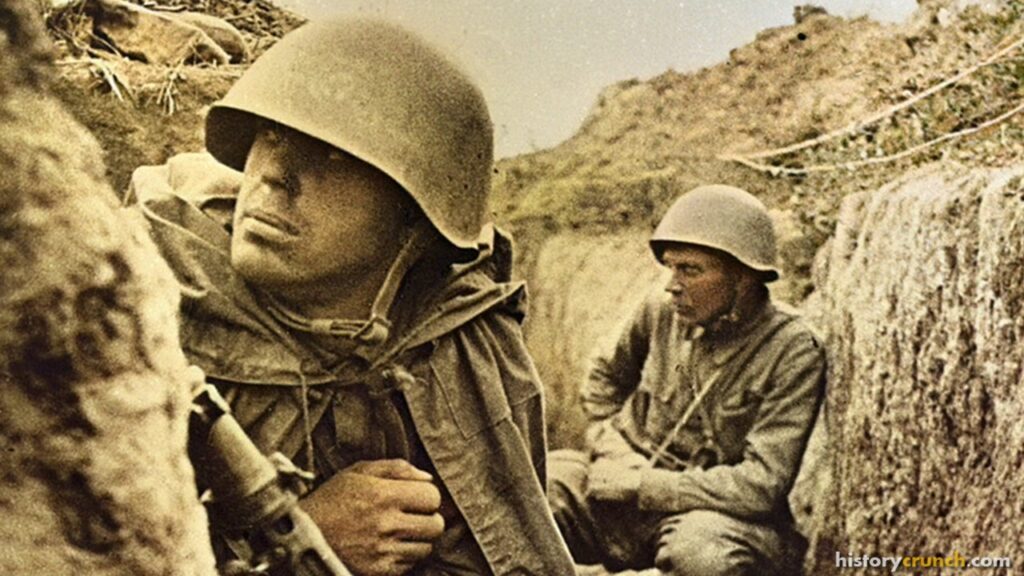
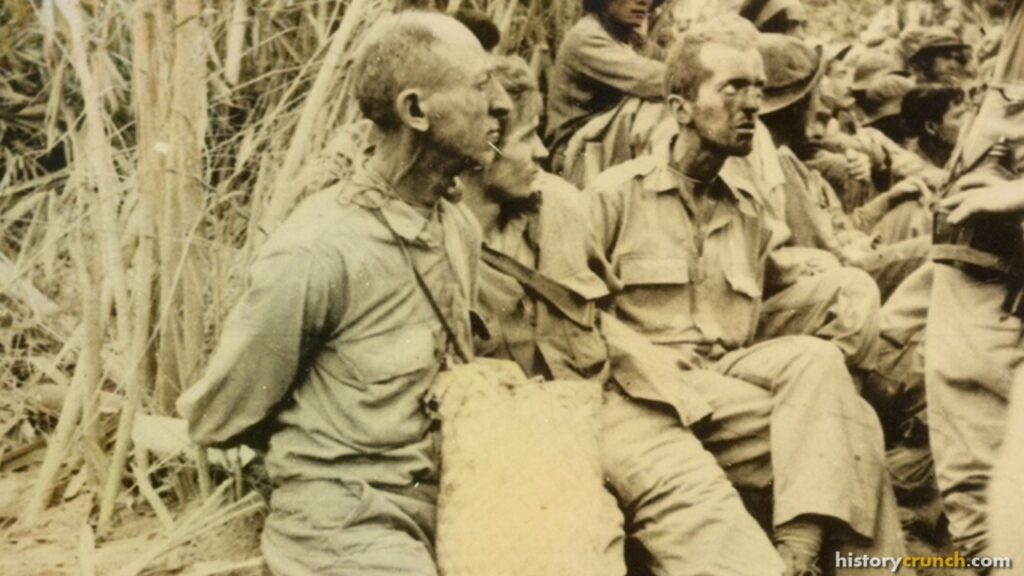
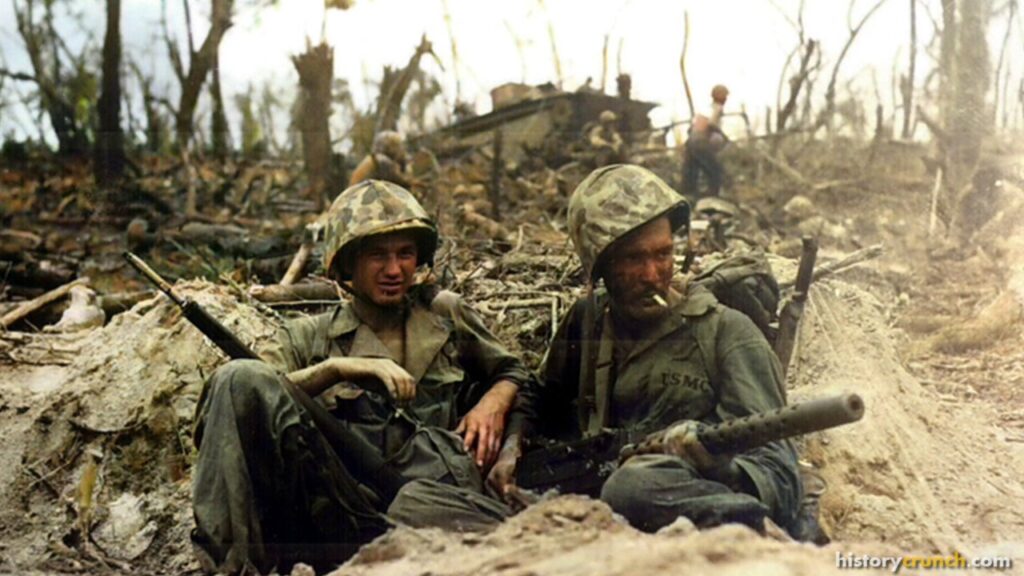
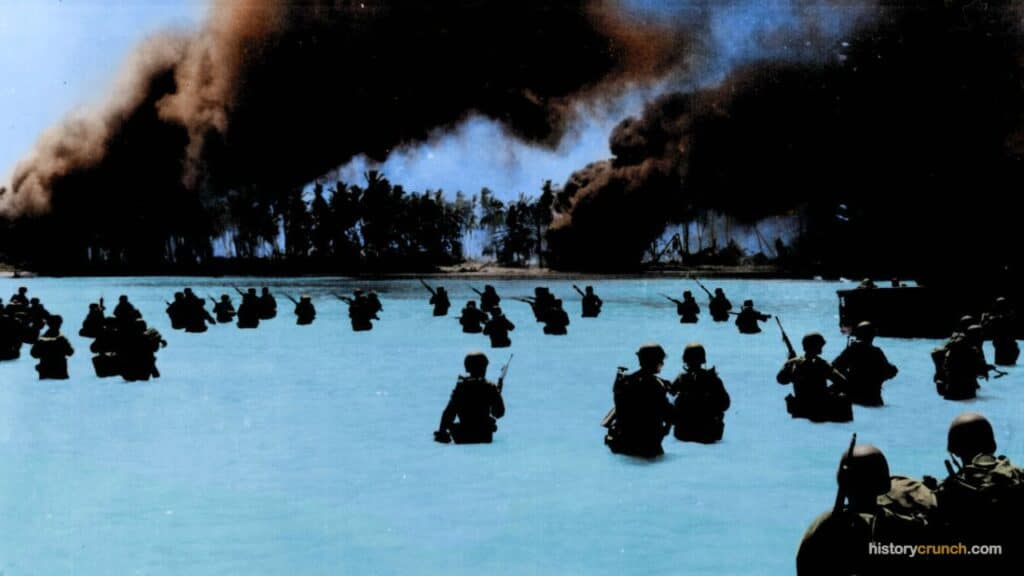
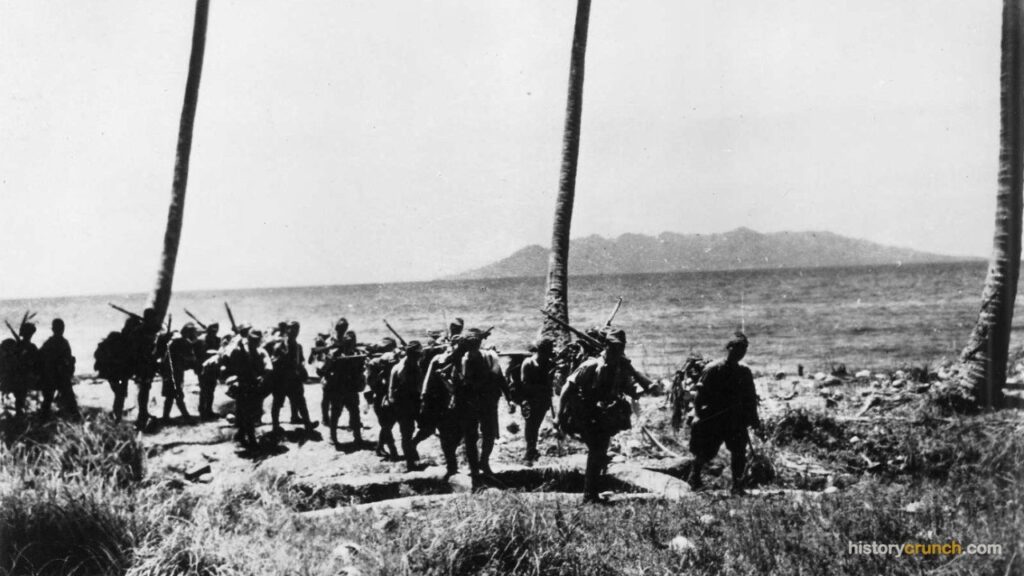
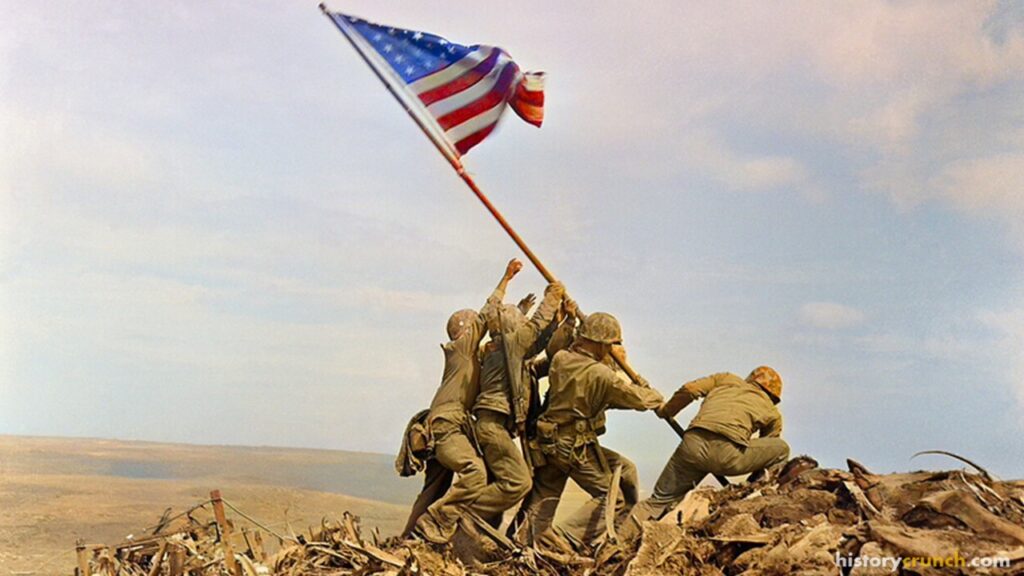
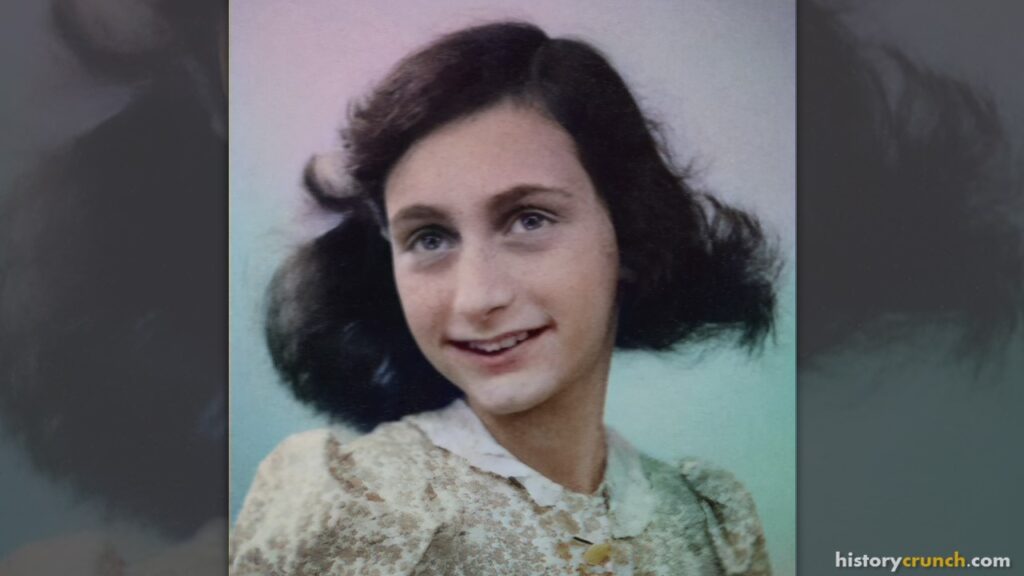
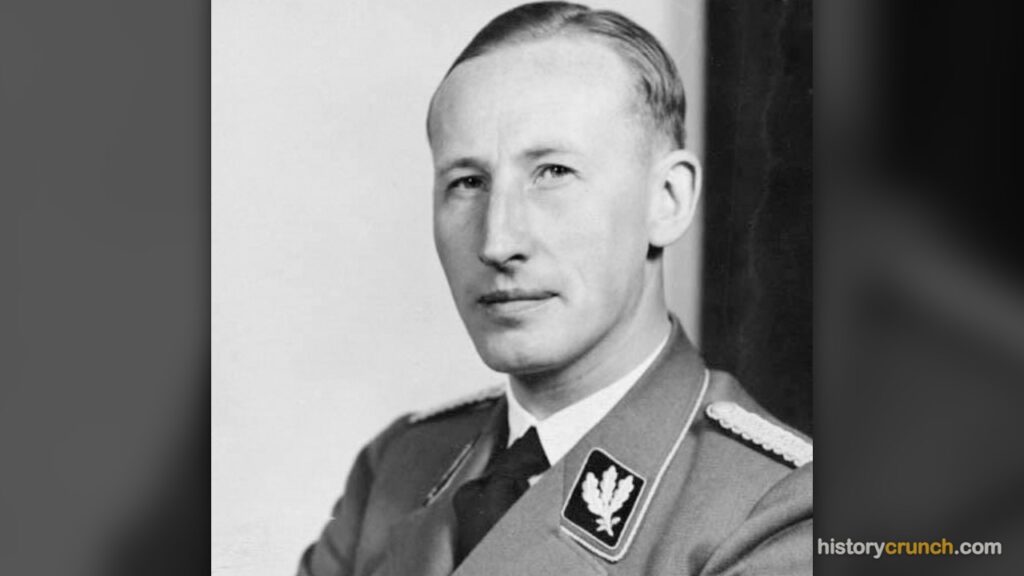 Evidence Photo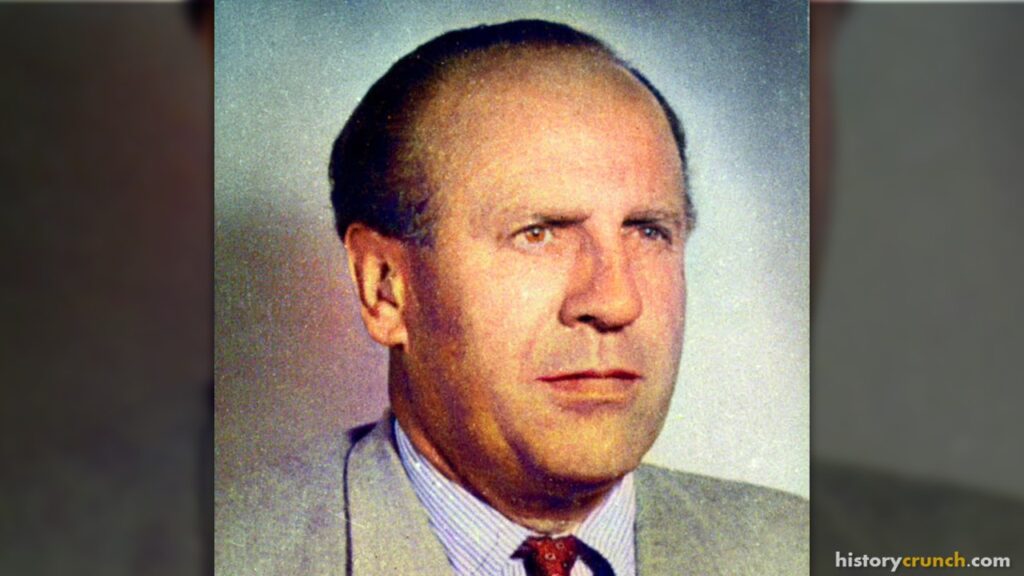
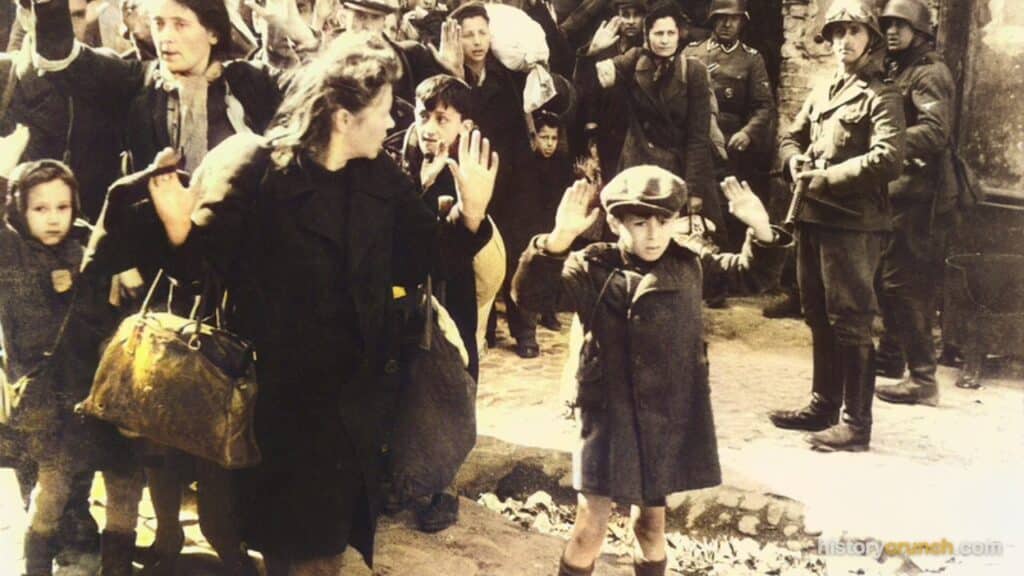
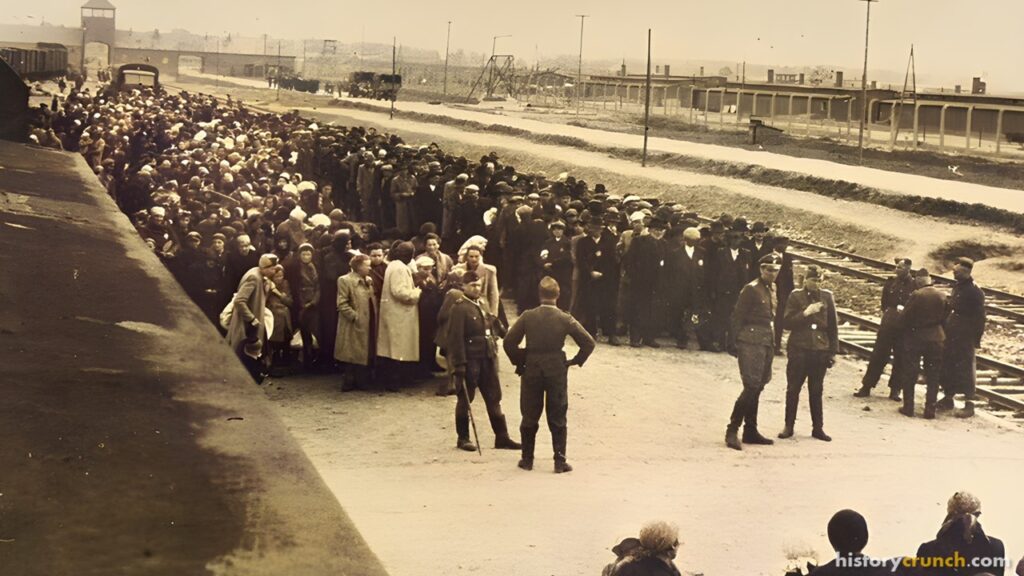
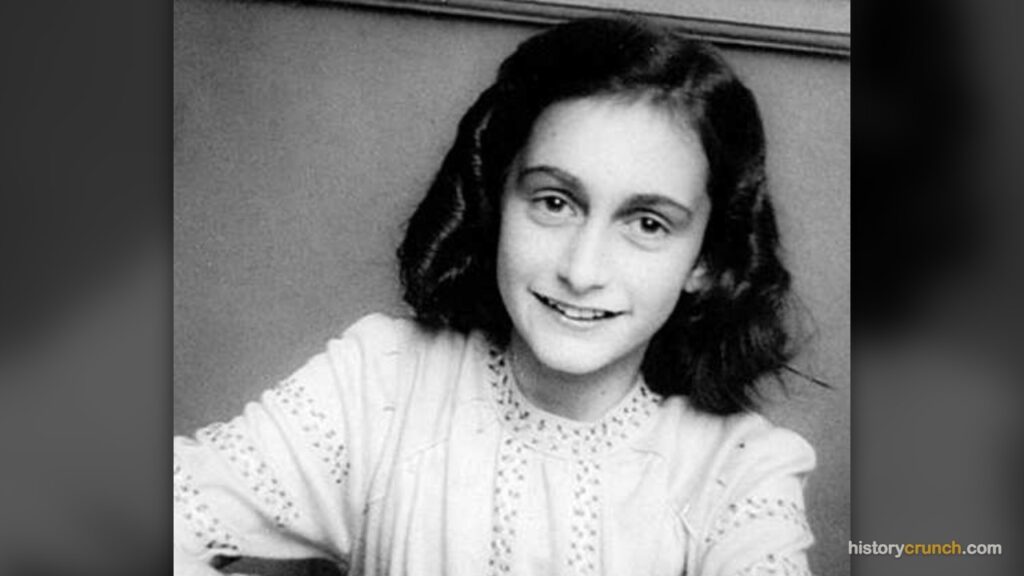
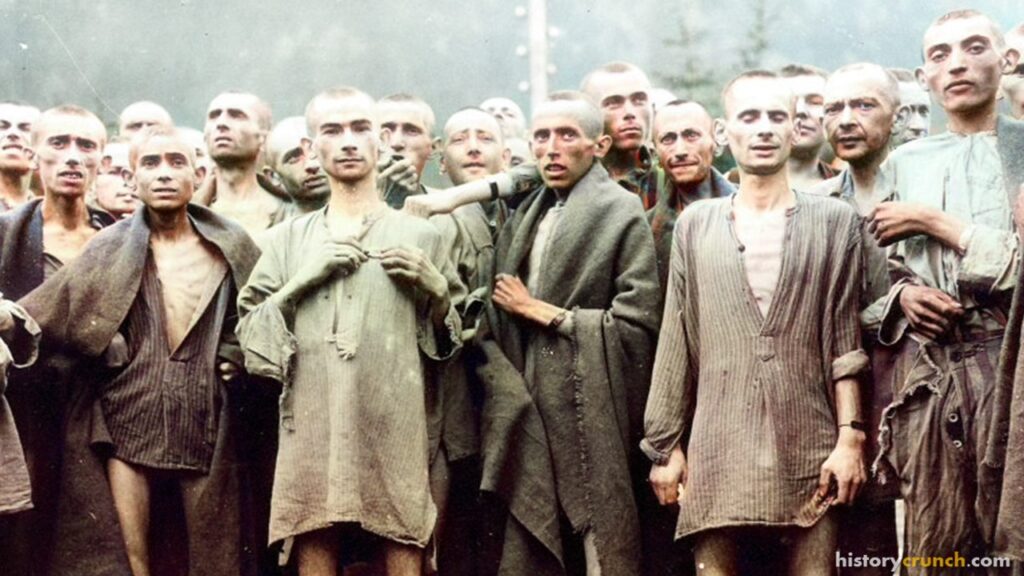
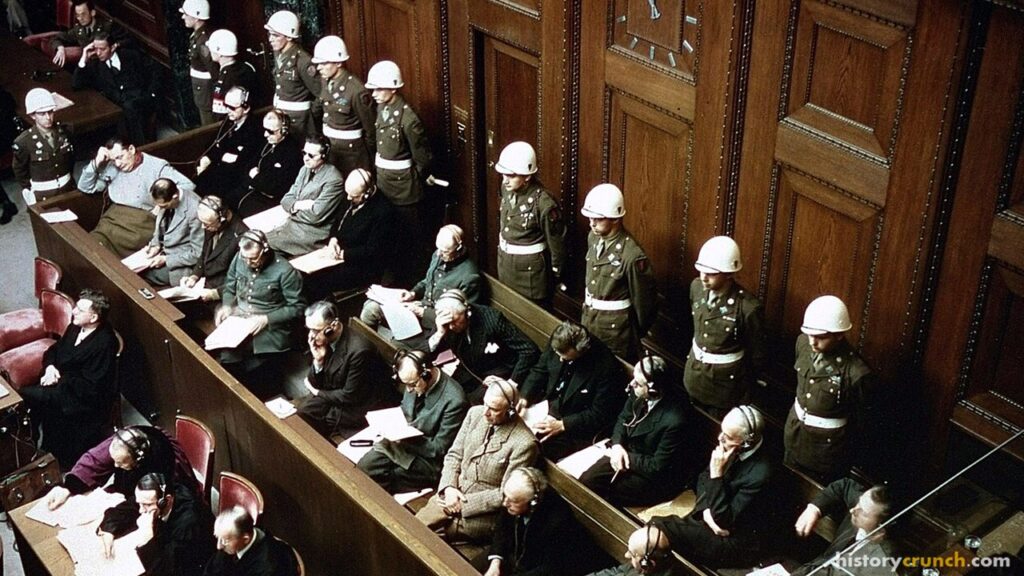
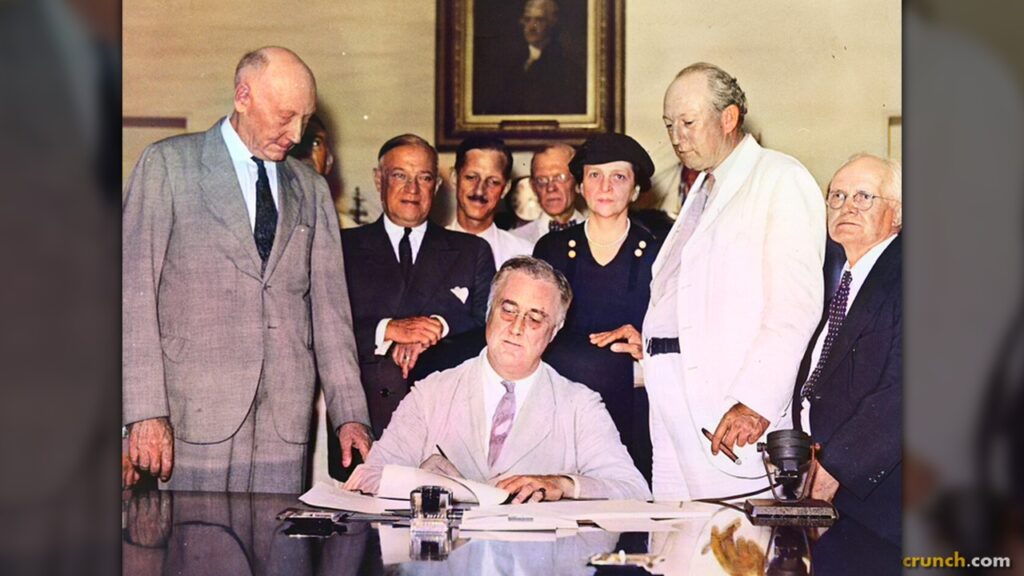
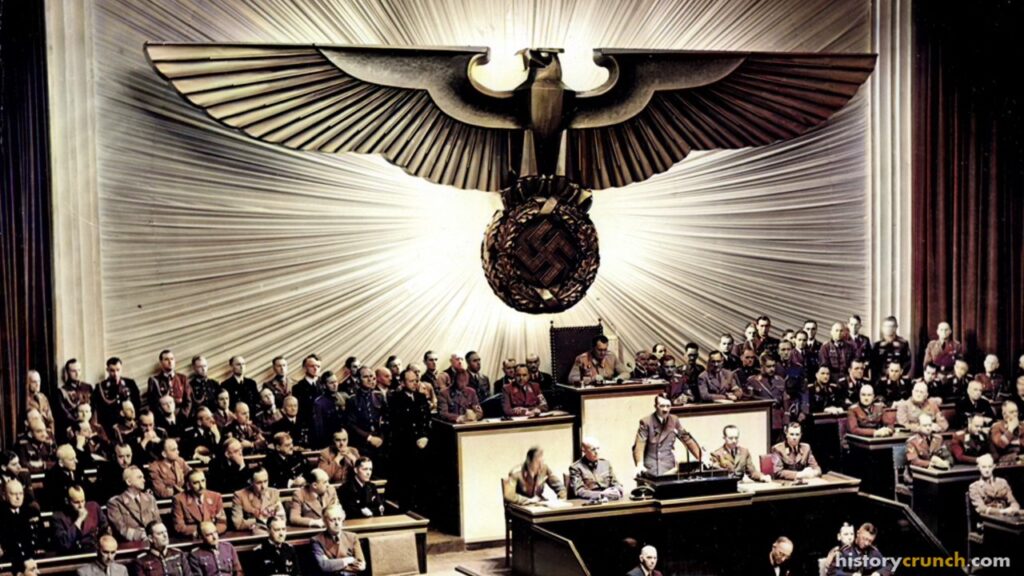
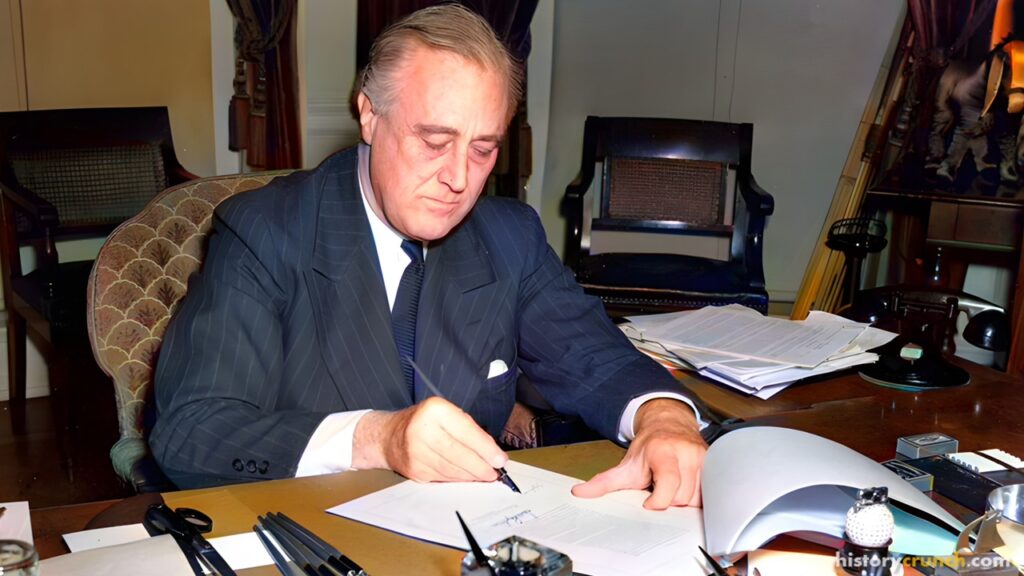
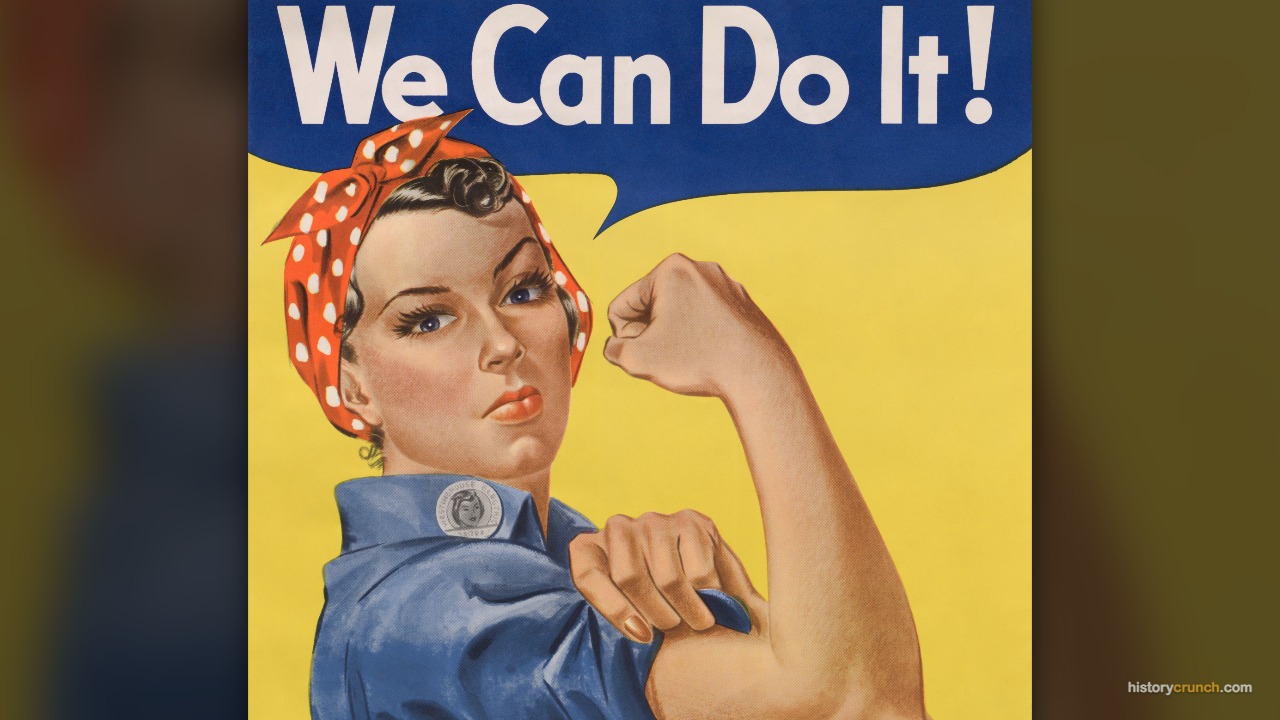
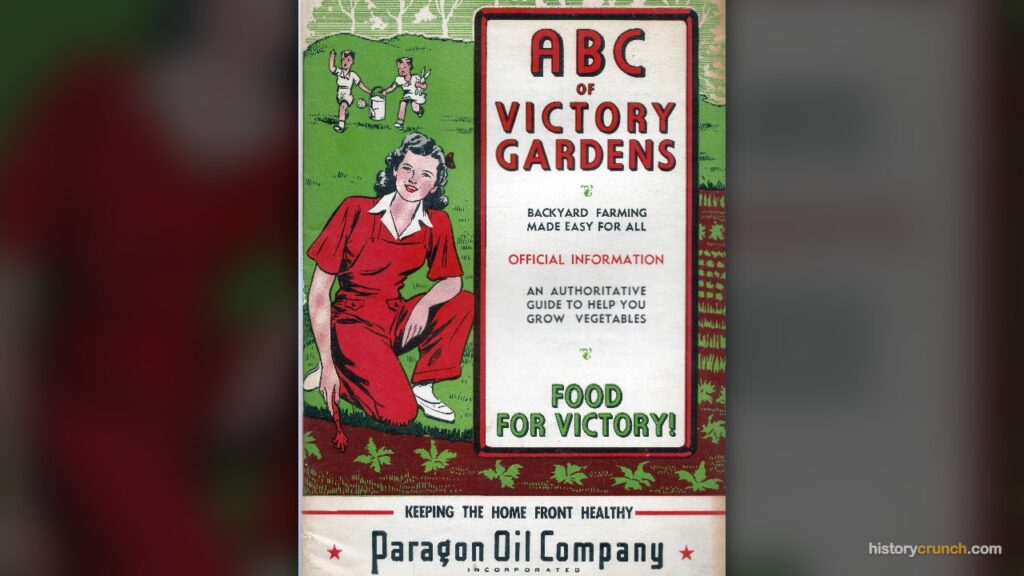
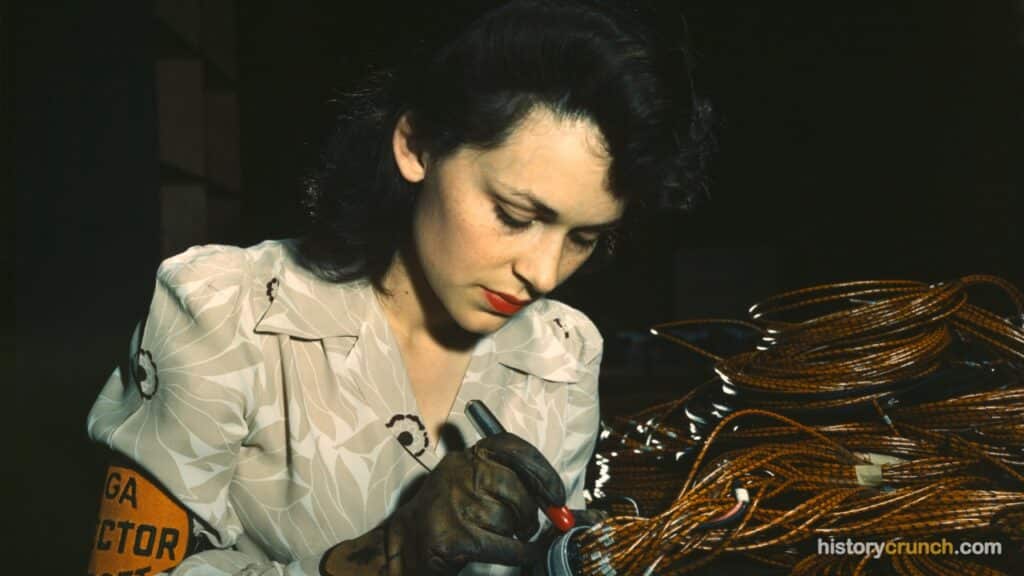
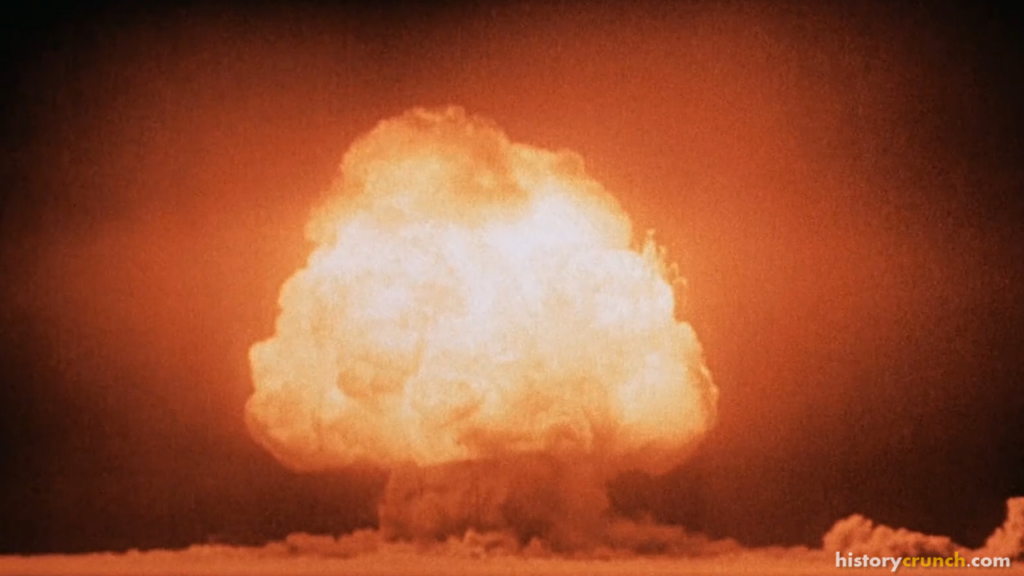
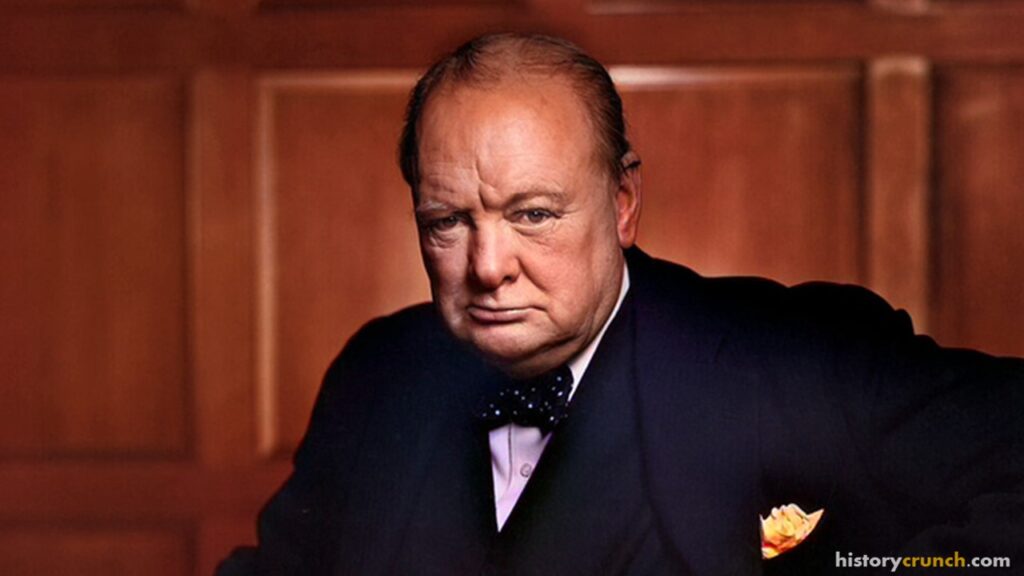
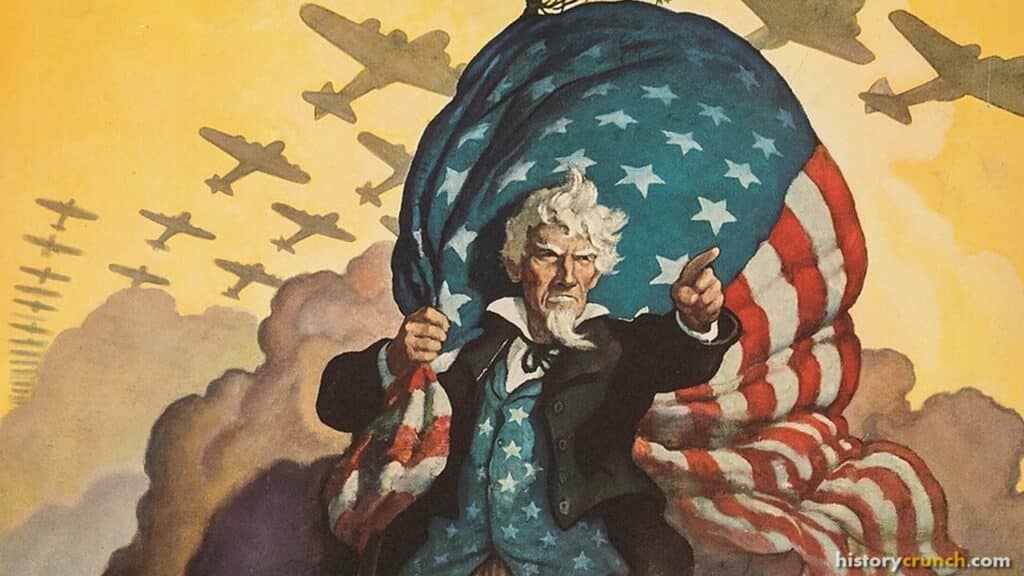 Evidence Photo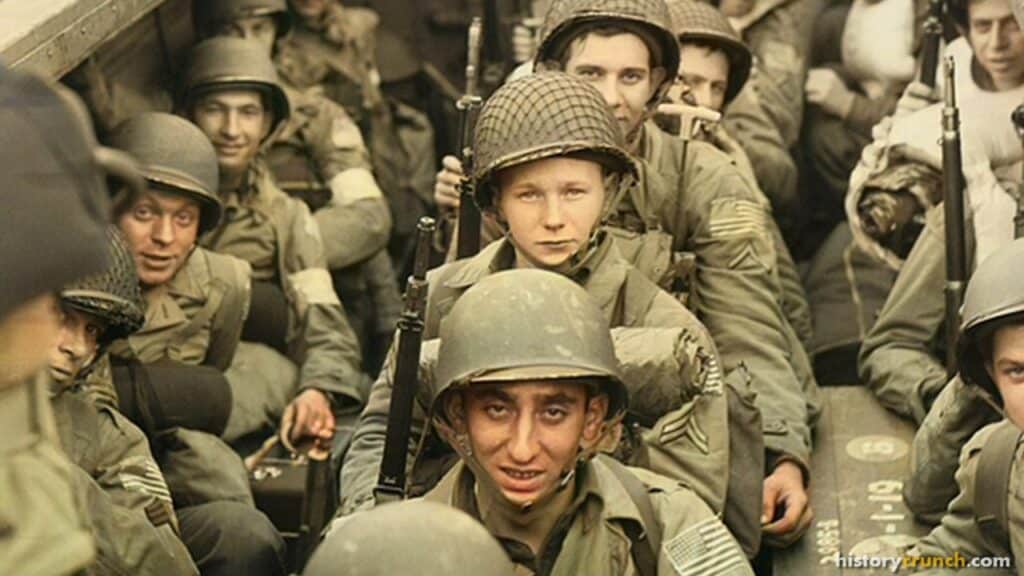
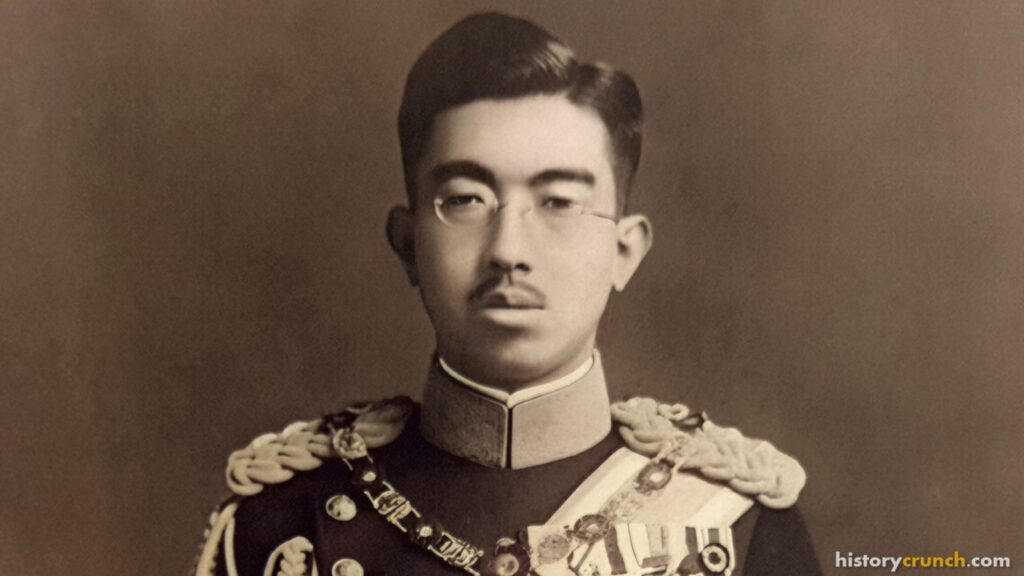
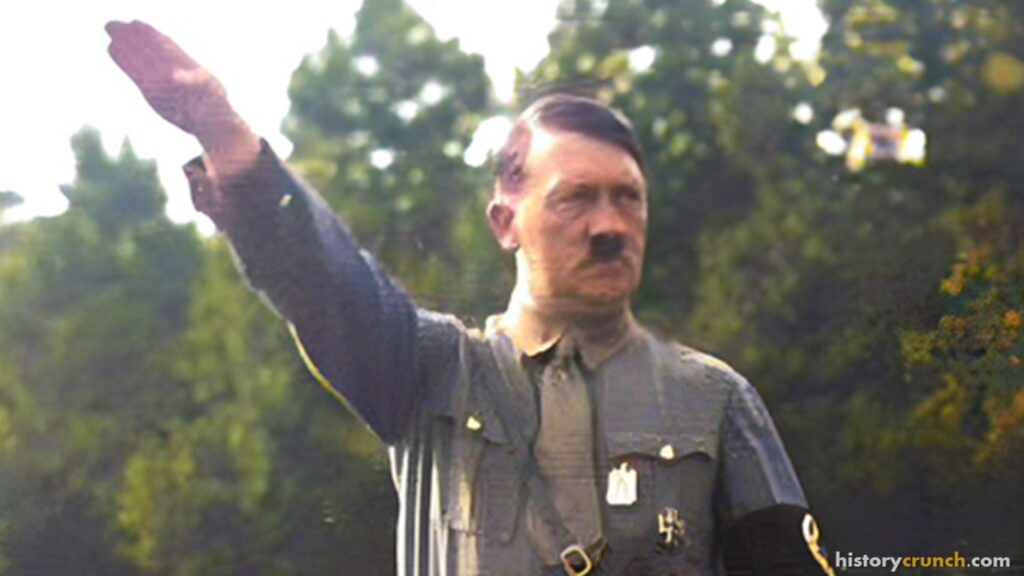 Evidence Photo