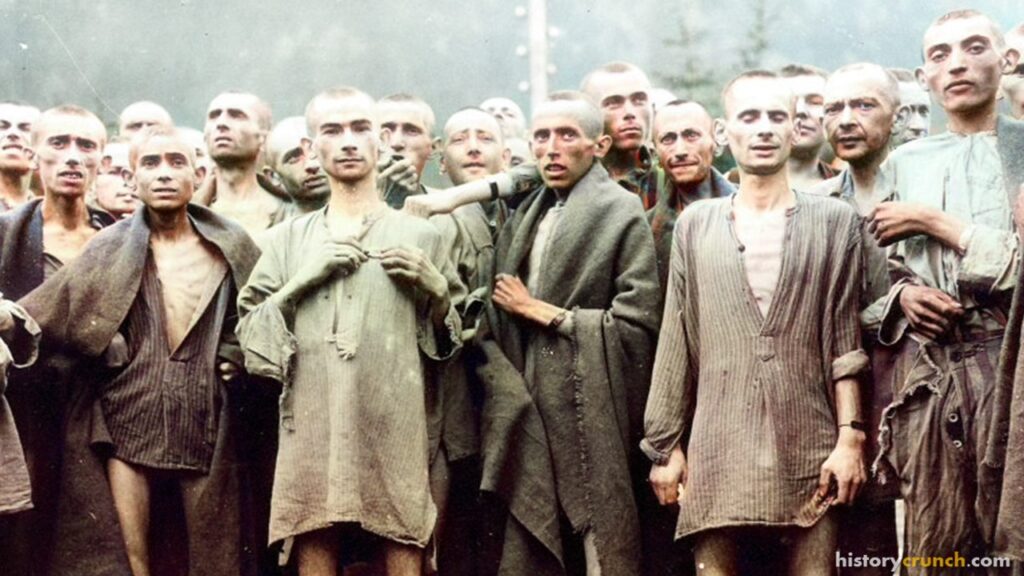
The Holocaust was a state-organized campaign in which Nazi Germany targeted Jewish people and others for persecution, forced labor, and mass murder. Understanding it requires knowing how the policy developed, who carried it out, and what life looked like for the people it affected. These cards cover the key facts across all of those areas in one place. For the full picture, see our World War II hub. Related: Causes of World War II and European Theater of World War II.
What Was the Holocaust?
Nazi Germany's persecution of Jewish people did not happen all at once. It built through years of laws, policies, and eventually organized violence carried out across much of Europe. Understanding this progression shows that the Holocaust was a deliberate, step-by-step process, not a sudden event.
No published cards yet for “The Holocaust”. Cards stay drafts until you publish them in the Card Library.
Nazi Persecution Before the War
Before the first shot of World War II was fired, the Nazi government had already stripped Jewish people in Germany of their rights, their jobs, and their property. These years of legal persecution prepared the conditions that made later violence possible. The policies passed during this period show how systematic discrimination was built into German law and daily life.
 FactsthatCrunchFactsthatCrunch
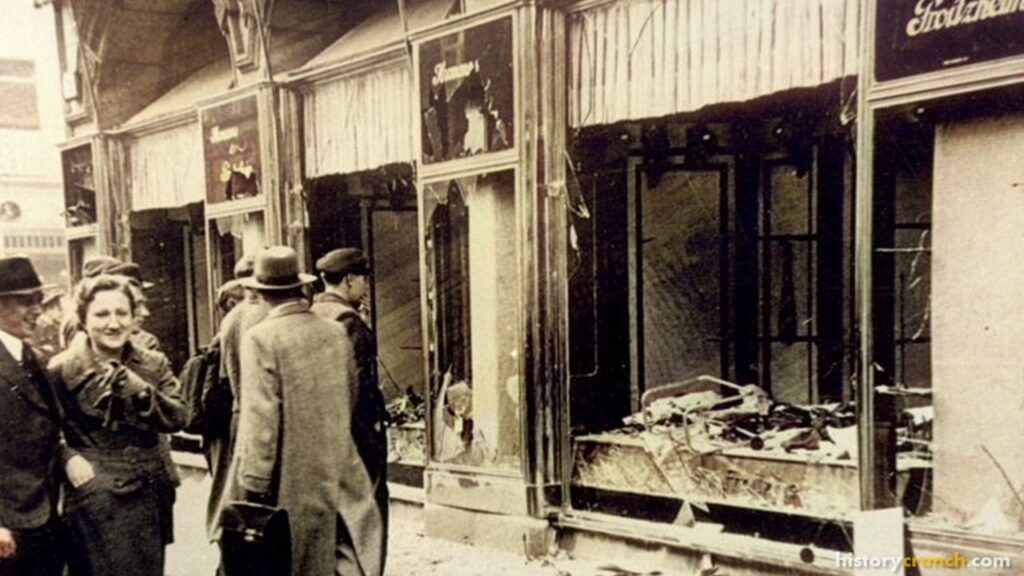
During and after Kristallnacht on the 9th and 10th of November, 1938, around 30,000 Jewish men were arrested and sent to the concentration camps at Dachau, Buchenwald, and Sachsenhausen.
At least 91 Jews were killed during the violence itself, but historians now count hundreds more deaths from beatings, illness, and suicide inside the camps. At Dachau alone, roughly 10,911 men arrived after the pogrom, with nearly 9,845 sent to Buchenwald and an estimated 6,000 to Sachsenhausen. Most surviving prisoners were released after weeks or months, but the mass arrests marked the first time the Nazi state used concentration camps to hold tens of thousands of people for simply being Jewish.
 FactsthatCrunch
Tap each impact to read what it led to.
Types of Camps
The Nazi camp system was not a single kind of place. Germany and its allies built camps that served different purposes, including forced labor, detention, and organized mass killing. Knowing the differences between camp types clarifies how the overall system worked and what prisoners in each faced.
No published cards yet for “The Holocaust”. Cards stay drafts until you publish them in the Card Library.
Einsatzgruppen
Mobile killing units called Einsatzgruppen carried out mass shootings across Eastern Europe, particularly after Germany invaded the Soviet Union in June of 1941. These units killed hundreds of thousands of people before the large extermination camps were fully operational. Their actions show that the Holocaust was not carried out only in fixed facilities but also by troops moving through occupied territory.
No published cards yet for “The Holocaust”. Cards stay drafts until you publish them in the Card Library.
Warsaw Ghetto Uprising
In April of 1943, Jewish residents of the Warsaw Ghetto organized armed resistance against Nazi forces sent to deport them. It was not a military victory, but it was a significant act of collective refusal under conditions designed to make resistance nearly impossible. The uprising is a central event in the history of Jewish response to Nazi persecution.
No published cards yet for “The Holocaust”. Cards stay drafts until you publish them in the Card Library.
Voices of the Holocaust
Survivors, witnesses, and victims left behind diaries, testimony, and recorded accounts that document what the Holocaust meant to the people who lived through it. These voices provide detail and perspective that statistics and policy records alone cannot give. They are among the most direct sources historians and educators use to understand individual experience during this period.
No published cards yet for “The Holocaust”. Cards stay drafts until you publish them in the Card Library.
Liberation of the Camps
As Allied forces advanced into German-held territory in 1944 and 1945, soldiers encountered the camps and documented what they found. What the liberating troops saw, recorded, and reported became some of the earliest evidence of the Holocaust presented to the outside world. The liberation period also raised lasting questions about how much people beyond the camps had known or could have known.
No published cards yet for “The Holocaust”. Cards stay drafts until you publish them in the Card Library.
Death Toll
Counting the full number of people killed in the Holocaust is an ongoing task for historians, because records were incomplete, destroyed, or never kept in the first place. The numbers that researchers have established cover not only Jewish victims but also Roma, disabled people, political prisoners, and others targeted by Nazi policy. Each figure represents a distinct group that faced persecution for a specific reason under Nazi rule.