Causes of World War II Facts

Quick facts on the key causes of World War II, from the Treaty of Versailles to appeasement, for fast study and review.

World War II did not start overnight. A chain of political mistakes, economic collapse, and weak responses to rising threats set the stage for the deadliest conflict in history. These cards break down the key causes so you can study fast and keep the big picture clear. Related: Political Systems in World War II and Military Tactics & Strategy in World War II.

Treaty of Versailles

The peace deal that ended World War I was supposed to prevent another massive war, but the terms it forced on Germany created deep anger that lasted for decades. That resentment gave ambitious leaders a ready audience and a long list of grievances to exploit.

Causes of World War IIEyewitness
Facts that CrunchFactsthatCrunch
Eyewitness account

I looked around that hall and saw the German delegates sign their names, and I thought of what this moment would mean for their country. The pen scratched across the paper like a sentence being passed. The terms were harsh, and I could not believe any nation could bear such a weight for long. I feared that day would plant the seeds of another war.

Harold Nicolson, British diplomat and writer, present at the Paris Peace Conference
Context

Nicolson recorded his impressions of the signing ceremony at the Palace of Versailles on June 28th, 1919, in his diary and later in his memoir 'Peacemaking 1919'.

Source: UNESCO© factsthatcrunch.comMore Causes of World War II Facts →
Causes of World War IIDid You Know
Facts that CrunchFactsthatCrunch
Surprising Fact

Germany was not allowed to negotiate any part of the Treaty of Versailles and was simply handed the finished document to sign.

The Allied powers wrote the treaty's terms among themselves in Paris and gave Germany only three weeks to respond in writing. German leaders called the treaty a 'diktat,' meaning a dictated peace, because they had no seat at the table. This humiliation angered many Germans and made it easier for later leaders to build popular support by promising to tear up the agreement.
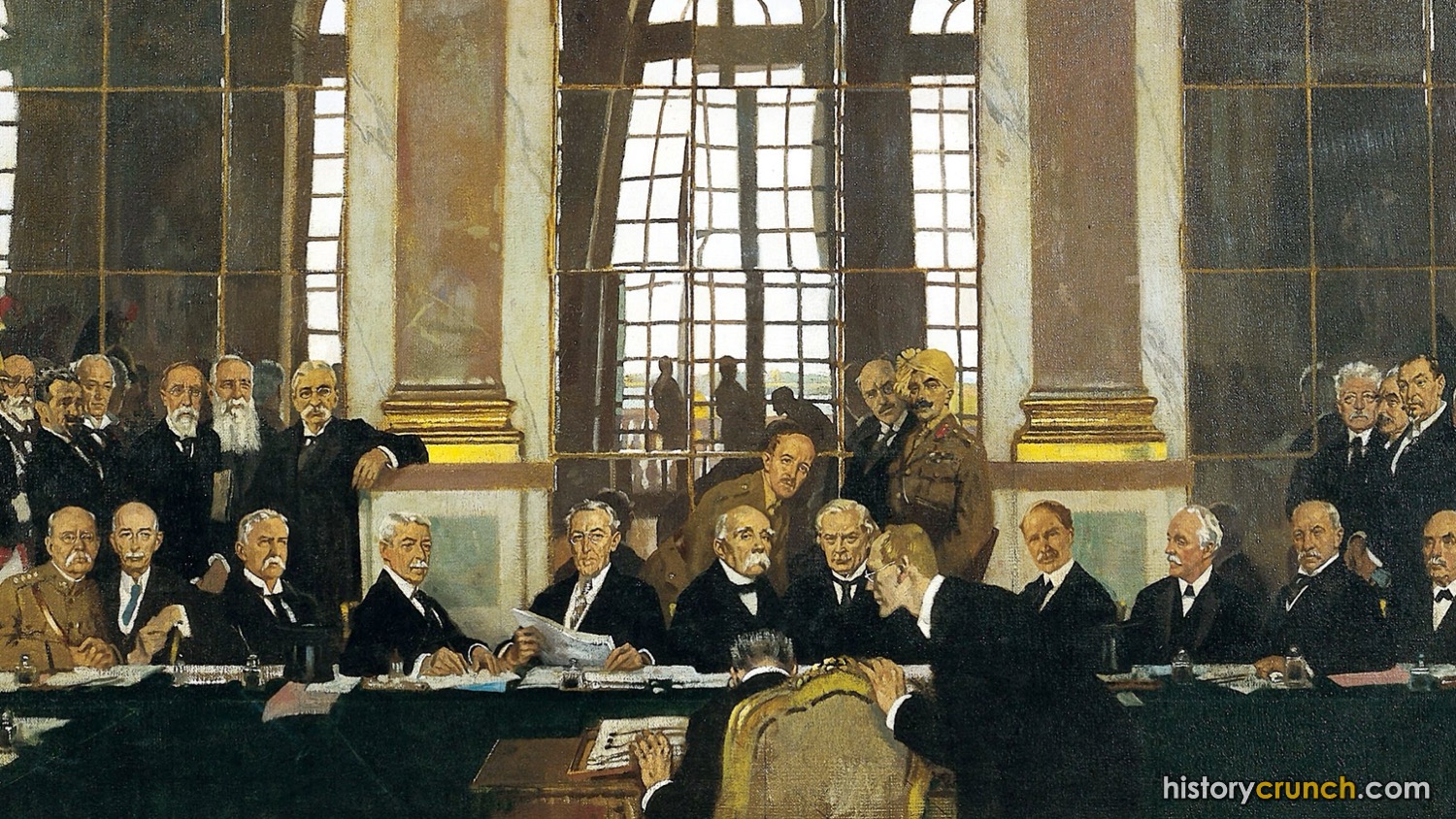
'The Signing of Peace in the Hall of Mirrors' by William Orpen (1919)
Source: Smithsonian Institution© factsthatcrunch.comMore Causes of World War II Facts →
Causes of World War IIColorizedInteractive
Facts that CrunchFactsthatCrunch
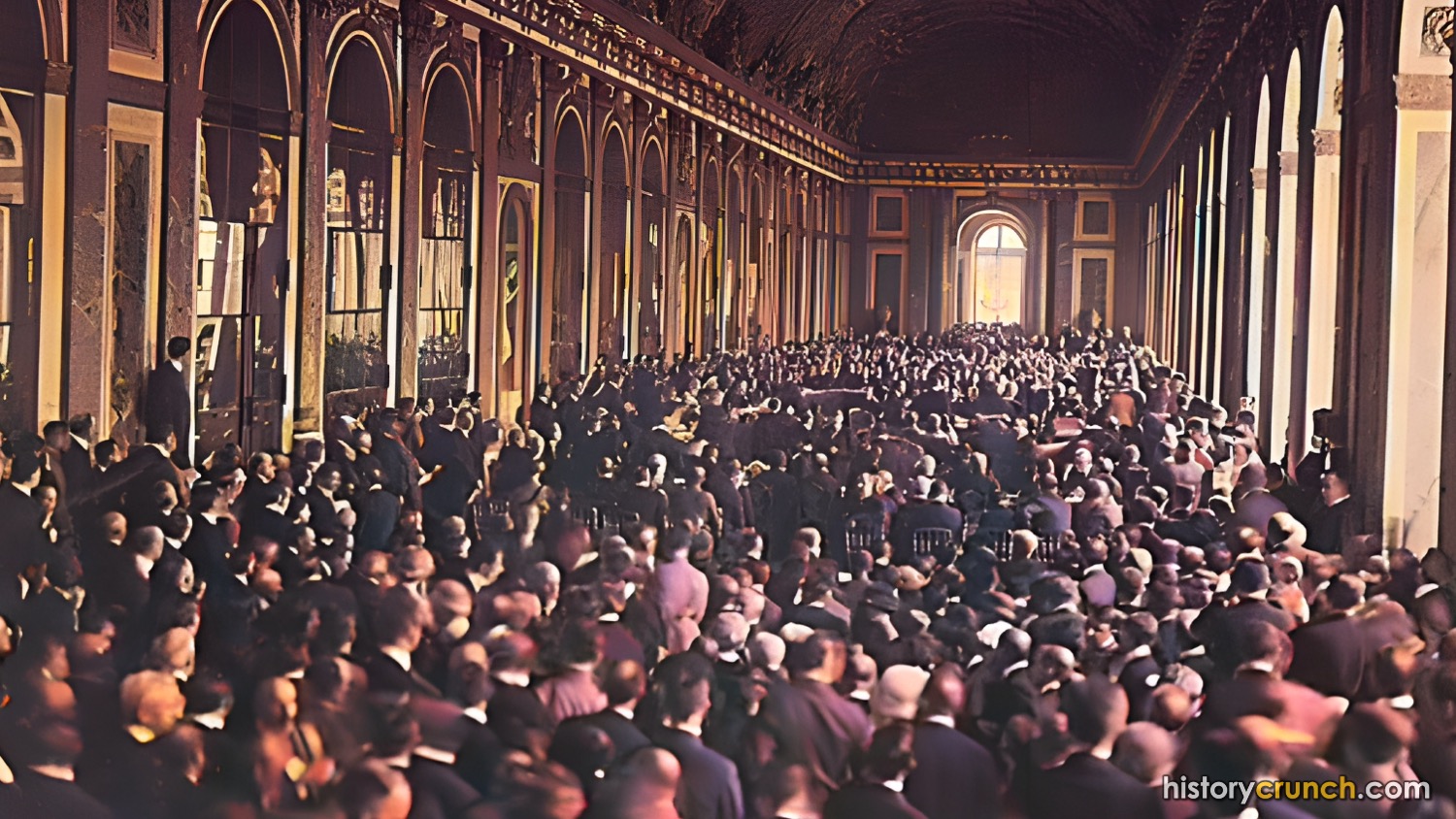
Signing of the Treaty of Versailles in the Hall of Mirrors. (Colorized by historycrunch.com)
Black & whiteColour
Signing of the Treaty of Versailles in the Hall of Mirrors. (Colorized by historycrunch.com)
Colorized by: historycrunch.com© factsthatcrunch.comMore Causes of World War II Facts →
Causes of World War IICause & Effect
Facts that CrunchFactsthatCrunch
Cause

The Treaty of Versailles forced Germany to accept full blame for World War I under Article 231, known as the 'War Guilt Clause.'

Effects
German voters grew angry and lost trust in the democratic Weimar Republic government.
Political extremists, including Adolf Hitler, used resentment over the clause to build support.
Hitler was appointed Chancellor of Germany on January 30th, 1933, partly by promising to undo the treaty.
The Nazi government used the War Guilt Clause as a rallying point to push for aggressive expansion.

Article 231 of the Treaty of Versailles placed sole blame for the war on Germany. This humiliation made many Germans ready to support leaders who promised to restore national pride.

Source: Library of Congress© factsthatcrunch.comMore Causes of World War II Facts →
Causes of World War IIDefinition
Facts that CrunchFactsthatCrunch
Appeasement
From Old French 'apaisier,' meaning to bring to peace

Appeasement is a foreign policy where a country gives concessions to an aggressive power in hopes of avoiding war. Leaders believed that meeting demands would satisfy the aggressor and keep the peace.

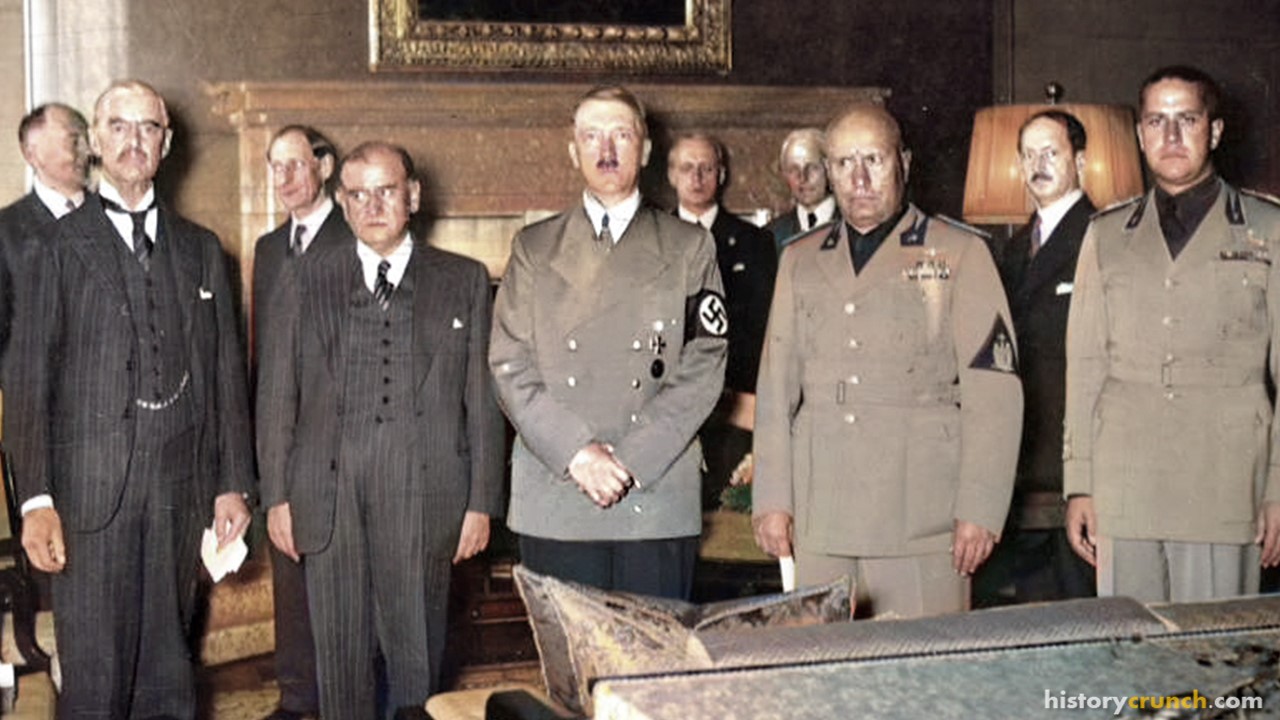
"When British Prime Minister Neville Chamberlain agreed at Munich on September 30th, 1938 to let Germany take the Sudetenland region of Czechoslovakia, he called it 'peace for our time,' but the policy of appeasement only encouraged Hitler to demand more territory."

Source: Smithsonian Institution© factsthatcrunch.comMore Causes of World War II Facts →
Causes of World War IIConnections
Facts that CrunchFactsthatCrunch
Treaty of Versailles
Weimar Republic Founded
The connection

Both events happened in 1919, and they shaped Germany's future together. The treaty placed heavy burdens on Germany just as the new Weimar Republic was trying to establish itself, making the young government deeply unpopular from the start.

The Weimar Republic was officially proclaimed on November 9th, 1918, and adopted its constitution on August 11th, 1919, the same year the treaty was signed, leaving its leaders to take the blame for accepting the peace terms.

Source: UNESCO© factsthatcrunch.comMore Causes of World War II Facts →
Causes of World War IIQuote
Facts that CrunchFactsthatCrunch

We will not accept a peace that turns Germany into a slave nation.

Adolf HitlerNazi Party leader and German chancellor, 1933, in public speeches after taking power
Why it matters

Hitler used this kind of language to build public anger over the Treaty of Versailles and to win support for tearing up its terms, which helped push Europe toward a second world war.
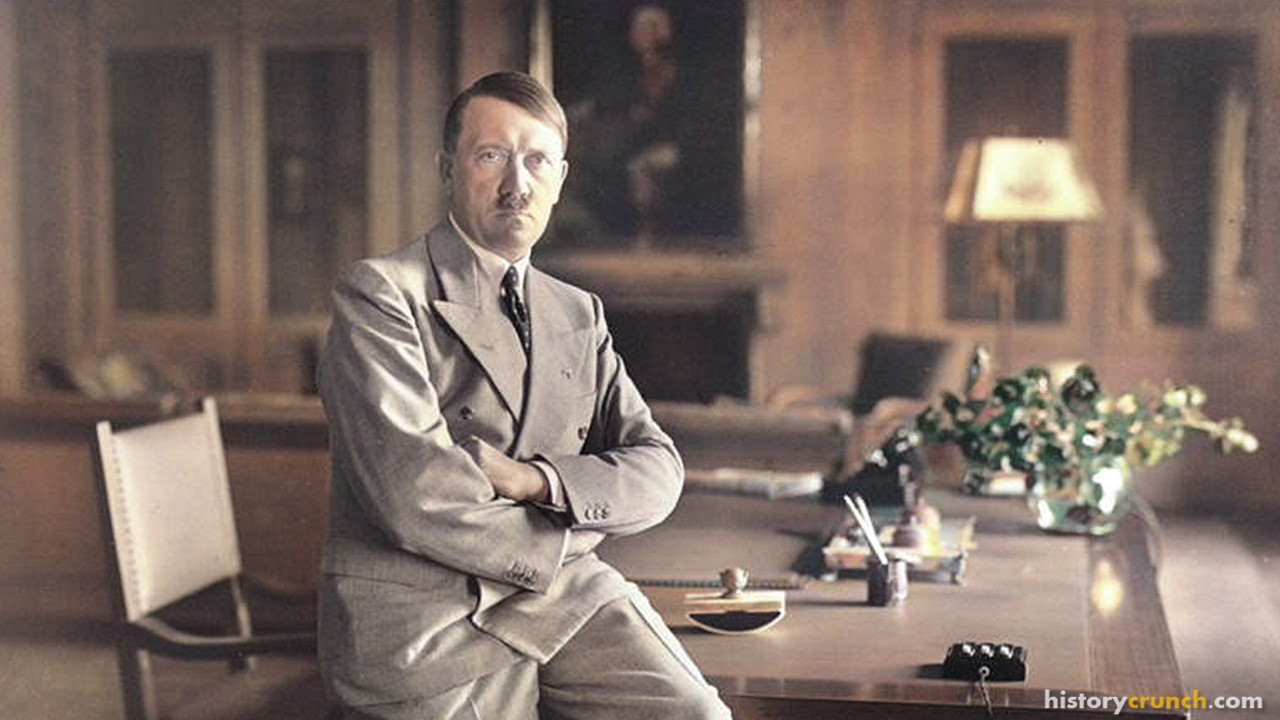
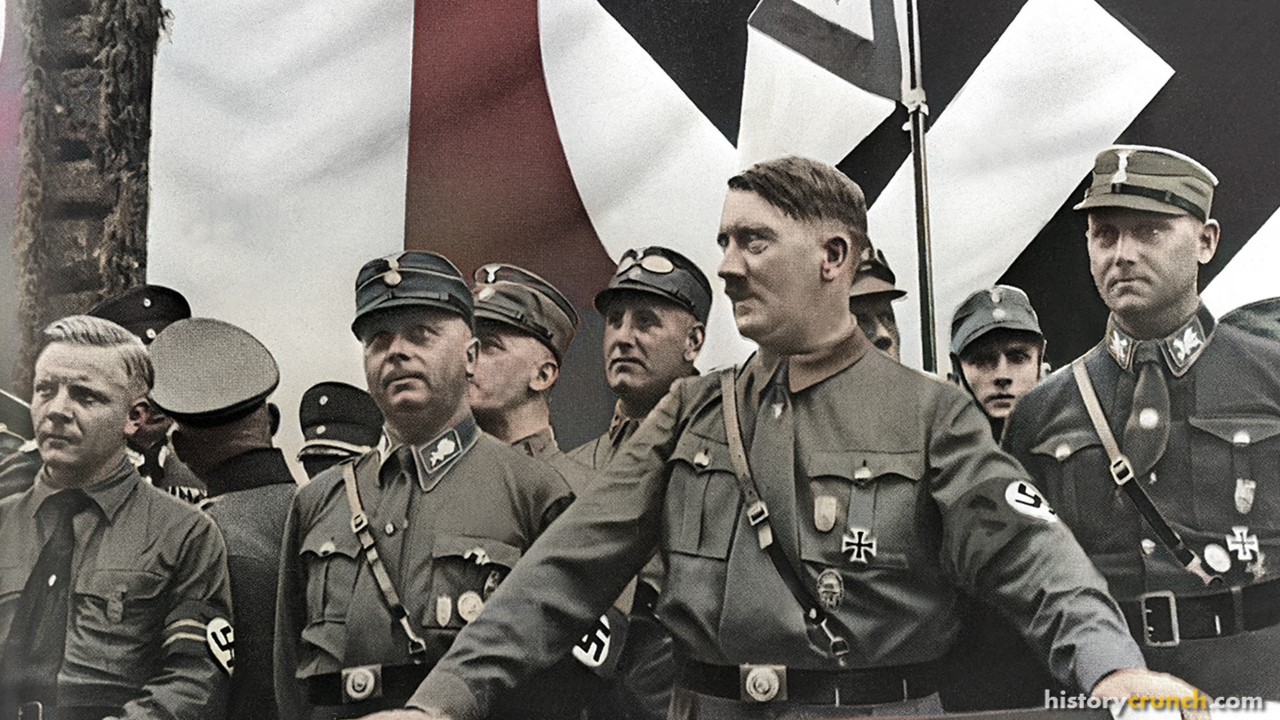
Adolf Hitler became Germany's head of state, in 1934 with, the title of Führer und Reichskanzler (leader and chancellor of the Reich). (Colorized by historycrunch.com)
Source: Smithsonian Institution© factsthatcrunch.comMore Causes of World War II Facts →
Causes of World War IIKey Terms
Facts that CrunchFactsthatCrunch
War Guilt Clausenoun phrase

The name given to Article 231 of the Treaty of Versailles, which forced Germany to accept full blame for starting World War I and provided the legal basis for demanding reparations payments.

"The War Guilt Clause made many Germans furious because they felt the country had been unfairly singled out for punishment."

Reparationsnoun

Payments that a defeated country is required to make to cover damages caused during a war, as ordered by the winning powers at the Paris Peace Conference.

"The reparations Germany owed under the Treaty of Versailles placed a heavy financial burden on its struggling economy throughout the 1920s."

Demilitarizationnoun

The process of removing or sharply limiting military forces from a specific area or country, such as the Rhineland region along Germany's western border, as required by the treaty.

"The demilitarization of the Rhineland was meant to keep Germany from threatening France, but Adolf Hitler ordered troops back into the region on March 7th, 1936."

Source: Library of Congress© factsthatcrunch.comMore Causes of World War II Facts →
Causes of World War IIPrimary Source
Facts that CrunchFactsthatCrunch

We shall have to work hard and unremittingly to tear from the pages of history the name and the shame of this dictated peace.

German Chancellor Philipp Scheidemann, Berlin, May 12th, 1919

Scheidemann spoke these words to the German National Assembly after the Allied powers presented the final treaty terms to Germany. Germany had not been allowed to negotiate the terms, which made many Germans feel humiliated and angry. This reaction became a major grievance that nationalist leaders, including Adolf Hitler, used to build political support throughout the 1920s and 1930s.

Source: UNESCO© factsthatcrunch.comMore Causes of World War II Facts →
Causes of World War IIPros & Cons
Facts that CrunchFactsthatCrunch

The Treaty of Versailles ended World War I, but its terms shaped the tensions that led to World War II.

Pros
It formally ended the fighting between Germany and the Allied powers on June 28th, 1919, bringing legal closure to the war.
It created the League of Nations, giving countries a shared body to settle future disputes without war.
It returned the Alsace-Lorraine region to France, correcting a border that had caused friction since 1871.
It reduced the size of the German navy, limiting Germany to six battleships and no submarines.
It required Germany to release prisoners of war and recognize the independence of several new nations, including Poland and Czechoslovakia.
Cons
The War Guilt Clause, Article 231, forced Germany to accept full blame for the war, which angered many Germans and fueled resentment.
The reparations bill was seen by many economists, including John Maynard Keynes, as far too harsh and likely to damage the European economy.
Stripping Germany of its colonies in Africa and the Pacific left many Germans feeling humiliated on the world stage.
The treaty was written largely without German input, so German leaders called it a 'diktat,' meaning a settlement forced on them.
The new borders it drew left millions of ethnic Germans living outside Germany, giving later leaders a rallying point to demand those lands back.
Source: Library of Congress© factsthatcrunch.comMore Causes of World War II Facts →
Causes of World War IIPoint of View
Facts that CrunchFactsthatCrunch
Point of View
John Maynard Keynes
British Treasury adviser to the British Government at the Paris Peace Conference, 1919 · on Terms of the Treaty of Versailles

Keynes believed the Allied leaders gave "politics precedence over economics" and left no room for Germany's economic recovery. He resigned his Treasury post in protest on May 26th, 1919, before the treaty was signed, then published his warnings in The Economic Consequences of the Peace on December 8th, 1919. He predicted that the harsh terms would ruin Germany financially and push Europe toward another war.
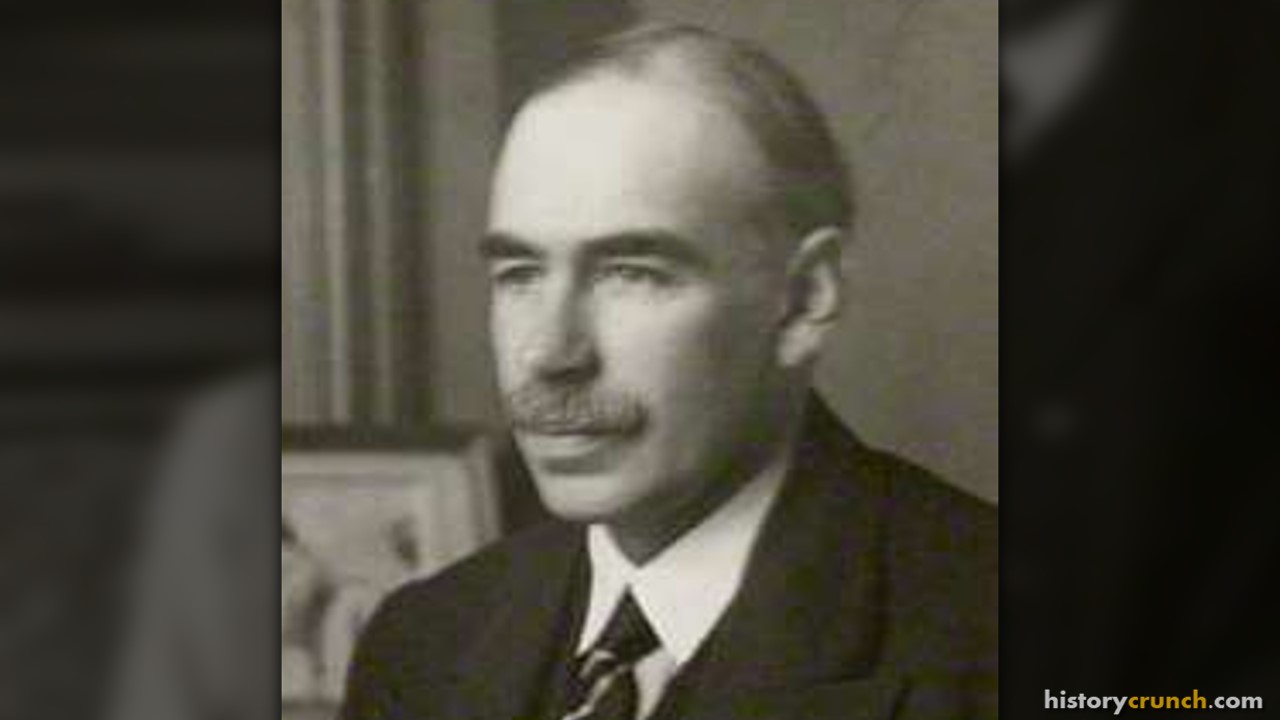
Portrait of John Maynard Keynes, the British economist whose ideas about government intervention in the economy became the foundation of modern liberalism.
Source: UNESCO© factsthatcrunch.comMore Causes of World War II Facts →
Causes of World War IIPerspective
Facts that CrunchFactsthatCrunch
The War Guilt Clause, Article 231
Allied Powers

French and British leaders saw Article 231 as a fair statement of legal responsibility. It gave the Allies a clear basis to demand payment for the enormous damage Germany had caused. Georges Clemenceau, France's prime minister, pushed hard for the clause because France had suffered the worst fighting on its own soil.

German Public

Most Germans felt that forcing Germany to accept sole blame for the war was deeply unjust. Many ordinary citizens and politicians alike saw the clause as a national humiliation, not a reflection of history. This anger made it easier for radical voices to argue that Germany had been stabbed in the back by its own leaders at the peace table.

Source: US National Archives© factsthatcrunch.comMore Causes of World War II Facts →
Causes of World War IIImage ExplorerInteractive
Facts that CrunchFactsthatCrunch
The long treaty table Delegates from many nations sit packed together at a long table covered in documents. This is the signing of the Treaty of Versailles on June 28th, 1919, in the Hall of Mirrors in France. The treaty forced Germany to accept blame for World War I, pay huge penalties, and give up territory. These harsh terms left Germany angry and struggling, which helped Adolf Hitler gain power and pushed Europe toward a second war.
Woodrow Wilson, seated at center-left The figure holding papers near the center-left of the table is U.S. President Woodrow Wilson. He pushed for a peace plan he believed would be fair, but the other Allied leaders overruled many of his ideas. The final treaty was much harsher than Wilson wanted. The U.S. Senate also refused to approve the treaty, leaving the new League of Nations weak and unable to stop future aggression.
Georges Clemenceau at center The white-haired man near the center of the table is French Prime Minister Georges Clemenceau. France had suffered enormous damage in the war and Clemenceau pushed for the toughest possible penalties on Germany. His demands shaped the punishing terms that humiliated Germany and fed the resentment that later fueled the rise of the Nazi Party.
'The Signing of Peace in the Hall of Mirrors' by William Orpen (1919)
Source: UNESCO© factsthatcrunch.comMore Causes of World War II Facts →
Causes of World War IIFlip NotebookInteractive
Facts that CrunchFactsthatCrunch

What were the main military restrictions placed on Germany by the Treaty of Versailles?

Source: US National Archives© factsthatcrunch.comMore Causes of World War II Facts →
Explore More Topics

League of Nations

When the world tried to build an organization that could stop wars before they started, the results were far weaker than anyone had hoped. The gap between what the League promised and what it could actually enforce left aggressive nations room to push boundaries without facing real consequences.

Causes of World War IIHow It Worked
Facts that CrunchFactsthatCrunch

The League of Nations was an international organization set up in 1920 to keep peace between countries by giving them a shared set of rules and a place to solve disputes.

1
Member countries brought disputes to the League's Assembly or Council, where representatives from each nation could speak and vote.
2
The Council, which included permanent seats for major powers such as Britain, France, Italy, and Japan, reviewed the most serious threats to peace and proposed solutions.
3
If a country was found to be the aggressor, the League could issue a formal condemnation and call on member nations to cut off trade with that country, a penalty called economic sanctions.
4
As a last step, the League could ask member nations to contribute military force, but it had no army of its own and depended entirely on members to act.
5
Because decisions in the Council required unanimous agreement, any one permanent member could block action, and without the United States, which never joined after the Senate voted against membership in November 1919, the League lacked the power to enforce its rulings.
Source: US National Archives© factsthatcrunch.comMore Causes of World War II Facts →
Causes of World War IIEyewitness
Facts that CrunchFactsthatCrunch
Eyewitness account

I watched the Council chamber fall silent when the Ethiopian delegation rose to speak. The great powers sat unmoved as Emperor Haile Selassie warned them that his country was being bombed and gassed by Italian aircraft. I could see that the words reached their ears but not their will, and I left Geneva that day believing the League had chosen comfort over conscience.

Philip Noel-Baker, British delegate and League of Nations official
Context

Noel-Baker was present at the League of Nations Council sessions in Geneva in 1935 and 1936 during the League's debate over Italy's invasion of Ethiopia, and he later described the atmosphere in those chambers in his writings and speeches.

Source: Library of Congress© factsthatcrunch.comMore Causes of World War II Facts →
Causes of World War IIDate
Facts that CrunchFactsthatCrunch
10
January 1920

The League of Nations holds its first meeting

The League of Nations met for the first time on January 10th, 1920, in Paris, France. It was created to settle disputes between countries peacefully and prevent another world war. The United States never joined, which left the League too weak to stop aggressive nations in the 1930s.
Emblem of the League of Nations.
Source: UNESCO© factsthatcrunch.comMore Causes of World War II Facts →
Causes of World War IIRecord
Facts that CrunchFactsthatCrunch
Largest Withdrawal

When Japan left the League of Nations on March 27th, 1933, it became the first major world power to walk out of the organization.

Japan left after the League condemned its invasion of Manchuria in 1931. The withdrawal showed that the League could not force powerful nations to follow its decisions. This made other aggressive countries less afraid of the League and weakened its ability to keep the peace.

Source: Library of Congress© factsthatcrunch.comMore Causes of World War II Facts →
Causes of World War IIMini Timeline
Facts that CrunchFactsthatCrunch
The League of Nations was created after World War I to keep peace between countries.
Its opening years set the rules and structure that shaped how it would work.
This timeline follows the League from its founding through its early tests.
1919
Paris Peace Conference drafts the CovenantAllied leaders meeting in Paris wrote the League's founding rules, called the Covenant, into the Treaty of Versailles.
1920
First Assembly meets in GenevaOn November 15th, 1920, the League held its first full Assembly in Geneva, Switzerland, with 41 member nations attending.
1920
Council holds first sessionThe smaller Council, meant to handle urgent disputes, met for the first time on January 16th, 1920, in Paris.
1921
Åland Islands dispute settledThe League ruled that the Åland Islands, claimed by both Finland and Sweden, would stay under Finnish control, marking an early peaceful success.
1923
Corfu Incident tests the LeagueAfter Italian forces occupied the Greek island of Corfu in August 1923, the League struggled to hold Italy accountable, revealing early limits of its power.
41
Nations in the League's first Assembly in November 1920
63
Peak number of member nations the League reached by the early 1930s
4
Permanent seats on the League Council held by Britain, France, Italy, and Japan at the start
Source: UNESCO© factsthatcrunch.comMore Causes of World War II Facts →
Causes of World War IIDefinition
Facts that CrunchFactsthatCrunch
Appeasement
From Old French 'apaisier,' meaning to bring to peace

Appeasement is a foreign policy strategy in which a country gives in to the demands of an aggressive power in order to avoid war. Appeasement means making concessions, giving something up, to satisfy a stronger or threatening nation and keep the peace. Leaders who use this strategy hope that meeting demands early will prevent a larger conflict later.

"When British Prime Minister Neville Chamberlain signed the Munich Agreement on September 30th, 1938, letting Germany take the Sudetenland region of Czechoslovakia, he called it 'peace for our time,' but many historians say this act of appeasement only encouraged Adolf Hitler to demand more territory."

Source: UNESCO© factsthatcrunch.comMore Causes of World War II Facts →
Causes of World War IIClaim
Facts that CrunchFactsthatCrunch
The Claim

The League of Nations failed to stop aggression in the 1930s largely because key powers were absent or unwilling to act, making collective security impossible in practice.

Evidence
The United States never joined the League, even though President Woodrow Wilson had proposed it. The U.S. Senate voted against membership on March 19th, 1920, leaving the organization without its largest economy.
When Japan seized Manchuria from China in 1931, the League condemned the action but imposed no meaningful penalties. Japan simply withdrew from the League on March 27th, 1933, and faced no further consequences.
When Italy invaded Ethiopia in October 1935, the League voted for economic sanctions, but excluded oil, the resource Italy needed most for its military campaign. The sanctions did not stop the conquest.
Some historians argue the League was doomed by its own rules, since any major decision required a unanimous vote among the council members, making strong action very hard to achieve.
Source: Smithsonian Institution© factsthatcrunch.comMore Causes of World War II Facts →
Causes of World War IIQuote
Facts that CrunchFactsthatCrunch

I believe it is peace for our time.

Neville ChamberlainPrime Minister of the United Kingdom, September 30th, 1938
Why it matters

Chamberlain said this to a crowd outside 10 Downing Street after signing the Munich Agreement, and the phrase later came to stand for the failure of appeasement as a way to stop Hitler.
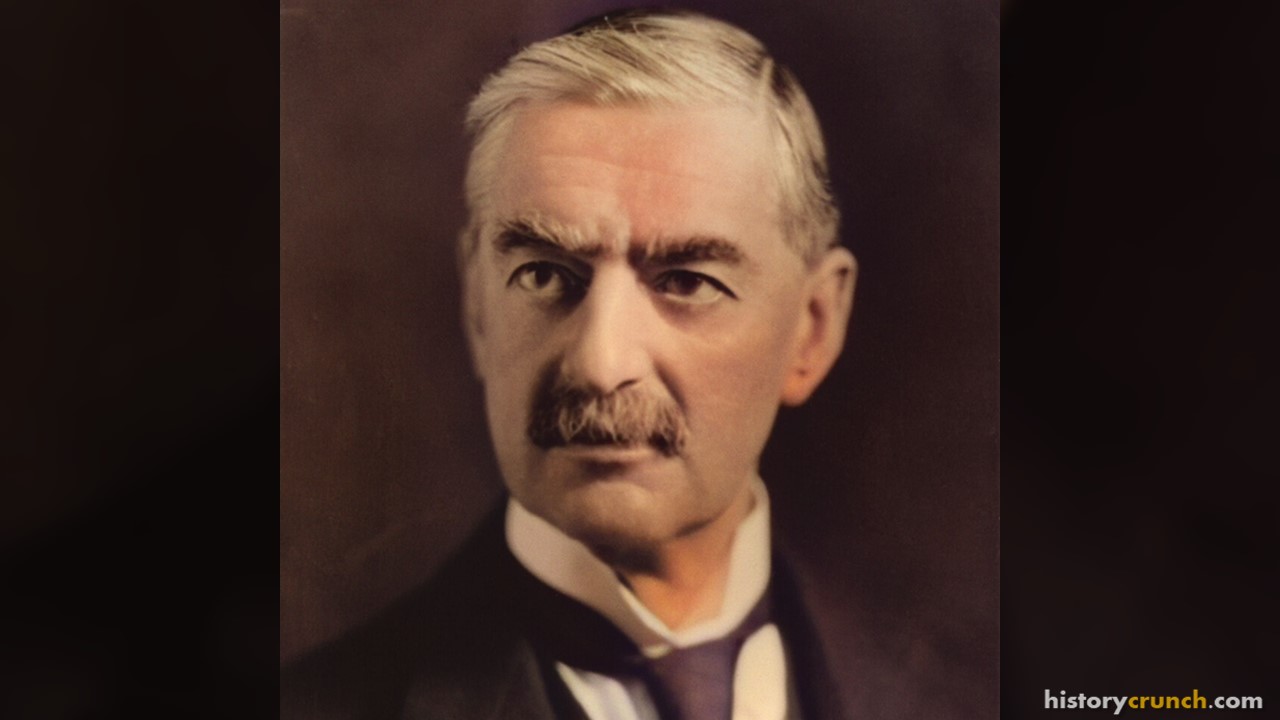
Neville Chamberlain (Colorized by historycrunch.com)
Source: UNESCO© factsthatcrunch.comMore Causes of World War II Facts →
Causes of World War IIPrimary Source
Facts that CrunchFactsthatCrunch

The League has failed to stop the war. It has failed to protect the victim of aggression.

Haile Selassie I, Emperor of Ethiopia, address to the League of Nations Assembly, Geneva, June 30th, 1936

Haile Selassie spoke to the League of Nations after Italy invaded Ethiopia in October 1935. The League had imposed some sanctions on Italy, but key items like oil were left off the list, and the measures did not stop the war. His speech made clear to the world that the League could not protect smaller nations from powerful aggressors, which weakened confidence in collective security and encouraged further acts of aggression in the years that followed.

Source: Library of Congress© factsthatcrunch.comMore Causes of World War II Facts →
Causes of World War IIPoint of View
Facts that CrunchFactsthatCrunch
Point of View
Haile Selassie I
Emperor of Ethiopia, 1930 to 1974 · on Appeal to the League of Nations, Geneva, summer 1936

After Italy invaded Ethiopia on October 3rd, 1935, Haile Selassie traveled to Geneva and spoke before the League assembly in Amharic, the first head of state to address the body in person. He warned that the League's failure to stop the attack on his country meant "it will be you tomorrow", telling the world's governments that unchecked aggression would spread. The League refused to act, and most member states recognized Italy's conquest, proving his warning right.

Source: UNESCO© factsthatcrunch.comMore Causes of World War II Facts →
Explore More Topics

Maginot Line

France poured enormous resources into a chain of fortifications meant to make another German invasion impossible, and for a while it seemed like a reasonable bet. The problem was that a fixed wall could only protect the ground directly behind it, and an enemy willing to go around it faced little resistance.
Causes of World War IIQ&A
Facts that CrunchFactsthatCrunch
Q

Why did France build the Maginot Line, and did it stop Germany in World War II?

A

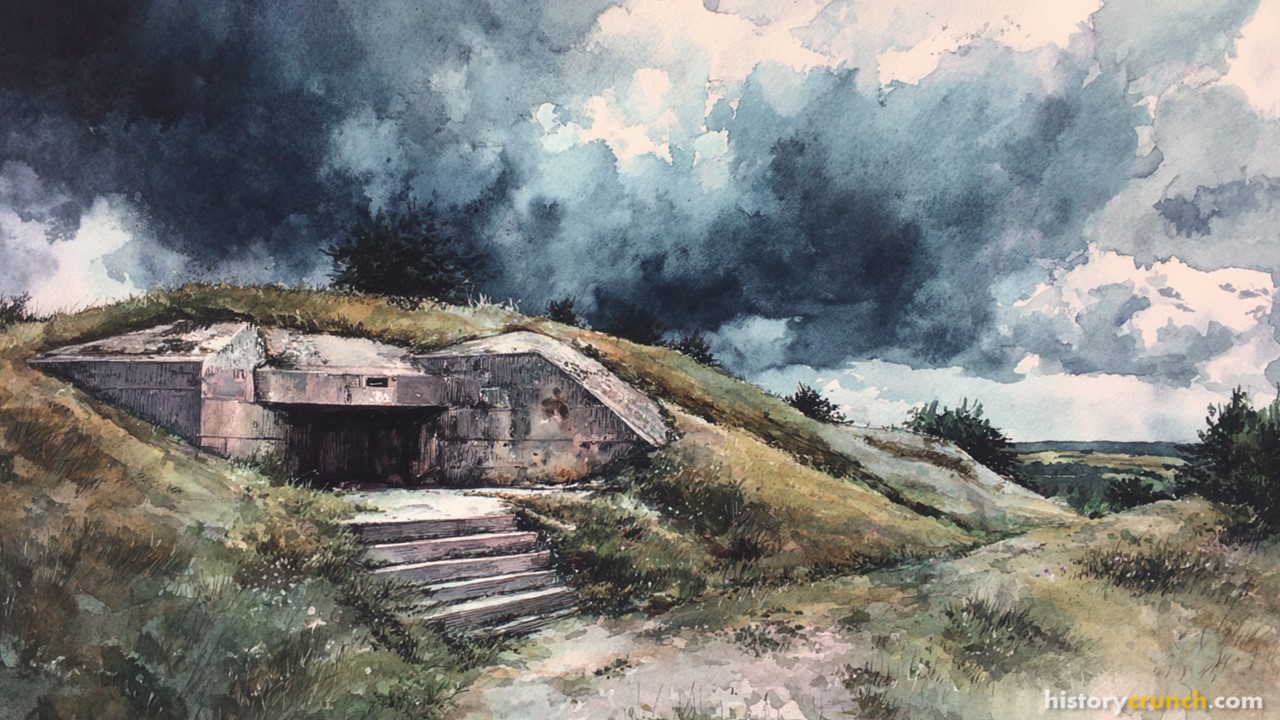
France built the Maginot Line in the 1930s to protect its border with Germany after the huge losses it suffered in World War I. The line stretched about 280 miles (450 kilometers) and included underground forts, gun positions, and troop quarters. Germany bypassed the line in May 1940 by attacking through Belgium and the Ardennes forest, leaving the fortifications useless.

Source: Library of Congress© factsthatcrunch.comMore Causes of World War II Facts →
Causes of World War IIEyewitness
Facts that CrunchFactsthatCrunch
Eyewitness account

I walked through the great concrete corridors beneath the ground and felt the walls tremble with the hum of ventilation machines. The casemates smelled of oil and damp stone, and the air never truly felt clean. Soldiers lived and slept far below the surface, sometimes for weeks at a time without seeing daylight. We believed the line made France untouchable, and that belief was complete.

André Maginot, French Minister of War and veteran of Verdun, chief advocate for the fortification line that bore his name
Context

Maginot inspected the early construction works along the Franco-German border in the late 1920s and spoke to journalists and officials about the project before his death on January 7th, 1932.

Source: US National Archives© factsthatcrunch.comMore Causes of World War II Facts →
Causes of World War IIScale
Facts that CrunchFactsthatCrunch

The Maginot Line stretched about 280 miles (450 km) along France's border with Germany, roughly the driving distance from New York City to Boston and back.

Full Maginot Line length: ~280 mi (450 km)
280NYC to Washington D.C. (one way): ~225 mi (362 km)
225NYC to Boston (one way): ~215 mi (346 km)
215Typical subway tunnel depth: ~30 ft (9 m)
30

France built the Maginot Line through the 1930s to guard against a German ground attack across its eastern border. The fortifications ran through roughly 280 miles (450 km) of northeastern France, containing over 500 separate structures, including bunkers, gun batteries, and underground rail tunnels. When Germany invaded in May 1940, its forces went around the line through Belgium and the Ardennes forest, making the massive barrier largely useless.

Source: Smithsonian Institution© factsthatcrunch.comMore Causes of World War II Facts →
Causes of World War IIDefinition
Facts that CrunchFactsthatCrunch
Fortifications
from Latin 'fortis' meaning strong

Fortifications are structures built to defend a territory from enemy attack. They include walls, bunkers, trenches, and barriers. Nations build them to protect borders and slow down an invading army. In the years before World War II, several countries invested heavily in fortification lines, believing that strong fixed defenses could prevent war or limit its damage.

"France completed the Maginot Line by 1936, a chain of concrete forts and gun positions stretching roughly 280 miles (450 kilometers) along its border with Germany, built to stop a German invasion."

Source: Smithsonian Institution© factsthatcrunch.comMore Causes of World War II Facts →
Causes of World War IIPros & Cons
Facts that CrunchFactsthatCrunch

France built the Maginot Line along its border with Germany in the 1930s, hoping it would stop any future invasion.

Pros
It stretched about 280 miles (450 km) and included forts, bunkers, and underground tunnels, giving French troops strong shelter.
The line held enough food, fuel, and supplies to let soldiers live and fight underground for months without resupply.
It tied down a large number of German planners, who knew a direct frontal attack through the fortifications would be very costly.
French morale improved during the late 1930s because citizens felt the country had a solid wall of defense on its eastern border.
The fortifications were largely completed by 1936, showing France could organize and fund a large military construction project.
Cons
The line did not extend along the Belgian border, leaving a gap that German forces used when they swept through the Ardennes forest in May 1940.
France spent roughly 3 billion francs on the project, leaving fewer funds available to build modern tanks and aircraft.
The fixed forts gave French commanders a defensive mindset, making it harder to plan bold or flexible counterattacks.
Germany simply went around the line rather than through it, making the entire construction effort militarily useless in the end.
Soldiers stationed inside the forts had very little room to move or adapt, and many were cut off and forced to surrender after France fell.
Source: Smithsonian Institution© factsthatcrunch.comMore Causes of World War II Facts →
Explore More Topics

Great Depression

The global economic collapse that began in 1929 did more than wipe out savings and close factories. It shook people’s faith in democratic governments and made desperate populations across Europe far more willing to listen to leaders who promised simple answers to complicated problems.

Causes of World War IIRecord
Facts that CrunchFactsthatCrunch
Biggest Drop

During the Great Depression, American industrial output fell by about 46 percent between 1929 and 1932, the largest collapse in U.S. manufacturing on record.

The steep drop in production left millions of workers without jobs and caused banks across the country to fail. Germany, which depended heavily on American loans to rebuild its economy after World War I, was hit especially hard when those loans dried up. Mass unemployment and economic despair in Germany helped extremist parties, including the Nazi Party, gain wide public support through the early 1930s.

Source: Library of Congress© factsthatcrunch.comMore Causes of World War II Facts →
Causes of World War IIDid You Know
Facts that CrunchFactsthatCrunch
Surprising Fact

The Great Depression spread so fast that U.S. unemployment hit roughly 25 percent by 1933, yet Germany's rate reached nearly 30 percent that same year, making its economic pain even sharper than America's.

When the U.S. stock market crashed in October 1929, American banks that had lent heavily to Germany called in those loans. German factories shut down quickly, and millions of workers lost their jobs within just a few years. That deep economic suffering made many Germans desperate for strong leadership and fast solutions, which helped radical political parties gain votes and power.
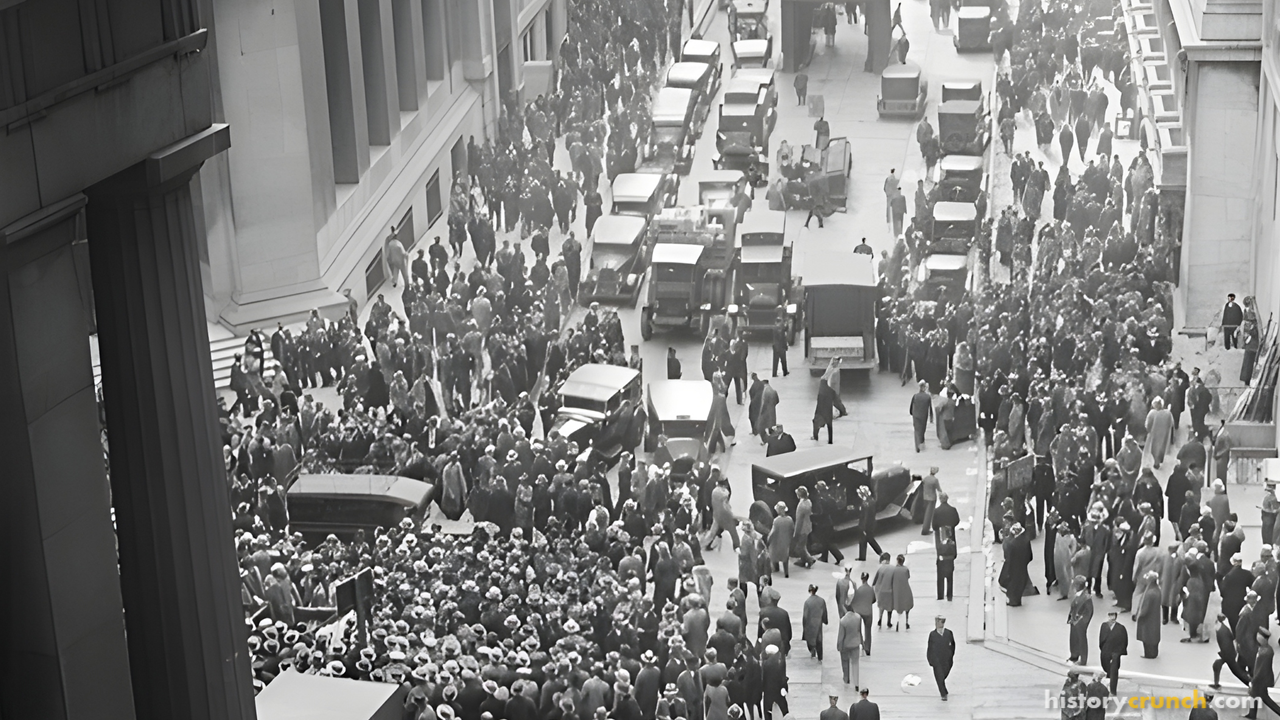
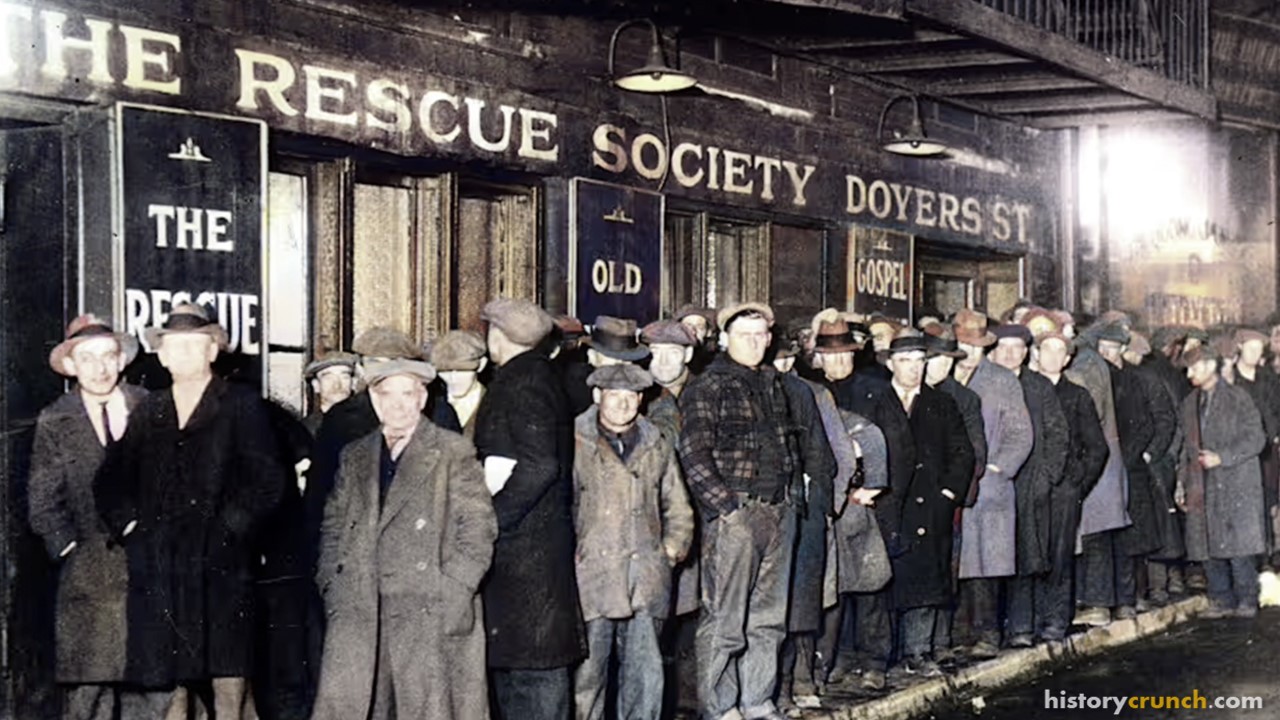
A crowd gathers outside the Stock Exchange after the crash of 1929.
Source: US National Archives© factsthatcrunch.comMore Causes of World War II Facts →
Causes of World War IICause & Effect
Facts that CrunchFactsthatCrunch
Cause

The Great Depression wiped out tax revenue across Europe, forcing governments to cut military and public spending at a time when political extremists were promising voters bold economic solutions.

Effects
In Germany, the Nazi Party's vote share in the Reichstag elections jumped from about 2.6 percent in May 1928 to 37.4 percent in July 1932, as desperate voters turned away from mainstream parties.
In Italy, Benito Mussolini used Europe's economic panic to push through tighter authoritarian controls during the early 1930s, silencing the last traces of political opposition.
In Japan, military officers blamed civilian politicians for the country's economic collapse, and junior army officers launched the coup attempt known as the February 26th, 1936 Incident, pushing Japan toward military rule.

The Great Depression did not cause World War II on its own, but it made voters across the world ready to accept radical leaders who promised to restore national pride and economic strength. That shift in public mood gave authoritarian governments the popular support they needed to rearm and expand.

Source: UNESCO© factsthatcrunch.comMore Causes of World War II Facts →
Causes of World War IIDefinition
Facts that CrunchFactsthatCrunch
Recession
from Latin 'recessus,' meaning a withdrawal or going back

A recession is a period when a country's economy shrinks for at least two back-to-back quarters, meaning businesses earn less, jobs disappear, and people spend less money. In the context of World War II, the word often applies to the broader economic collapse of the 1930s, which weakened democratic governments and made voters more willing to accept extreme leaders who promised quick fixes. Germany's economy had already been damaged by war debts and the terms of the Treaty of Versailles, and the global downturn of the Great Depression pushed unemployment even higher. A struggling economy can reduce military budgets, lower morale, and create political openings for leaders who promote aggressive foreign policies as a distraction from hardship at home.

"After the Wall Street Crash of October 1929, the recession spread to Europe so quickly that by 1932 German industrial output had dropped to roughly half of what it had been in 1928, leaving millions without work and making radical political parties far more appealing."

Source: Smithsonian Institution© factsthatcrunch.comMore Causes of World War II Facts →
Causes of World War IIConnections
Facts that CrunchFactsthatCrunch
U.S. Bank Failures (1933)
Hitler Becomes Chancellor (1933)
The connection

In early 1933, thousands of American banks had already collapsed, and mass unemployment had spread fear across the democratic world. That same year, economic desperation in Germany helped push voters toward Adolf Hitler, who became Chancellor on January 30th, 1933.

By 1933, roughly 4,000 American banks had failed since 1929, and Germany's economic collapse under the Depression had created the instability that extreme political parties used to gain power.

Source: US National Archives© factsthatcrunch.comMore Causes of World War II Facts →
Causes of World War IIImpactsInteractive
Facts that CrunchFactsthatCrunch
The eventThe Great Depression
Political RadicalismThe Depression left millions of people angry and desperate. Voters in Germany, Italy, and Japan turned to extreme leaders who promised quick fixes and national strength.
Weak Western DemocraciesBritain and France spent the early 1930s focused on economic recovery at home. This left them reluctant to spend money on their militaries or stand firm against early acts of aggression.
Japan's Push for ResourcesJapan had few natural resources and relied on exports, which collapsed after 1929. Japanese military leaders pushed the government to seize resource-rich territories in Asia to replace lost trade income.
Collapse of the Weimar RepublicGermany's government was already fragile when the Depression hit. Unemployment surged and the middle class lost savings, making many Germans willing to support anyone who promised to restore order and pride.
Breakdown of International TradeThe Smoot-Hawley Tariff Act, signed on June 17th, 1930, triggered a wave of retaliatory tariffs around the world. Countries turned inward, and the trade collapse deepened tensions between nations already competing for resources.
Economics in the Great Depression was characterized by high unemployment and the stock market crash of 1929. (Colorized by historycrunch.com)
Source: Smithsonian Institution© factsthatcrunch.comMore Causes of World War II Facts →
Causes of World War IIMultiple ChoiceInteractive
Facts that CrunchFactsthatCrunch

Which American law, passed on June 17th, 1930, raised taxes on imported goods and made the Great Depression worse in Europe?

ExplanationThe Smoot-Hawley Tariff Act raised taxes on over 20,000 imported goods. Other countries responded with their own tariffs. This hurt trade worldwide and deepened the economic crisis that helped extreme political parties gain power in Europe.
Source: Smithsonian Institution© factsthatcrunch.comMore Causes of World War II Facts →
Explore More Topics

Adolf Hitler’s Rise to Power

Causes of World War IIEyewitness
Facts that CrunchFactsthatCrunch
Eyewitness account

I stood in the crowd at the Sportpalast in Berlin on the 4th of February, 1933, just days after Hitler became Chancellor, and the noise that rose from tens of thousands of throats was unlike anything I had ever heard in a public hall. People around me wept and reached out their hands toward the stage as though they were witnessing something sacred. I had covered political rallies for years, but this was not a rally in any ordinary sense. It felt more like a religious ceremony, and I wrote that night that no reporter who had not been present could fully understand the grip this man had on ordinary Germans.

Sefton Delmer, British journalist and correspondent for the Daily Express, present in Germany during Hitler's rise
Context

Delmer reported from Berlin in early 1933 and wrote accounts of Hitler's public appearances for British readers during the weeks immediately following Hitler's appointment as Chancellor on January 30th, 1933.
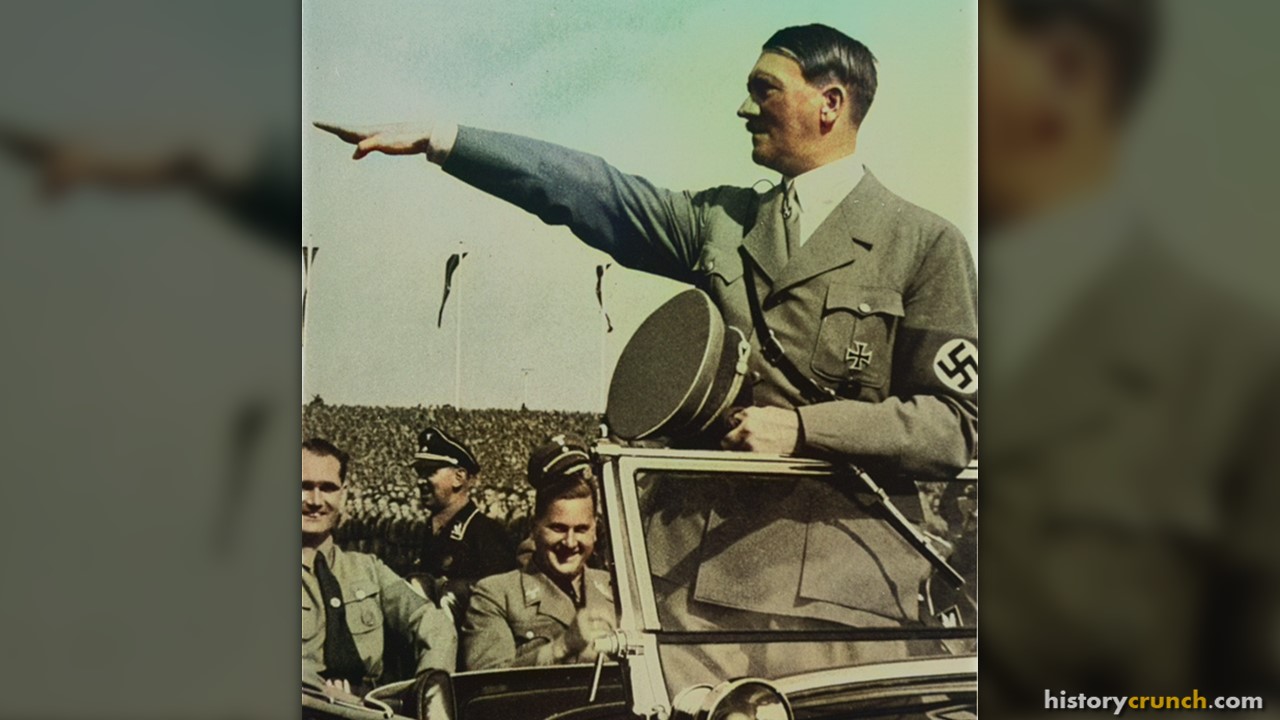
Adolf Hitler salutes a mass rally of Nazi supporters in 1930s Germany. Hitler is an example of totalitarianism in the 20th century. (Colorized by historycrunch.com)
Source: US National Archives© factsthatcrunch.comMore Causes of World War II Facts →
Causes of World War IIDate
Facts that CrunchFactsthatCrunch
23
March 1933

The Reichstag Passes the Enabling Act

On March 23rd, 1933, the German parliament passed the Enabling Act, which gave Adolf Hitler the power to make laws without the approval of parliament. The act needed a two-thirds majority to pass, and many opposing members had already been arrested or kept out of the building by Nazi stormtroopers. This law effectively ended democratic government in Germany and gave Hitler full control over the country.

Source: US National Archives© factsthatcrunch.comMore Causes of World War II Facts →
Causes of World War IIMini Timeline
Facts that CrunchFactsthatCrunch
Adolf Hitler did not take power overnight.
His rise began with early failures and a slow build of public support during the 1920s.
These steps set the stage for what came next.
1919
Hitler Joins the DAPHitler attends a meeting of the tiny German Workers' Party in Munich and soon becomes its most powerful speaker.
1920
Party RenamedThe party is renamed the National Socialist German Workers' Party, known by its shortened German form as the Nazi Party.
November 8th, 1923
The Beer Hall PutschHitler and his followers try to seize control of the Bavarian government in Munich, but the coup fails and Hitler is arrested.
April 1st, 1924
Prison SentenceA Munich court sentences Hitler to five years in prison, where he writes his political book 'Mein Kampf,' though he is released after less than a year.
1925
Party RebuiltAfter his release, Hitler rebuilds the Nazi Party into a more organized movement and works to grow its membership across Germany.
5 Years
Hitler's prison sentence after the failed 1923 putsch, though he served less than 9 months
55
Number of members the German Workers' Party had when Hitler first attended a meeting in 1919
1925
Year Hitler was formally declared the sole leader, or Fuehrer, of the rebuilt Nazi Party
Source: Smithsonian Institution© factsthatcrunch.comMore Causes of World War II Facts →
Causes of World War IIDefinition
Facts that CrunchFactsthatCrunch
Militarism
From Latin 'militaris,' meaning 'of soldiers'

Militarism is the belief that a country should keep a strong military and be ready to use it aggressively to gain power or protect national interests. Governments driven by militarism often spend heavily on weapons and armies. They treat military strength as a key measure of national greatness.

"Germany's militarism in the 1930s was clear when Adolf Hitler began rebuilding the German army after March 16th, 1935, in open violation of the Treaty of Versailles."

Source: US National Archives© factsthatcrunch.comMore Causes of World War II Facts →
Causes of World War IIQuote
Facts that CrunchFactsthatCrunch

Give me four years time, and you will not recognize Germany.

Adolf HitlerChancellor of Germany, 1933
Why it matters

Hitler used this kind of direct promise to convince ordinary Germans that he could restore national pride and economic strength, which helped him build broad public support in the early years of his rule.
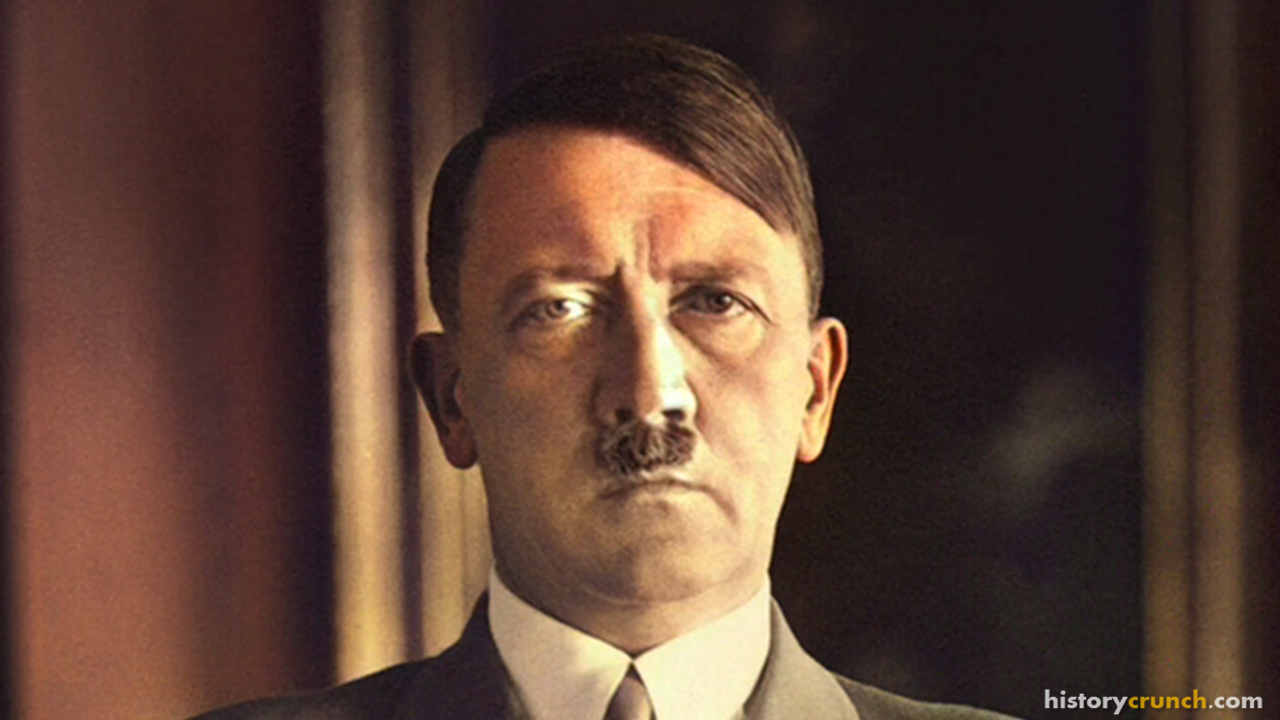
Adolf Hitler in 1938. (Colorized by historycrunch.com)
Source: Smithsonian Institution© factsthatcrunch.comMore Causes of World War II Facts →
Causes of World War IIPrimary Source
Facts that CrunchFactsthatCrunch

We are socialists, we are enemies of today's capitalistic economic system for the exploitation of the economically weak, with its unfair salaries, with its unseemly evaluation of a human being according to wealth and property instead of responsibility and performance.

Adolf Hitler, speech to the National Socialist German Workers' Party, May 1st, 1927

Hitler gave this speech during a period when the Nazi Party was still a fringe group struggling to win broad support across Germany. The quote shows how Hitler used the language of economic fairness and worker grievance to attract voters who felt left behind by the existing system. Historians treat speeches like this one as key primary sources because they reveal the promises Hitler made before he gained full power.

Source: Library of Congress© factsthatcrunch.comMore Causes of World War II Facts →
Causes of World War IISequenceInteractive
Facts that CrunchFactsthatCrunch

In what order did these steps happen during Hitler's rise to power?

123456
Hitler merges the offices of President and Chancellor after Hindenburg dies
Hindenburg appoints Hitler as Chancellor of Germany
Hitler is released from Landsberg Prison
The Nazi Party wins seats and becomes the largest party in the Reichstag
Hitler regains legal permission to speak in public
The Reichstag passes the Enabling Act, giving Hitler decree powers
Adolf Hitler became Germany's head of state, in 1934 with, the title of Führer und Reichskanzler (leader and chancellor of the Reich). (Colorized by historycrunch.com)
Source: Smithsonian Institution© factsthatcrunch.comMore Causes of World War II Facts →
Causes of World War IIColorizedInteractive
Facts that CrunchFactsthatCrunch
Adolf Hitler stands at a podium in the Reich Chancellery in Berlin after being appointed Chancellor of Germany on January 30th, 1933. His rise to power turned Germany away from democracy and set the country on a path toward war.
Black & whiteColour
Adolf Hitler stands at a podium in the Reich Chancellery in Berlin after being appointed Chancellor of Germany on January 30th, 1933. His rise to power turned Germany away from democracy and set the country on a path toward war.
Colorized by: historycrunch.com© factsthatcrunch.comMore Causes of World War II Facts →
Explore More Topics

Appeasement Before World War II

Through the mid-1930s, Britain and France repeatedly chose to give Hitler what he demanded rather than risk another war, believing each concession would be the last. That pattern sent a clear signal about how far a determined aggressor could go before anyone would actually push back.

Causes of World War IIEyewitness
Facts that CrunchFactsthatCrunch
Eyewitness account

I sat in the front row of the gallery in the House of Commons on the 30th of September, 1938, and watched Neville Chamberlain wave the paper he had brought back from Munich. The chamber rang with cheers that I found deeply unsettling. I had reported on Hitler's demands at Berchtesgaden only weeks before, and I knew the Czechs had been given no seat at the table when their own land was handed away. I left Westminster that evening certain that what the crowd called peace was only a short delay.

Virginia Cowles, American journalist who covered European affairs for the Hearst newspapers and was present in London and Central Europe during the Czech crisis of 1938
Context

Cowles described the scene in London on September 30th, 1938, the day Chamberlain returned from Munich, in her 1941 memoir "Looking for Trouble."

Source: UNESCO© factsthatcrunch.comMore Causes of World War II Facts →
Causes of World War IIMini Timeline
Facts that CrunchFactsthatCrunch
Before World War II began, several countries gave in to demands from aggressive nations rather than risk conflict.
This approach is called appeasement.
The opening phase of this policy unfolded through a series of clear steps in the early 1930s.
1931
Japan Takes ManchuriaJapan invaded the Chinese region of Manchuria on September 18th, 1931, and the League of Nations took no firm action to stop it.
1933
Germany Leaves the LeagueGermany walked out of the League of Nations disarmament talks in October 1933 and then withdrew from the League itself.
1934
Germany Begins Secret RearmamentGermany quietly started rebuilding its military in violation of the Treaty of Versailles, and other powers chose not to confront Berlin.
1935
Italy Invades EthiopiaItaly attacked Ethiopia on October 3rd, 1935, and the League imposed only weak trade limits, leaving Italy's oil supply untouched.
1936
Germany Remilitarizes the RhinelandGerman troops entered the demilitarized Rhineland on March 7th, 1936, and France and Britain protested but took no military action.
7
Weeks it took Japan to seize most of Manchuria's major cities after September 18th, 1931
50
Sanctions the League of Nations considered against Italy in 1935, though the most effective ones were never applied
0
Number of military responses by Britain or France to Germany's reoccupation of the Rhineland on March 7th, 1936
Source: US National Archives© factsthatcrunch.comMore Causes of World War II Facts →
Causes of World War IIDefinition
Facts that CrunchFactsthatCrunch
Lebensraum
German, pronounced 'LAY-bens-rowm'; means 'living space'

Lebensraum was a political idea that Germany needed to conquer new territory to the east in order to give its people enough land, food, and resources to survive and grow.

"Hitler used the idea of Lebensraum to justify invading Poland and pushing into the Soviet Union, claiming that Germans needed the land and farmland those countries held."

Source: UNESCO© factsthatcrunch.comMore Causes of World War II Facts →
Causes of World War IIClaim
Facts that CrunchFactsthatCrunch
The Claim

Some historians argue that Neville Chamberlain's policy of appeasement was a reasonable response to genuine constraints, not simply a failure of courage or judgment.

Evidence
Britain's military chiefs warned Chamberlain in 1938 that the armed forces were not ready for a major war, giving him real cause to buy time at Munich.
Chamberlain believed, based on his reading of Hitler's stated goals, that satisfying specific German grievances could produce a lasting peace, a view many British voters shared at the time.
Critics counter that appeasement sent Hitler the message that Western democracies would not fight, making further German demands more likely rather than less.
The debate remains open because historians disagree on whether the extra year between Munich and September 1st, 1939 helped Britain rearm enough to matter.
Source: UNESCO© factsthatcrunch.comMore Causes of World War II Facts →
Causes of World War IIConnections
Facts that CrunchFactsthatCrunch
Anschluss (March 1938)
Munich Agreement (September 1938)
The connection

Both happened in 1938 and showed that Britain and France would not stop Hitler's expansion. Their shared pattern of allowing German aggression without military response encouraged Hitler to push further.

After Germany absorbed Austria in March 1938, Britain and France still agreed at Munich to let Hitler take the Sudetenland from Czechoslovakia just six months later.

Source: Smithsonian Institution© factsthatcrunch.comMore Causes of World War II Facts →
Causes of World War IIKey Terms
Facts that CrunchFactsthatCrunch
Appeasementnoun

A policy of giving in to another country's demands in order to avoid a war or conflict. Britain and France used appeasement with Hitler in the 1930s, hoping he would stop seeking more territory after each gain.

"Britain's policy of appeasement gave Hitler confidence that he could keep expanding without facing military resistance."

Sudetenlandproper noun

A region along the edge of Czechoslovakia that had a large German-speaking population. Hitler demanded control of it in 1938, and Britain and France agreed to hand it over as part of their appeasement policy, without asking Czechoslovakia's government.

"The transfer of the Sudetenland to Germany in 1938 is one of the clearest examples of appeasement in action, because Czechoslovakia lost the territory without ever having a say."

Collective Securitynoun

The idea that a group of nations can protect each other by agreeing to treat an attack on one as an attack on all. Supporters believed it could stop aggressors like Hitler, but the League of Nations struggled to make it work in the 1930s.

"Many people argued that a strong collective security agreement would have done more to stop Hitler than the policy of appeasement ever did."

Source: US National Archives© factsthatcrunch.comMore Causes of World War II Facts →
Causes of World War IIPrimary Source
Facts that CrunchFactsthatCrunch

How horrible, fantastic, incredible it is that we should be digging trenches and trying on gas masks here because of a quarrel in a far-away country between people of whom we know nothing.

Neville Chamberlain, BBC radio broadcast, London, England, September 27th, 1938

British Prime Minister Neville Chamberlain made this statement three days before he signed the Munich Agreement, which gave Germany the Sudetenland region of Czechoslovakia. He described the crisis as a distant problem to justify avoiding war with Hitler. Winston Churchill responded on October 5th, 1938, telling Parliament that Britain had chosen dishonor and would get war anyway.

Neville Chamberlain (Colorized by historycrunch.com)
Source: US National Archives© factsthatcrunch.comMore Causes of World War II Facts →
Causes of World War IIPoint of View
Facts that CrunchFactsthatCrunch
Point of View
Winston Churchill
Conservative Member of Parliament for Epping, 1938 · on Munich Agreement, October 5th, 1938 speech to the House of Commons

Churchill told the House of Commons on October 5th, 1938 that Britain and France had suffered a "total and unmitigated defeat" by giving in to Hitler's demands for Czechoslovakia's Sudetenland region. He warned that the agreement had deeply endangered the safety of both Britain and France, not just Czechoslovakia. Churchill believed that giving ground to an aggressor without resistance only encouraged further demands, and he had called for rearmament and firm collective action throughout the 1930s.
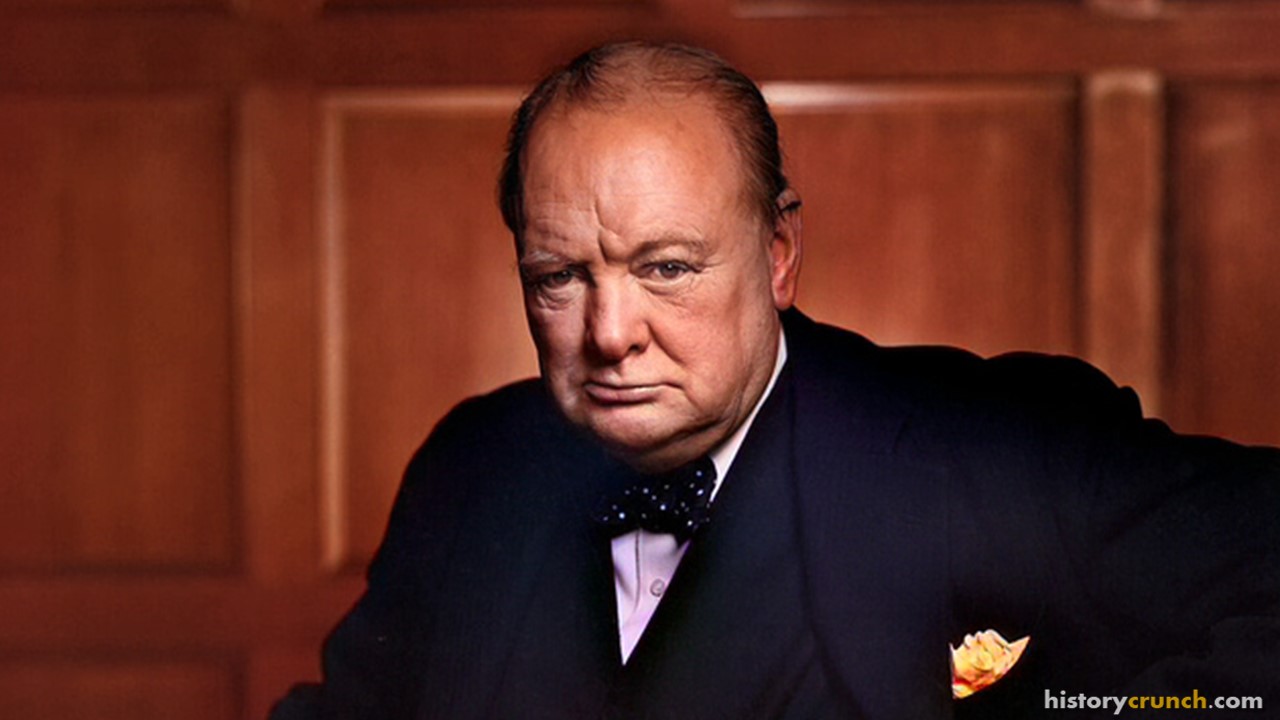
Winston Churchill in December of 1941. (Colorized by historycrunch.com)
Source: Library of Congress© factsthatcrunch.comMore Causes of World War II Facts →
Causes of World War IIFlip NotebookInteractive
Facts that CrunchFactsthatCrunch

What were the key acts of appeasement that encouraged Hitler before World War II?

Source: UNESCO© factsthatcrunch.comMore Causes of World War II Facts →
Causes of World War IIImage ExplorerInteractive
Facts that CrunchFactsthatCrunch
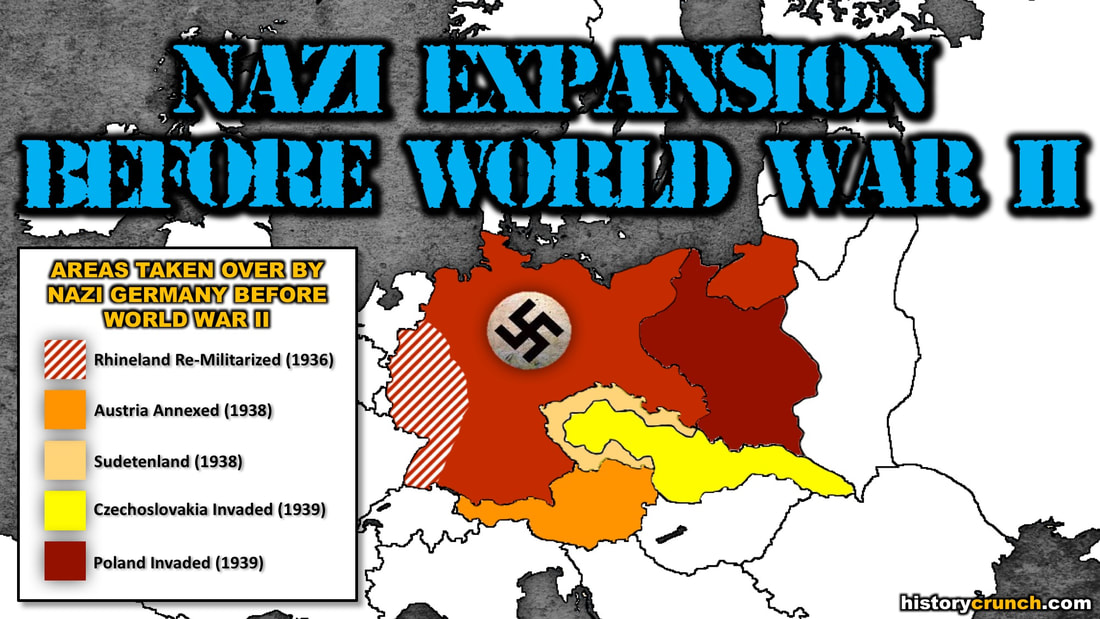
Rhineland (striped red and white, left side of map) The striped area on the western edge of Germany shows the Rhineland, which Nazi Germany remilitarized in 1936. The Treaty of Versailles had banned German troops from this zone. When Hitler sent soldiers back in and faced no military response from France or Britain, he grew bolder about seizing more territory.
Austria and Sudetenland (orange and tan areas, center-south) The orange area shows Austria, which Germany annexed in March 1938, and the tan area just east of it shows the Sudetenland, taken from Czechoslovakia later that same year. Britain and France allowed both moves without a fight, a policy called appeasement. Each gain without resistance encouraged Hitler to push further.
Poland (dark red area, far right) The large dark red area on the right side of the map shows Poland, which Germany invaded on September 1st, 1939. This invasion finally pushed Britain and France to declare war on Germany, marking the start of World War II. The sheer size of the dark red zone compared to earlier gains shows how rapidly Nazi expansion escalated.
Nazi swastika symbol (center of map) The large swastika badge sits at the heart of the map, over Germany itself. It represents Nazi political power and the ideology that drove Hitler to seek new lands for German settlement. Nazi racial and territorial goals were a direct cause of the aggression shown across the rest of the map.
Appeasement Before World War II Map
Source: US National Archives© factsthatcrunch.comMore Causes of World War II Facts →
Causes of World War IIMultiple ChoiceInteractive
Facts that CrunchFactsthatCrunch

At the Munich Conference in September 1938, Britain and France agreed to let Hitler take the Sudetenland from Czechoslovakia. Which British Prime Minister approved this agreement and returned home claiming it meant 'peace for our time'?

ExplanationNeville Chamberlain signed the Munich Agreement on September 30th, 1938, and spoke those famous words on his return to Britain. Winston Churchill publicly criticized the deal. Stanley Baldwin had already left office in 1937, and David Lloyd George had led Britain during World War I, not in 1938.
Source: Smithsonian Institution© factsthatcrunch.comMore Causes of World War II Facts →
Causes of World War IIMatchingInteractive
Facts that CrunchFactsthatCrunch

Can you match each term to its correct definition about appeasement before World War II?

Source: US National Archives© factsthatcrunch.comMore Causes of World War II Facts →
Causes of World War IIColorizedInteractive
Facts that CrunchFactsthatCrunch
Neville Chamberlain, Édouard Daladier, Adolf Hitler and Benito Mussolini during the Munich Conference. (Colorized by historycrunch.com)
Black & whiteColour
Neville Chamberlain, Édouard Daladier, Adolf Hitler and Benito Mussolini during the Munich Conference. (Colorized by historycrunch.com)
Colorized by: historycrunch.com© factsthatcrunch.comMore Causes of World War II Facts →
Explore More Topics
Explore More Topics