Eastern Front of World War II Facts

Quick facts on the Eastern Front of World War II, covering key battles, turning points, and the Soviet-German conflict from 1941 to 1945.

The Eastern Front was the largest land conflict of World War II, and the decisions made there shaped the overall outcome of the war in Europe. Germany and the Soviet Union committed more troops, equipment, and territory to this fight than to any other theater of the war. This page collects quick, clear facts on the key events, from the Molotov-Ribbentrop Pact that set the stage to the final Battle of Berlin. Related: Causes of World War II and European Theater of World War II.

Molotov-Ribbentrop Pact

The agreement signed in August of 1939 between Nazi Germany and the Soviet Union shaped the early years of the war by removing the threat of a two-front conflict for Germany. It also divided Eastern Europe into German and Soviet zones of influence, directly setting the stage for the invasions that followed. Understanding the pact explains why the Soviet Union was caught so badly off guard when Germany turned against it less than two years later.

World War IIBulletin Board BioInteractive
Facts that CrunchFactsthatCrunch
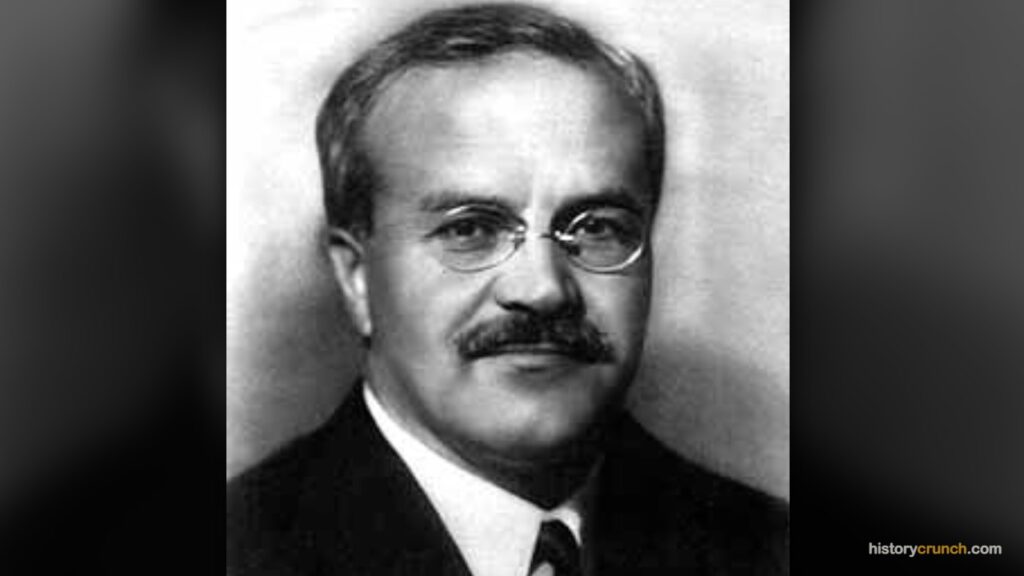
Vyacheslav Molotov served as Soviet Foreign Minister during World War II and is known for signing the Molotov-Ribbentrop Pact with Nazi Germany in 1939.
Vyacheslav Molotov
At a Glance
BornMarch 9th, 1890, in Kukarka, Vyatka Governorate, Russia
DiedNovember 8th, 1986, in Moscow, Soviet Union
RoleSoviet Foreign Minister and senior diplomat during World War II
Tap a heading to open the note.
Molotov Pact
On August 23rd, 1939, Molotov and German Foreign Minister Joachim von Ribbentrop signed a non-aggression treaty between the Soviet Union and Nazi Germany, stunning the world.
Secret Protocol
The pact included a secret section that divided Eastern Europe into Soviet and German zones of control, splitting countries like Poland and the Baltic states between the two powers.
Wartime Diplomacy
Molotov attended the Tehran Conference in November 1943 and helped coordinate Allied strategy between the Soviet Union, the United States, and Britain.
Molotov Cocktail
Finnish soldiers fighting the Soviet Union in the Winter War of 1939 to 1940 named their homemade fire bombs 'Molotov cocktails' as a mocking reference to him.
Yalta and Potsdam
Molotov took part in both the Yalta Conference in February 1945 and the Potsdam Conference in July and August 1945, helping shape the postwar order.
Long Career
Molotov served as Soviet Foreign Minister from 1939 to 1949 and again from 1953 to 1956, making him one of the longest-serving senior officials in Soviet wartime and postwar government.
Source: National Archives© factsthatcrunch.comMore World War II Facts →
World War IIRedacted FileInteractive
Facts that CrunchFactsthatCrunch
TOP SECRET
Molotov-Ribbentrop Pact: Secret Protocol on Territorial Division Assessment
The Molotov-Ribbentrop Pact was signed on August 23rd, 1939, just days before Germany invaded Poland. The public treaty promised that the Soviet Union and Germany would not attack each other. A secret additional protocol, kept hidden from the world for decades, divided Eastern Europe into two spheres of influence. Under that protocol, Finland, Estonia, Latvia, and parts of Romania were assigned to the Soviet sphere, while Germany claimed western Poland. The existence of the secret protocol was officially denied by the Soviet government until 1989, when a special commission under Mikhail Gorbachev confirmed that the documents were real.
Tap the black bars to declassify.
Vyacheslav Molotov served as Soviet Foreign Minister during World War II and is known for signing the Molotov-Ribbentrop Pact with Nazi Germany in 1939.Evidence Photo
The secret protocol directly enabled the Soviet invasion of eastern Poland on September 17th, 1939, splitting the country between two powers.
Evidence Tag
SubjectMolotov-Ribbentrop Pact: Secret Protocol on Territorial Division Assessment
File No.FTC-8821
Class.TOP SECRET
SourceNational Archives
Source: National Archives© factsthatcrunch.comMore World War II Facts →
World War IIDefinition
Facts that CrunchFactsthatCrunch
Nonaggression Pact
non-uh-GRESH-un PAKT | from Latin 'non' (not) + 'aggressio' (attack) + 'pactum' (agreement)

A nonaggression pact is a formal agreement between two or more countries promising not to attack each other for a set period of time. The countries involved do not have to be allies or share the same goals; they simply agree to stay out of each other's way militarily. These agreements were common in the 1930s as nations tried to protect their borders without going to war.

"When Germany and the Soviet Union signed a nonaggression pact on August 23rd, 1939, many countries were surprised because the two powers had been bitter enemies for years."

Source: US National Archives© factsthatcrunch.comMore World War II Facts →
Adolf Hitler
Held personal command over German armed forces as Supreme Commander from December 1941, overruling his generals on major decisions including the order to hold Stalingrad at all costs in the winter of 1942 to 1943
VS
Joseph Stalin
Held personal command over Soviet armed forces as Supreme Commander-in-Chief from July 10th, 1941, and worked closely with his General Staff, gradually allowing professional commanders like Zhukov more operational freedom after 1942
Stalin's willingness to trust his generals after 1942 proved decisive; Hitler's insistence on controlling tactical details and forbidding retreats contributed directly to disasters like the loss of the German Sixth Army at Stalingrad.
Source: National WWII Museum© factsthatcrunch.comFacts that Crunch
World War IIBiography
Facts that CrunchFactsthatCrunch
Joseph Stalin
General Secretary of the Soviet Communist Party and Supreme Commander of Soviet Armed Forces
Born: December 18th, 1878, Gori, Georgia, Russian Empire
Rose to power: 1924
Signed: August 23rd, 1939, Nazi-Soviet Non-Aggression Pact
Died: March 5th, 1953, Kuntsevo, Soviet Union

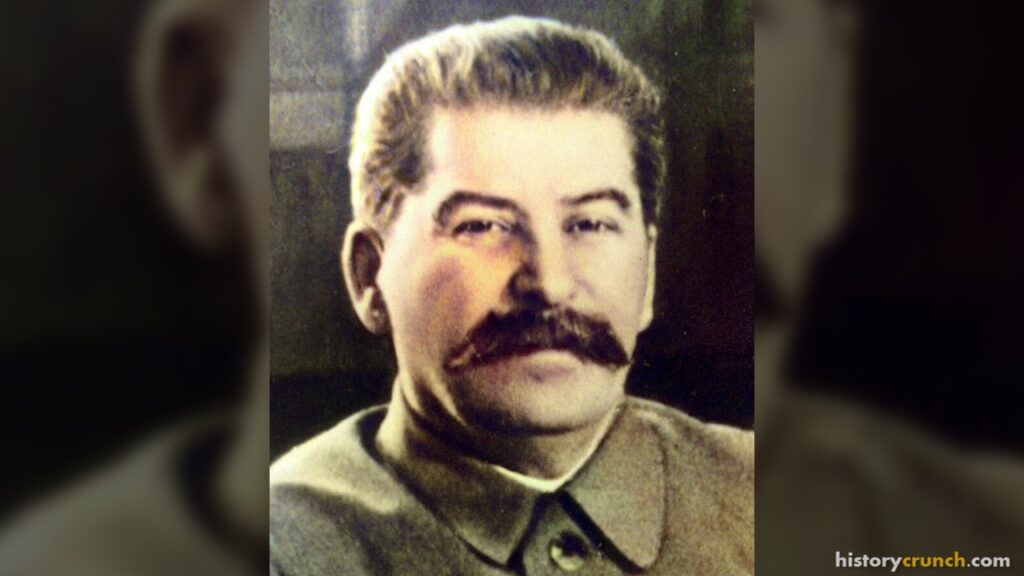
Stalin led the Soviet Union through World War II, directing the Red Army's defense against the German invasion that began in June 1941 and pushing German forces back all the way to Berlin by May 1945. His decisions shaped the Eastern Front, where the Soviet Union suffered losses on a scale no other Allied nation experienced.
Soviet Supreme CommanderEastern Front LeaderAllied Big Three MemberPostwar Superpower Builder
Joseph Stalin in 1950. Stalin was leader of the country during the major purges of the Soviet Union. (Colorized by historycrunch.com)
Source: UNESCO© factsthatcrunch.comMore World War II Facts →
World War IITurning Point
Facts that CrunchFactsthatCrunch
The Molotov-Ribbentrop Pact as a Soviet Foreign Policy Turning Point
What Happened

On the night of August 23rd, 1939, Soviet Foreign Minister Vyacheslav Molotov and German Foreign Minister Joachim von Ribbentrop signed a non-aggression treaty in Moscow that also contained a secret protocol dividing Eastern Europe into German and Soviet spheres of influence.

Before

The Soviet Union had spent most of the 1930s pursuing collective security agreements with Western democracies to contain German expansion.

After

The Soviet Union abandoned its collective security approach and aligned itself with Nazi Germany, enabling both powers to partition Eastern Europe without interference from the other.

Source: Smithsonian Institution© factsthatcrunch.comMore World War II Facts →
Test Yourself
World War IIMultiple ChoiceInteractive
Facts that CrunchFactsthatCrunch

What did the Molotov-Ribbentrop Pact mean for Poland's eastern territory and the Baltic States?

Tap an option.
ExplanationThe pact's secret protocol divided Eastern Europe into German and Soviet zones. The Soviet sphere included Estonia, Latvia, Lithuania, and eastern Poland. When Germany invaded Poland from the west on September 1st, 1939, the Soviet Union invaded from the east on September 17th, 1939, and the Baltic States were occupied by the Soviet Union by June 1940.
Source: UNESCO© factsthatcrunch.comMore World War II Facts →
World War II

The secret protocols of the Molotov-Ribbentrop Pact assigned Finland to the Soviet sphere of influence.

Tap an option.
ExplanationThe secret protocol signed on August 23rd, 1939, divided Eastern Europe into German and Soviet spheres. Finland was placed in the Soviet sphere, along with Estonia, Latvia, and the eastern part of Poland. Lithuania was later moved to the Soviet sphere in a revised secret protocol signed on September 28th, 1939.
Source: National Archives and Records Administration© factsthatcrunch.comFacts that Crunch
Explore More Topics

Operation Barbarossa

Germany's invasion of the Soviet Union in June of 1941 opened the largest land campaign in military history and shifted the overall scale of the war dramatically. The speed and size of the assault forced the Soviet military to fight massive defensive battles across thousands of miles of territory in a matter of weeks. The decisions made in those early months determined where and how the two sides would fight for the next four years.

World War IIScale
Facts that CrunchFactsthatCrunch

How Big Was the Operation Barbarossa Invasion Force in World War II? The Axis Fielded More Troops Than the Entire U.S. Army Times Eight

Total Axis invasion force
3,800,000Army Group Centre alone
1,180,000Army Group South alone
1,000,000Army Group North alone
680,000Entire U.S. Army today (active)
452,000

The National WWII Museum notes that about 3.5 million German troops and nearly 700,000 allied Axis soldiers from Romania, Finland, Hungary, Italy, and Slovakia took part in the opening phase. Germany committed 138 of its own divisions, split across three Army Groups aimed at Leningrad, Moscow, and Kiev. The full Axis force was roughly eight times larger than the entire active-duty U.S. Army today.

Source: UNESCO© factsthatcrunch.comMore World War II Facts →
World War IIQuote
Facts that CrunchFactsthatCrunch

If Hitler invaded Hell I would make at least a favourable reference to the Devil in the House of Commons.

WC
Winston ChurchillPrime Minister of Great Britain, June 21st, 1941, at Chequers, the evening before Germany invaded the Soviet Union
Why it matters

Churchill had opposed communism for decades, and this remark explained why he would still stand with the Soviet Union against Hitler, a case he then made to the British public in a radio broadcast the next evening promising Russia all possible help.

Source: Winston Churchill, The Grand Alliance, 1950© factsthatcrunch.comMore World War II Facts →
World War IITimelineInteractive
Facts that CrunchFactsthatCrunch

What were the key turning points in Operation Barbarossa from June to December 1941?

June 22nd, 1941June 27th, 1941July 3rd, 1941August 5th, 1941August 21st, 1941September 19th, 1941October 2nd, 1941
June 22nd, 1941 — Invasion Begins Germany launched Operation Barbarossa before dawn, sending roughly 3.8 million Axis troops across a 1,800-mile (2,900-kilometer) front into Soviet territory, the largest land invasion in history.
June 27th, 1941 — Minsk Encircled German Army Group Center completed a double encirclement around Minsk, trapping around 290,000 Soviet soldiers within the first week of the campaign.
July 3rd, 1941 — Stalin Addresses Nation Stalin made his first radio speech to Soviet citizens since the invasion began, calling on the population to resist the German advance and form a national defense effort.
August 5th, 1941 — Smolensk Pocket Closes German forces sealed the Smolensk encirclement, capturing roughly 310,000 Soviet prisoners and opening a potential path toward Moscow.
August 21st, 1941 — Hitler Redirects South Hitler ordered Army Group Center to halt its push toward Moscow and redirect forces to support the drive into Ukraine, a decision that delayed the Moscow offensive by weeks.
September 19th, 1941 — Kiev Falls German and allied forces captured Kiev after a massive encirclement battle, taking approximately 665,000 Soviet prisoners in one of the largest surrenders of the war.
October 2nd, 1941 — Operation Typhoon Starts Army Group Center launched Operation Typhoon, the German drive aimed at capturing Moscow before winter set in.
June 22nd, 1941 — Invasion BeginsGermany launched Operation Barbarossa before dawn, sending roughly 3.8 million Axis troops across a 1,800-mile (2,900-kilometer) front into Soviet territory, the largest land invasion in history.
June 27th, 1941 — Minsk EncircledGerman Army Group Center completed a double encirclement around Minsk, trapping around 290,000 Soviet soldiers within the first week of the campaign.
July 3rd, 1941 — Stalin Addresses NationStalin made his first radio speech to Soviet citizens since the invasion began, calling on the population to resist the German advance and form a national defense effort.
August 5th, 1941 — Smolensk Pocket ClosesGerman forces sealed the Smolensk encirclement, capturing roughly 310,000 Soviet prisoners and opening a potential path toward Moscow.
August 21st, 1941 — Hitler Redirects SouthHitler ordered Army Group Center to halt its push toward Moscow and redirect forces to support the drive into Ukraine, a decision that delayed the Moscow offensive by weeks.
September 19th, 1941 — Kiev FallsGerman and allied forces captured Kiev after a massive encirclement battle, taking approximately 665,000 Soviet prisoners in one of the largest surrenders of the war.
October 2nd, 1941 — Operation Typhoon StartsArmy Group Center launched Operation Typhoon, the German drive aimed at capturing Moscow before winter set in.

Tap a point to read its detail.

Source: Smithsonian Institution© factsthatcrunch.comMore World War II Facts →
World War IINotebook Definition
Facts that CrunchFactsthatCrunch
Wehrmacht
(noun)
The Wehrmacht was the unified armed forces of Nazi Germany from 1935 to 1945, made up of the army, navy, and air force under a single command. It replaced the older Reichswehr when Adolf Hitler publicly restored military conscription in March 1935.
in a sentence: The Wehrmacht invaded Poland on September 1st, 1939, starting the war in Europe.
Source: National WWII Museum© factsthatcrunch.comMore World War II Facts →
World War IIScale
Facts that CrunchFactsthatCrunch

Operation Barbarossa's Invasion Force in World War II Relied on Nearly 700,000 Horses, Far More Than Its 3,800 Tanks

Horses
700,000Motor vehicles
600,000Aircraft
4,300Tanks
3,800

When Germany and its Axis partners launched Operation Barbarossa on June 22nd, 1941, the force included about 700,000 horses to pull artillery and carry supplies, far more than its roughly 3,800 tanks or 4,300 aircraft. Despite its image as a modern mechanized army, the German military depended on horses more than on any other form of transport. Only about one fifth of the German Army was motorized; infantry divisions moved mostly on foot or by horse-drawn wagon.
Source: Library of Congress© factsthatcrunch.comMore World War II Facts →
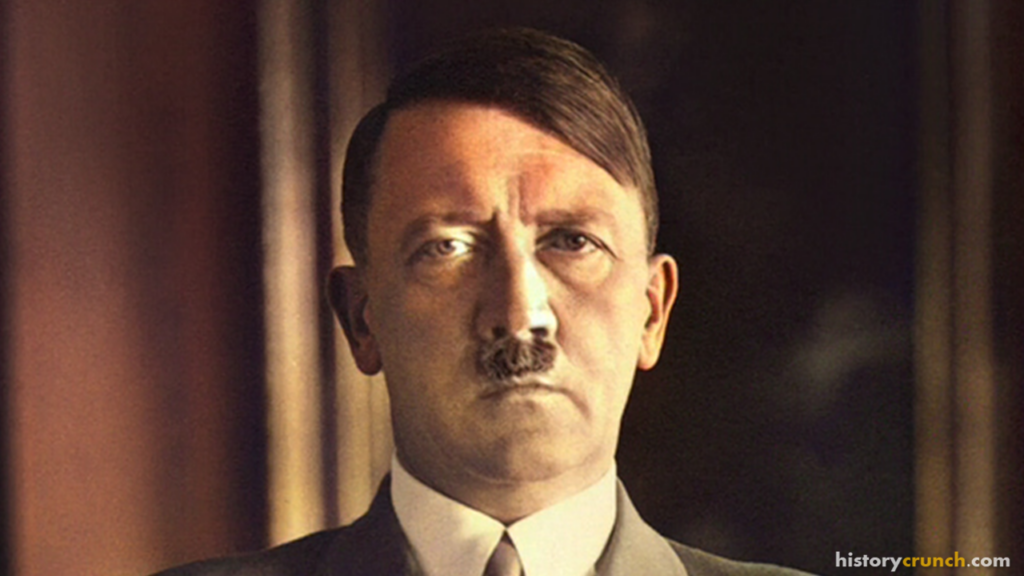
When Barbarossa commences, the world will hold its breath and make no comment.
Adolf Hitler
Fuhrer of Nazi Germany, speaking to his generals in early 1941
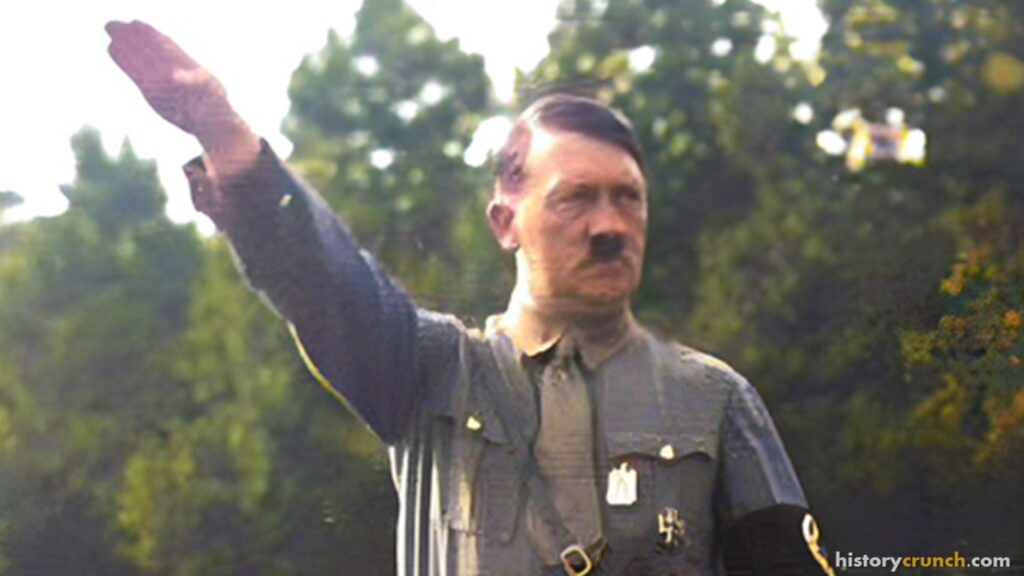
Hitler said this while secretly planning Operation Barbarossa, the German invasion of the Soviet Union. The attack began on June 22nd, 1941 with more than 3 million German soldiers, and it opened the largest land war in history.
Adolf Hitler in 1938. (Colorized by historycrunch.com)
Source: Imperial War Museums© factsthatcrunch.com
World War IIQuote
Facts that CrunchFactsthatCrunch

Our cause is just. The enemy will be defeated. Victory will be ours!

VM
Vyacheslav MolotovSoviet foreign minister and deputy head of the government, June 22nd, 1941, radio address announcing the German invasion
Why it matters

Molotov, not Stalin, told the Soviet people that Germany had attacked, since Stalin did not speak on the radio until July 3rd, 1941, and these closing words became the wartime slogan later engraved on the Soviet medal For Victory over Germany.

Source: Molotov radio address, June 22nd, 1941, US Holocaust Memorial Museum© factsthatcrunch.comMore World War II Facts →
World War IIBy the Numbers
Facts that CrunchFactsthatCrunch

German captivity killed Soviet prisoners of war at staggering rates, producing some of the deadliest numbers of any prisoner group in World War II.

About 5.7 Million
Soviet soldiers captured by Germany
About 3.3 Million
Died in German captivity
2 Million
Died by February 1st, 1942 (first 7 months)
About 57 to 58%
Death rate among Soviet POWs
3.6%
Death rate among British and American POWs (for comparison)
About 930,000
Soviet POWs still held as of January 1945
Germany deliberately withheld food and shelter from Soviet POWs, treating them far worse than prisoners from Western nations. The United States Holocaust Memorial Museum notes that Soviet POWs were the second-largest group of victims of Nazi racial policy, after Jewish people.
Source: UNESCO© factsthatcrunch.comMore World War II Facts →
Operation Barbarossa
Germany launched roughly 3.8 million troops into the Soviet Union on June 22nd, 1941, expecting to win within 3 to 4 months before winter set in
VS
Napoleon's 1812 Invasion
Napoleon crossed into Russia with about 450,000 troops in June 1812, also expecting a quick campaign before the Russian winter arrived
Both invasions underestimated Russia's size and winter—Napoleon lost more than 300,000 troops to cold, hunger, and disease before reaching Moscow, while Hitler's forces stalled outside Moscow by December 1941, never achieving the fast knockout either commander planned.
Source: National Army Museum, London© factsthatcrunch.comFacts that Crunch
World War IITimelineInteractive
Facts that CrunchFactsthatCrunch

What were the major battles on the Eastern Front during World War II, and how did they change the course of the war?

June 22nd, 1941September 19th, 1941October 2nd, 1941August 23rd, 1942November 19th, 1942February 2nd, 1943July 5th, 1943
June 22nd, 1941 — Operation Barbarossa Germany launched a massive invasion of the Soviet Union along a 1,800-mile (2,900 km) front. About 3 million German and Axis troops crossed the border, making it the largest land invasion in history.
September 19th, 1941 — Fall of Kiev German forces captured Kiev after encircling Soviet armies in the region. The battle resulted in roughly 600,000 Soviet soldiers captured or killed, one of the largest encirclements of the war.
October 2nd, 1941 — Battle of Moscow Begins Germany launched Operation Typhoon, aiming to capture Moscow before winter. Soviet forces, aided by harsh temperatures that dropped below minus 20 degrees Fahrenheit (minus 29 degrees Celsius), halted the German advance by December.
August 23rd, 1942 — Battle of Stalingrad Begins German forces began their assault on Stalingrad, the industrial city on the Volga River. Fighting lasted until February 2nd, 1943, and resulted in about 800,000 Axis casualties.
November 19th, 1942 — Operation Uranus Soviet forces launched a major counteroffensive designed to encircle German troops at Stalingrad. Two Soviet army groups linked up at Kalach on November 23rd, 1942, trapping roughly 300,000 Axis soldiers inside the pocket.
February 2nd, 1943 — German Surrender at Stalingrad Field Marshal Friedrich Paulus surrendered what remained of German Sixth Army at Stalingrad. About 91,000 German soldiers were taken prisoner, including 24 generals, marking a major turning point on the Eastern Front.
July 5th, 1943 — Battle of Kursk Begins Germany launched Operation Citadel to cut off a large Soviet salient near Kursk. The battle involved roughly 6,000 tanks on both sides and became the largest armored engagement of the war.
June 22nd, 1941 — Operation BarbarossaGermany launched a massive invasion of the Soviet Union along a 1,800-mile (2,900 km) front. About 3 million German and Axis troops crossed the border, making it the largest land invasion in history.
September 19th, 1941 — Fall of KievGerman forces captured Kiev after encircling Soviet armies in the region. The battle resulted in roughly 600,000 Soviet soldiers captured or killed, one of the largest encirclements of the war.
October 2nd, 1941 — Battle of Moscow BeginsGermany launched Operation Typhoon, aiming to capture Moscow before winter. Soviet forces, aided by harsh temperatures that dropped below minus 20 degrees Fahrenheit (minus 29 degrees Celsius), halted the German advance by December.
August 23rd, 1942 — Battle of Stalingrad BeginsGerman forces began their assault on Stalingrad, the industrial city on the Volga River. Fighting lasted until February 2nd, 1943, and resulted in about 800,000 Axis casualties.
November 19th, 1942 — Operation UranusSoviet forces launched a major counteroffensive designed to encircle German troops at Stalingrad. Two Soviet army groups linked up at Kalach on November 23rd, 1942, trapping roughly 300,000 Axis soldiers inside the pocket.
February 2nd, 1943 — German Surrender at StalingradField Marshal Friedrich Paulus surrendered what remained of German Sixth Army at Stalingrad. About 91,000 German soldiers were taken prisoner, including 24 generals, marking a major turning point on the Eastern Front.
July 5th, 1943 — Battle of Kursk BeginsGermany launched Operation Citadel to cut off a large Soviet salient near Kursk. The battle involved roughly 6,000 tanks on both sides and became the largest armored engagement of the war.

Tap a point to read its detail.

Source: Library of Congress© factsthatcrunch.comMore World War II Facts →
World War IIQ&A
Facts that CrunchFactsthatCrunch
Q

Why Did Hitler Invade the Soviet Union?

A

Hitler invaded the Soviet Union in 1941 primarily because he believed that conquering Soviet territory would give Germany food, oil, and living space for German settlers, a goal he called Lebensraum. He also wanted to destroy Soviet communism, which he saw as a threat tied to what he called a Jewish conspiracy, and he expected the Soviet military to collapse quickly under a fast German attack. A third reason was that controlling Soviet resources would allow Germany to outlast Britain and any future American involvement in the war.
Source: US National Archives© factsthatcrunch.comMore World War II Facts →
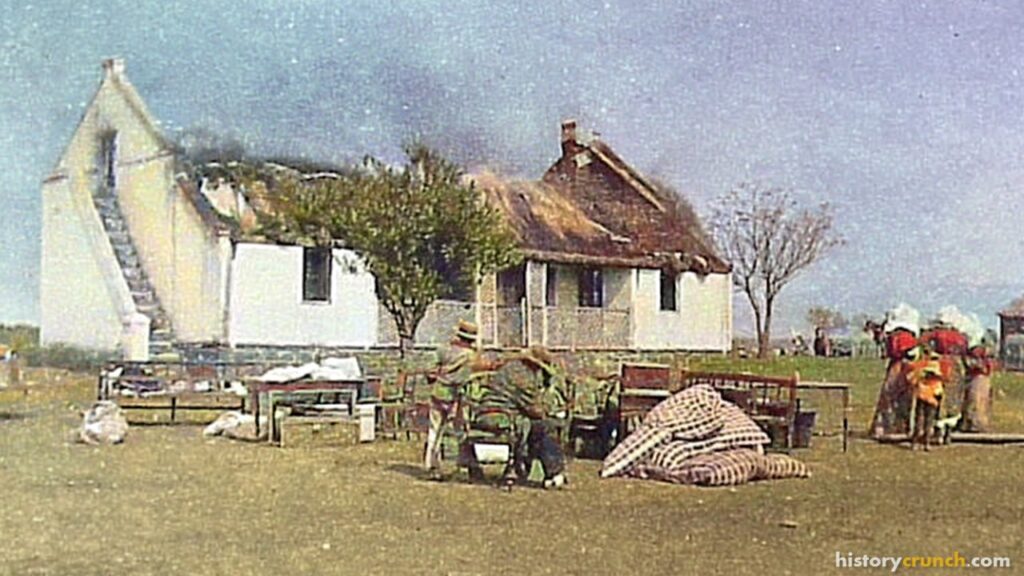
Scorched Earth
noun
Scorched earth is a military strategy in which retreating or advancing forces destroy crops, bridges, roads, supplies, and other resources so the enemy cannot use them. During World War II, both the Soviet Union and Nazi Germany used scorched earth tactics on the Eastern Front to slow each other's advance and cut off supplies.
Scorched earth tactics by the British Army during the Boer War. Pictured here, Boer citizens watch as their home is burned. (Colorized by historycrunch.com)
Source: National WWII Museum© factsthatcrunch.com
World War IINotebook Definition
Facts that CrunchFactsthatCrunch
Lebensraum
(noun)
Lebensraum is a German word meaning 'living space.' Nazi leaders used it to argue that Germany needed to conquer land in Eastern Europe to feed and house its growing population.
in a sentence: Hitler used Lebensraum to justify invading Poland and the Soviet Union.
Source: United States Holocaust Memorial Museum© factsthatcrunch.comMore World War II Facts →
World War IINotebook Timeline
Facts that CrunchFactsthatCrunch
World War II
Eastern Front: Major Battles, 1941 to 1945
June 22nd, 1941: Germany launched Operation Barbarossa, sending about 3 million troops into Soviet territory.
September 8th, 1941: German forces completed their encirclement of Leningrad, beginning a siege that would last nearly 900 days.
July 4th, 1942: Germany opened its summer offensive toward the Volga River and the Caucasus oil fields.
July 5th, 1943: The Battle of Kursk began as Germany launched its last major offensive on the Eastern Front.
June 23rd, 1944: The Soviet Union launched Operation Bagration, destroying Germany's Army Group Center in about six weeks.
April 16th, 1945: Soviet forces began the Battle of Berlin, the final major engagement on the Eastern Front.
Source: National WWII Museum© factsthatcrunch.comMore World War II Facts →
World War IIScale
Facts that CrunchFactsthatCrunch

Operation Barbarossa in World War II drew in 80 percent of the German Army, committing 148 divisions to a single campaign against the Soviet Union.

German Army losses on the Eastern Front, 1941 to 1944
95%German Army divisions sent into Barbarossa
80%German Army troops massed on Soviet frontier by spring 1941
73%German Luftwaffe massed on Soviet frontier by spring 1941
58%

Germany began concentrating 73 percent of its army and 58 percent of its air force on the Soviet border in the months before the June 22nd, 1941 invasion. The scale of that commitment shaped the whole war: for most of the conflict, 75 to 80 percent of the Wehrmacht had to stay deployed in the East. By the end of the war, the Eastern Front had claimed about 95 percent of all German Army losses recorded between 1941 and 1944.
Source: UNESCO© factsthatcrunch.comMore World War II Facts →
Einsatzgruppen
Nazi mobile killing squads
Einsatzgruppen were mobile SS and police units that followed the German army into the Soviet Union and Eastern Europe after June 1941, shooting Jewish people, Roma, and others in mass executions at sites such as Babi Yar, where they killed more than 33,000 people over two days in September 1941. By 1943, these units had killed an estimated 1.5 million people, making them a central tool of the Nazi campaign of mass murder before the gas chambers of the death camps took over as the main method.
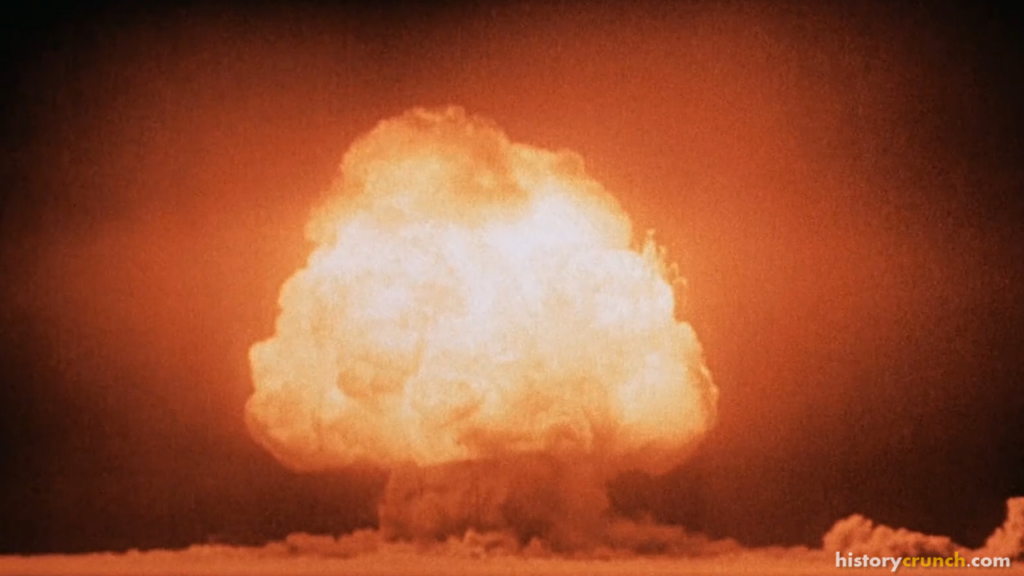
Image of the Mushroom cloud of the 'Gadget' during the Trinity Test. (July 16th, 1945)
Source: United States Holocaust Memorial Museum© factsthatcrunch.comFacts that Crunch
World War IIRecord
Facts that CrunchFactsthatCrunch
LARGEST MILITARY DEATH TOLL OF ANY NATION

The Soviet Union lost an estimated 8.7 million military personnel in World War II, more than any other country, based on a 1993 study led by Colonel General Grigory Krivosheev using declassified Soviet Defense Ministry archives.

Germany, the next highest, lost about 5.3 million military personnel. The largest group within the Soviet military dead were ethnic Russians at roughly 5.7 million, followed by ethnic Ukrainians at about 1.3 million. These figures remain debated, as Russia's Central Defense Ministry Archive lists the names of roughly 14 million dead and missing service members.

Source: UNESCO© factsthatcrunch.comMore World War II Facts →
World War IIImage ExplorerInteractive
Facts that CrunchFactsthatCrunch
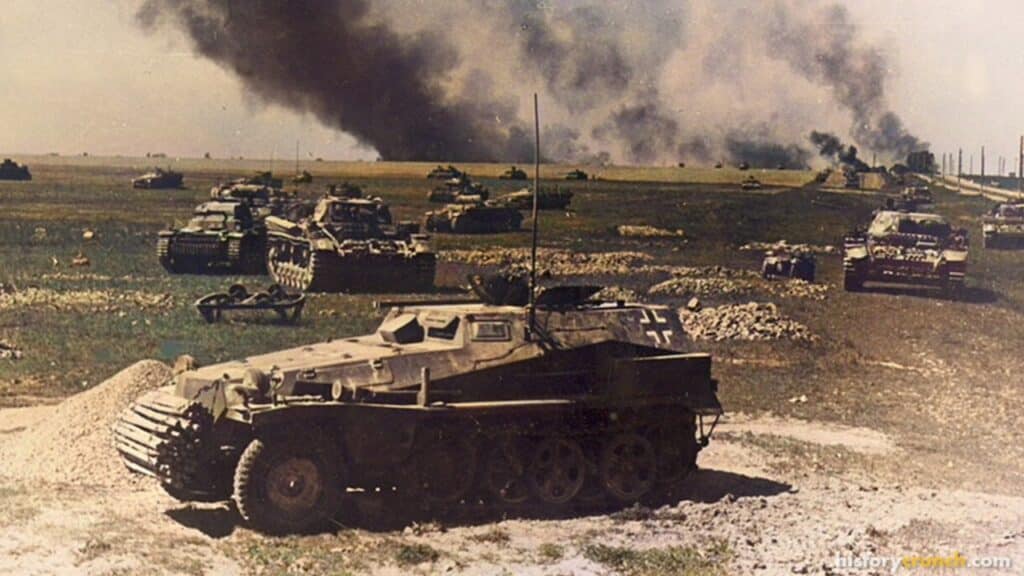
Nazi German mechanized forces during the events of Operation Barbarossa. (Colorized by historycrunch.com)
German Cross on Half-Track The black cross (Balkenkreuz) painted on the half-track's side identifies this vehicle as German. The Wehrmacht used this marking on all their armored vehicles so crews could tell friend from foe quickly during fast-moving armored advances.
Sd.Kfz. 251 Half-Track The vehicle in the foreground is an Sd.Kfz. 251 armored personnel carrier, recognizable by its half-wheel, half-track design. Germany used these to move infantry alongside tanks, which was central to the blitzkrieg method of fast combined-arms attack.
Panzer Tanks Advancing Several tanks are visible spread across the open terrain in the middle distance, moving in a loose formation. This spread-out spacing reflects standard German armored doctrine, which kept vehicles apart to reduce losses from a single hit and to cover more ground quickly.
Smoke Columns in the Distance Two large columns of black smoke rise on the horizon, showing that fighting or destruction is already happening ahead of the advancing column. Burning vehicles or fuel depots produce this kind of thick black smoke, and its presence tells us these forces are moving into an active combat zone.
Nazi German mechanized forces during the events of Operation Barbarossa. (Colorized by historycrunch.com)
Source: UNESCO© factsthatcrunch.comMore World War II Facts →
Test Yourself
World War II

Germany's invasion of the Soviet Union on June 22nd, 1941, was so successful in its early weeks that the Soviets lost more aircraft in the first day of Operation Barbarossa than the United States had in its entire air force at the time.

Myth or fact? Tap your call.
The truthThe Soviet air force suffered devastating losses on the first day, with roughly 1,200 Soviet aircraft destroyed, but the United States Army Air Forces had well over 2,000 aircraft in service by mid-1941, so the comparison does not hold.
Source: National WWII Museum© factsthatcrunch.comFacts that Crunch
World War IISequenceInteractive
Facts that CrunchFactsthatCrunch

In what order did these Operation Barbarossa advances happen across the Eastern Front?

Use the arrows to put these in the right order, then tap Check order.
123456
Germany crosses into Soviet territory on three fronts
Kiev falls to German forces after a massive encirclement
Operation Typhoon drives toward Moscow
German troops capture Kharkov and push toward Rostov
German advance stalls in the snow west of Moscow
Army Group North reaches the outskirts of Leningrad
Source: UNESCO© factsthatcrunch.comMore World War II Facts →
World War IIImage QuestionInteractive
Facts that CrunchFactsthatCrunch
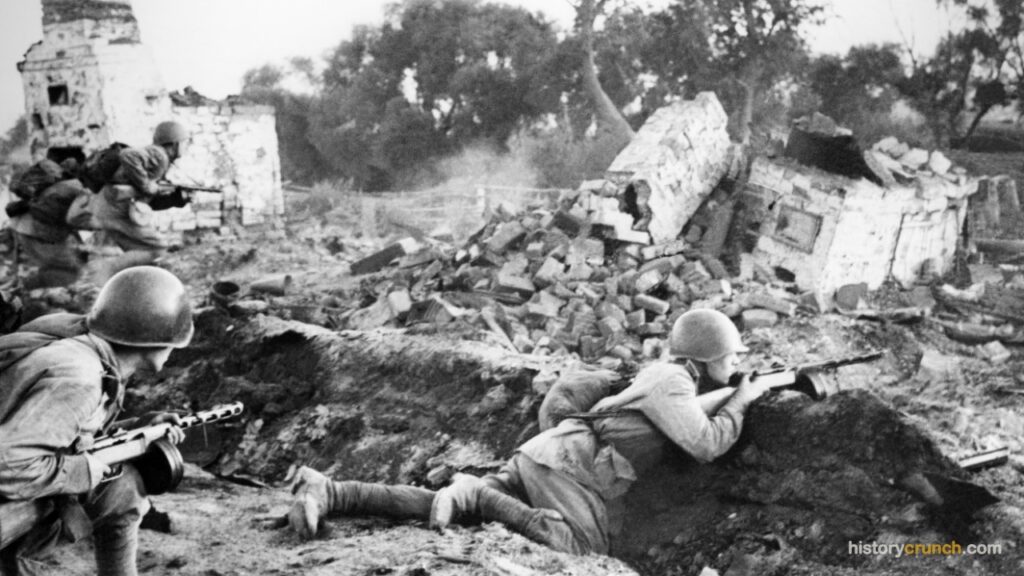
Soviet soldiers fire from a trench and ruined buildings during ground combat on the Eastern Front in World War II.

In this photograph of Soviet soldiers fighting among ruined buildings on the Eastern Front, what does the soldiers' use of low ground and collapsed brick structures as cover reveal about urban combat in World War II?

Tap an option.
ExplanationThe image shows one soldier prone in a trench aiming forward while another crouches behind a collapsed brick wall, both using whatever low ground and debris are available. This reflects a central reality of Eastern Front urban combat: once buildings were destroyed, soldiers fought in small groups from position to position, using craters, trenches, and rubble as cover rather than advancing in formation. Battles such as the fighting for Stalingrad in 1942 and 1943 made this style of close, grinding combat well known, where the destruction of a city created the very terrain that slowed attackers and helped defenders hold ground.
Source: Smithsonian Institution© factsthatcrunch.comMore World War II Facts →
World War II

In Operation Barbarossa in late 1941, was each of these a cause of the German advance stalling before Moscow or a factor that helped Soviet forces hold the line?

Read the item in the dashed box, then tap the column where it belongs.
SORT THIS ITEM1 / 10
Autumn mud halting vehicles
Overextended supply lines
Exhaustion of frontline troops
Delayed start from June invasion
Severe winter without proper gear
Siberian reserve divisions
Railway control behind the front
Defense-in-depth around Moscow
Shortened Soviet supply routes
Zhukov appointed to command
Sort all 10 to see your score
Autumn mud halting vehiclesOverextended supply linesSiberian reserve divisionsRailway control behind the frontExhaustion of frontline troopsDelayed start from June invasionDefense-in-depth around MoscowSevere winter without proper gearShortened Soviet supply routesZhukov appointed to command
ExplanationThe German advance on Moscow stalled in late November and early December 1941 because supply lines stretched more than 1,000 miles (1,600 km) while Soviet forces received fresh Siberian divisions trained and equipped for winter fighting, giving the Red Army a critical edge.
Source: National WWII Museum© factsthatcrunch.comFacts that Crunch

Sources

Explore More Topics

Siege of Leningrad

Few events on the Eastern Front lasted as long or placed as heavy a burden on civilians as the German encirclement of Leningrad. The city was cut off from reliable supply routes for nearly 900 days, forcing its population to survive on minimal food during some of the harshest winters of the war. The siege illustrates how the conflict on the Eastern Front affected city populations directly, not just military forces in the field.

World War IIStat
Facts that CrunchFactsthatCrunch
civilian deaths per month

During the Siege of Leningrad, civilian deaths peaked at roughly 100,000 per month in January and February 1942, mostly from starvation.

German and Finnish forces encircled Leningrad beginning on September 8th, 1941, cutting off food and fuel supplies to a city of more than 2.5 million people. At the worst point of the first winter, the daily bread ration for non-working civilians fell to just 125 grams, a portion made partly from sawdust and other fillers. The siege lasted until January 27th, 1944, a total of 872 days, and killed an estimated one million or more civilians overall.

Source: US National Archives© factsthatcrunch.comMore World War II Facts →
World War IINotebook Timeline
Facts that CrunchFactsthatCrunch
World War II
Siege of Leningrad: Key Moments
September 8th, 1941: German forces cut the last land road into Leningrad, starting the siege.
November 20th, 1941: Soviet authorities cut civilian bread rations to just 125 grams per day, the lowest level of the siege.
December 22nd, 1941: Soviet trucks began crossing frozen Lake Ladoga, opening the first supply route into the city.
January 18th, 1943: Soviet forces broke a narrow land corridor through the German lines, partly relieving the city.
September 1943: German artillery bombardment of the city reached its peak intensity that fall.
January 27th, 1944: Soviet armies fully lifted the siege after 872 days, driving German forces away from the city.
Source: National WWII Museum© factsthatcrunch.comMore World War II Facts →
World War IIComparison Table
Facts that CrunchFactsthatCrunch

The Siege of Leningrad and the Battle of Stalingrad were two of the most destructive engagements on the Eastern Front in World War II.

Siege of LeningradBattle of Stalingrad
Start DateSeptember 8th, 1941August 23rd, 1942
End DateJanuary 27th, 1944February 2nd, 1943
DurationAbout 872 daysAbout 5 months
German CommanderField Marshal Wilhelm Ritter von LeebField Marshal Friedrich Paulus
Soviet CommanderMarshal Georgy Zhukov (early phase)General Vasily Chuikov (city defense)
Primary Soviet CostAbout 800,000 civilian deaths from starvation and shellingAbout 480,000 Soviet military deaths
OutcomeGermans never captured the city; siege liftedGerman 6th Army surrounded and forced to surrender
Siege of Leningrad
Start Date
September 8th, 1941
End Date
January 27th, 1944
Duration
About 872 days
German Commander
Field Marshal Wilhelm Ritter von Leeb
Soviet Commander
Marshal Georgy Zhukov (early phase)
Primary Soviet Cost
About 800,000 civilian deaths from starvation and shelling
Outcome
Germans never captured the city; siege lifted
Battle of Stalingrad
Start Date
August 23rd, 1942
End Date
February 2nd, 1943
Duration
About 5 months
German Commander
Field Marshal Friedrich Paulus
Soviet Commander
General Vasily Chuikov (city defense)
Primary Soviet Cost
About 480,000 Soviet military deaths
Outcome
German 6th Army surrounded and forced to surrender
Source: US National Archives© factsthatcrunch.comMore World War II Facts →
World War IIRecord
Facts that CrunchFactsthatCrunch
LONGEST SIEGE OF A MAJOR CITY IN WORLD WAR II

The Siege of Leningrad, which ran from September 8th, 1941, to January 27th, 1944, lasted 872 days, making it the longest blockade of a major city fought during World War II.

German and Finnish forces cut all land routes into Leningrad on September 8th, 1941, trapping a population of roughly 2.5 million people. The city was never captured. Soviet forces broke the blockade fully on January 27th, 1944, after a final offensive drove Axis troops back from the city's outer defenses.

Source: US National Archives© factsthatcrunch.comMore World War II Facts →
World War IICause & Effect
Facts that CrunchFactsthatCrunch
Cause

On September 8th, 1941, German and Finnish forces completed a land blockade around Leningrad, cutting the city's roughly three million residents off from outside food and supply routes.

Effects
Soviet authorities rationed bread to as little as 4.4 ounces (125 grams) per day for civilians with no work assignment, an amount far too small to prevent starvation.
An estimated 800,000 to 1.1 million civilians died during the siege, most from hunger-related causes in the winter of 1941 to 1942.
The Soviet government organized a supply route across frozen Lake Ladoga, called the Road of Life, to haul food and fuel into the city by truck during winter months.
City workers converted parks and open spaces into vegetable plots, and factories kept producing military equipment even as their workers went hungry.

The German blockade of Leningrad lasted from September 8th, 1941, to January 27th, 1944. The city's survival depended on the Lake Ladoga supply route and strict rationing managed by Soviet authorities throughout those nearly 900 days.

Source: UNESCO© factsthatcrunch.comMore World War II Facts →
World War IIFlip NotebookInteractive
Facts that CrunchFactsthatCrunch

How did the Road of Life keep Leningrad supplied across frozen Lake Ladoga during the siege?

Source: Smithsonian Institution© factsthatcrunch.comMore World War II Facts →
Test Yourself

During the Siege of Leningrad in World War II, was each of these a cause of German failure or a Soviet survival measure?

Read the item in the dashed box, then tap the column where it belongs.
SORT THIS ITEM1 / 8
Winter halting German armor
Lufftwaffe shift to other fronts
German supply lines overstretched
Hitler's order forbidding city capture
Civilian food rationing cards
The Road of Life across Lake Ladoga
Factory evacuation east of the Urals
Militia units formed from workers
Sort all 8 to see your score
Winter halting German armorLufftwaffe shift to other frontsCivilian food rationing cardsThe Road of Life across Lake LadogaFactory evacuation east of the UralsMilitia units formed from workersGerman supply lines overstretchedHitler's order forbidding city capture
ExplanationGermany chose to starve the city rather than storm it, but the Soviets kept Leningrad supplied across frozen Lake Ladoga and organized civilians into defense and production, preventing a German victory.
Source: National WWII Museum© factsthatcrunch.comFacts that Crunch
World War II

Can you put these key stages of the Siege of Leningrad in the correct order, from the German encirclement to the full Soviet relief in 1944?

Use the arrows to put these in the right order, then tap Check order.
123456
German forces close the land corridor around Leningrad
Operation Iskra supplies reach Leningrad by rail for the first time
Operation Spark breaks a narrow land corridor to the city
Soviet forces launch Operation Neva to widen the corridor
Soviet forces open the Road of Life across Lake Ladoga
Soviet Operation Neva 2 fully lifts the siege
Source: National WWII Museum© factsthatcrunch.comFacts that Crunch

How many tons of supplies crossed the Road of Life to reach besieged Leningrad during World War II?

Take your best guess. Tap a range.
The real numberabout 1.6 million tonsThe Road of Life carried about 1.6 million tons of supplies across frozen Lake Ladoga between 1941 and 1943, keeping Leningrad from total starvation while more than one million civilians still died during the siege.
Source: Michigan State University Soviet History Project (soviethistory.msu.edu)© factsthatcrunch.comFacts that Crunch
Explore More Topics

Battle of Moscow

Germany's drive toward the Soviet capital in the fall and winter of 1941 was intended to end the campaign before Soviet industry could fully shift to war production. The Soviet defense, combined with an early and severe winter, stopped the German advance at the edges of the city. The outcome mattered because it was the first major halt to German progress on the Eastern Front and showed that a quick German victory was no longer certain.

World War IIBulletin Board BioInteractive
Facts that CrunchFactsthatCrunch
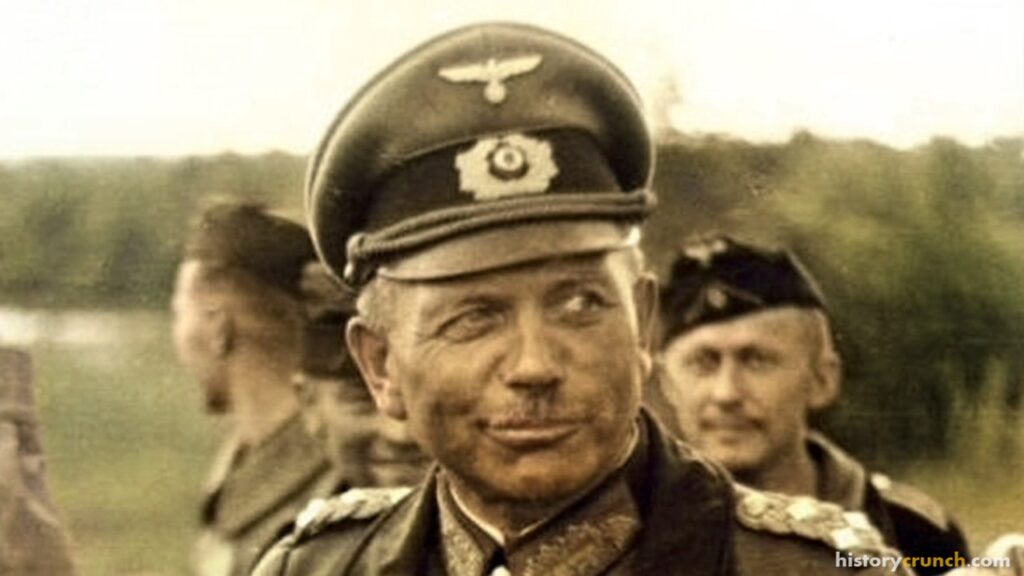
Heinz Guderian in July of 1941. (Colorized by historycrunch.com)
Heinz Guderian
At a Glance
BornJune 17th, 1888, in Kulm, West Prussia, German Empire (present-day Chelmno, Poland)
DiedMay 14th, 1954, in Schwangau, Bavaria, West Germany
RoleGerman General and Pioneer of Armored Warfare
Tap a heading to open the note.
Early Career
Guderian served as a signals officer in World War I, and his experience with communications shaped his later ideas about fast, coordinated tank attacks.
Blitzkrieg Architect
Guderian developed and promoted the theory of armored warfare in the 1930s, arguing that tanks should mass together and strike fast rather than support infantry slowly.
France 1940
During the invasion of France in May 1940, Guderian's panzer corps crossed the Meuse River at Sedan and drove to the English Channel in about ten days, splitting Allied forces in two.
Operation Barbarossa
In the summer of 1941, Guderian commanded the 2nd Panzer Group during the invasion of the Soviet Union and drove hundreds of miles east in the opening weeks of the campaign.
Relieved of Command
Hitler relieved Guderian of command in December 1941 after Guderian ordered a retreat near Tula without permission, a decision Hitler refused to accept.
Memoirs
After the war, Guderian wrote a memoir titled 'Panzer Leader,' published in 1950, which became a widely read account of armored warfare on the Eastern and Western Fronts.
Source: National Archives and Records Administration© factsthatcrunch.comMore World War II Facts →
World War IICorkboard Timeline
Facts that CrunchFactsthatCrunch
Battle of Moscow in World War II
Key Dates, 1941 to 1942
1941
September 30th, 1941
Germany launched Operation Typhoon, its drive to capture Moscow, with Army Group Center pushing east across a wide front.
1941
October 7th, 1941
German armored units closed a large encirclement near Vyazma and Bryansk, trapping roughly 673,000 Soviet soldiers in two pockets.
1941
October 19th, 1941
Soviet leader Joseph Stalin declared a state of siege in Moscow, ordering civilians and officials to help defend the city.
1941
November 15th, 1941
Germany renewed its advance on Moscow after a brief pause, sending armored groups north and south of the city to attempt an encirclement.
1941
December 5th, 1941
Soviet forces under General Georgy Zhukov launched a major counterattack along the entire Moscow front, pushing German units back from the city's outskirts.
1942
January 7th, 1942
Soviet forces began a broad winter offensive aimed at surrounding and destroying German Army Group Center, marking the end of the immediate threat to Moscow.
A timeline pinned to the board.
Source: National WWII Museum© factsthatcrunch.comMore World War II Facts →
World War IIBulletin Board BioInteractive
Facts that CrunchFactsthatCrunch
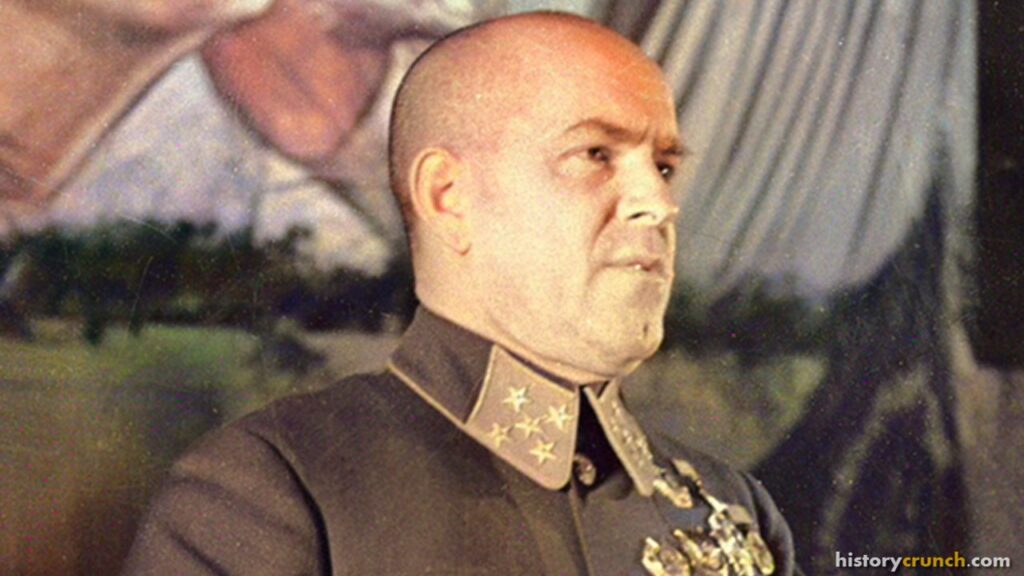
Georgy Zhukov in 1941. (Colorized by historycrunch.com)
Georgy Zhukov
At a Glance
BornDecember 1st, 1896, in Strelkovka, Kaluga Governorate, Russian Empire
DiedJune 18th, 1974, in Moscow, Soviet Union
RoleMarshal of the Soviet Union and senior Red Army commander in World War II
Tap a heading to open the note.
Battle of Khalkhin Gol
Zhukov commanded Soviet forces against Japan at Khalkhin Gol, Mongolia, in 1939, defeating the Japanese Sixth Army and stopping Japanese expansion toward Siberia.
Defense of Moscow
In late 1941, Zhukov led the defense of Moscow and organized a Soviet counterattack in December that pushed German forces back from the city for the first time in the war.
Battle of Stalingrad
Zhukov helped plan Operation Uranus in November 1942, the encirclement strategy that trapped roughly 300,000 German soldiers at Stalingrad.
Battle of Kursk
In July 1943, Zhukov coordinated Soviet forces at Kursk, the largest tank battle in history, where the Red Army stopped Germany's final major offensive on the Eastern Front.
Fall of Berlin
Zhukov commanded the 1st Belorussian Front during the Soviet assault on Berlin in April and May 1945, accepting Germany's formal surrender on May 8th, 1945, on behalf of the Soviet Union.
Post-War Career
Stalin distrusted Zhukov's popularity and removed him from top command in 1946, but Nikita Khrushchev later restored him and Zhukov served as Soviet Minister of Defense from 1955 to 1957.
Source: National WWII Museum© factsthatcrunch.comMore World War II Facts →
World War IIComparison
Facts that CrunchFactsthatCrunch
Battle of Moscow
Soviet side: Western Front armies under General Georgy Zhukov, reinforced by reserves from Siberia in late 1941
German side: Army Group Center under Field Marshal Fedor von Bock, aiming to capture the Soviet capital
Soviet forces held a line roughly 60 miles (97 km) from Moscow at the closest point
German troops numbered around 1.9 million at the start of Operation Typhoon in October 1941
Battle of Stalingrad
Soviet side: Don Front under General Konstantin Rokossovsky and Stalingrad Front under General Andrei Yeremenko, coordinated by Zhukov
German side: 6th Army under Field Marshal Friedrich Paulus, supported by Romanian, Italian, and Hungarian forces along the flanks
Axis allied armies held exposed flanks stretching hundreds of miles along the Don and Volga rivers
Soviet Operation Uranus in November 1942 encircled roughly 265,000 Axis troops inside the city
VS

At Moscow, two roughly matched national armies faced each other in a direct push and counterattack, with no large allied contingents on either side. At Stalingrad, Germany relied heavily on Romanian, Italian, and Hungarian armies to hold its flanks, and those weaker allied forces were the main target of the Soviet encirclement plan.

Source: Smithsonian Institution© factsthatcrunch.comMore World War II Facts →
World War IIRipple Effect
Facts that CrunchFactsthatCrunch
The Event

In early December 1941, German forces halted outside Moscow and were thrown back by a Soviet counteroffensive, ending Hitler's plan to knock the Soviet Union out of the war in a single campaign.

German Army Group Center lost roughly 100,000 men to combat and frostbite in December 1941 alone, and the Wehrmacht never fully replaced those losses.
Hitler dismissed Field Marshal Walther von Brauchitsch as commander of the German Army on December 19th, 1941, and took direct personal command, removing professional military judgment from major operational decisions for the rest of the war.
Germany was forced to plan a more limited 1942 offensive aimed only at the southern Soviet Union rather than a renewed drive on Moscow, committing forces to the campaign that ended in disaster at Stalingrad.
The survival of Moscow as the Soviet capital kept the rail and road network centered on the city intact, allowing the USSR to move troops and supplies across the front throughout the war.
The failure confirmed to Soviet leadership that Germany could be stopped and eventually defeated, shifting overall Soviet strategy from pure survival to building the force needed for a long counteroffensive campaign.
Source: Library of Congress© factsthatcrunch.comMore World War II Facts →
World War IINotebook T-Chart
Facts that CrunchFactsthatCrunch
Battle of Moscow, Late 1941: Soviet Advantages vs. German Disadvantages
Soviet Advantages
Siberian divisions, transferred from the Far East, arrived well-trained and equipped for winter combat.
Soviet troops wore padded winter gear that kept soldiers functional in temperatures below minus 30 degrees Fahrenheit (minus 34 degrees Celsius).
General Georgy Zhukov took command of Moscow's defense in October 1941 and organized a disciplined counterattack.
Short supply lines gave Soviet forces quicker access to reinforcements and ammunition near the capital.
The T-34 tank's wide tracks handled deep snow and frozen ground far better than most German armor.
German Disadvantages
German units had been fighting continuously since June 1941 and were exhausted by the time they neared Moscow.
Most German soldiers arrived at Moscow still wearing summer uniforms, leaving them dangerously unprepared for the severe Russian winter.
Hitler dismissed Field Marshal von Brauchitsch in December 1941 and took direct command himself, disrupting army leadership.
Overextended supply lines stretched hundreds of miles back, slowing delivery of fuel, food, and replacement parts.
German tank engines and gun lubricants froze in the extreme cold, making many vehicles and weapons inoperable.
Source: National WWII Museum© factsthatcrunch.comMore World War II Facts →
Test Yourself
World War IIDecision PointInteractive
Facts that CrunchFactsthatCrunch
DECISION POINT

It is late October 1941, and you are Field Marshal Fedor von Bock, commanding Army Group Center during Germany's invasion of the Soviet Union in World War II. Operation Typhoon, the German drive toward Moscow, has stalled after weeks of heavy rain turned the roads into mud, and your men and vehicles are worn down from months of fighting. You must decide whether to push forward toward Moscow before winter fully sets in or pull back and rest your forces, knowing that the Soviet capital is only about 65 miles (105 kilometers) away at its closest point.

History turned on this choice. What would you have done?
What do you do with Army Group Center in late October 1941?
Choose a path. Each choice opens a different future.
Your move
Pick option A, B, or C to walk down that path.
If you choose A
German forces might reach Moscow before Soviet defenses can be reinforced, but exhausted troops and broken supply lines make a collapse possible if the drive fails.
If you choose B
A frozen surface would let vehicles move again and let troops recover, but the pause gives Soviet forces time to bring up fresh reserve armies from Siberia.
If you choose C
Troops would be sheltered and supplied through the winter, but Germany would lose the strategic momentum it had held since June 1941.
What really happened
Von Bock and the German high command resumed the advance in mid-November 1941 after the ground froze, pushing to within roughly 12 miles (19 kilometers) of Moscow before Soviet forces, reinforced by about 18 fresh divisions transferred from the Far East, launched a major counteroffensive on December 5th and 6th, 1941, and drove Army Group Center back. The failure to take Moscow kept the Soviet government and its rail network intact and ended any chance of a quick German victory in the East, prolonging the war on the Eastern Front for more than three additional years.
Source: National WWII Museum© factsthatcrunch.comMore World War II Facts →
World War II

Operation Typhoon, Germany's drive on Moscow in 1941, was halted in part because German supply lines had stretched more than 600 miles (965 km) from their starting positions, leaving frontline units short of fuel and ammunition.

Tap an option.
ExplanationBy the time German forces reached the outskirts of Moscow in late November and early December 1941, their supply lines had been badly overstretched, making it nearly impossible to keep tanks fueled and soldiers fed. Soviet forces under General Georgy Zhukov launched a counteroffensive on December 5th, 1941, pushing the Germans back from the capital.
Source: National WWII Museum© factsthatcrunch.comFacts that Crunch
World War II

Hitler fired General Walther von Brauchitsch and took personal command of the German Army after the failure at Moscow, which actually stabilized the front and prevented a complete collapse.

Myth or fact? Tap your call.
The truthWhen Brauchitsch resigned on December 19th, 1941, Hitler took direct command of the German Army. Historians at the German Military History Research Office note that his strict 'no retreat' order, though costly, prevented a disorganized rout similar to what Napoleon's army suffered in 1812.
Source: German Military History Research Office (Militaergeschichtliches Forschungsamt)© factsthatcrunch.comFacts that Crunch
Explore More Topics

Battle of Stalingrad

The fighting for Stalingrad from the summer of 1942 through the winter of 1943 marked the point at which Soviet forces moved from holding ground to destroying entire German armies. Germany committed a large portion of its southern forces to taking the city, and the Soviet encirclement that followed trapped over 300,000 Axis troops. After Stalingrad, Germany was unable to mount a sustained offensive on the Eastern Front.

World War IIThen and Now
Facts that CrunchFactsthatCrunch
Then

During World War II, Stalingrad was a major industrial city on the western bank of the Volga River, home to large factories including the Stalingrad Tractor Factory, which produced T-34 tanks before being seized as a frontline stronghold in late 1942. The Battle of Stalingrad lasted from August 1942 to February 2nd, 1943, and left most of the city in ruins. Soviet and German forces fought building by building, and civilian and military casualties on both sides reached into the hundreds of thousands.

Now

Today the city is called Volgograd, a name it received on November 10th, 1961, when Soviet authorities changed it during a period of de-Stalinization. A massive memorial complex on Mamayev Kurgan hill, opened in 1967, marks the battle site and includes the famous statue known as The Motherland Calls, which stands about 279 feet (85 meters) tall. The city has a population of around one million people and holds an annual commemoration each February 2nd to mark the battle's end.

The name change from Stalingrad to Volgograd shows how the city's identity has shifted over time, even as the battle remains one of the most studied turning points of World War II.

Source: UNESCO© factsthatcrunch.comMore World War II Facts →
World War IIFast Facts
Facts that CrunchFactsthatCrunch
Operation Uranus launch dateNovember 19th, 1942
Soviet troops committed to the operationAbout 1.1 million soldiers
Soviet tanks and self-propelled guns deployedAbout 1,500
Soviet artillery pieces usedAbout 13,500 guns and mortars
Axis troops encircled by November 23rd, 1942About 265,000 German and Axis soldiers trapped inside the Stalingrad pocket
Length of the encirclement ringAbout 200 miles (320 kilometers) around the pocket
Soviet fronts that took partThree: the Southwestern, Don, and Stalingrad Fronts

Key takeaways

Operation Uranus was the Soviet counterattack planned to trap German forces fighting at Stalingrad, and it succeeded within four days of launching.

The three Soviet fronts attacked from the north and south at the same time, closing the encirclement near Kalach-on-Don on November 23rd, 1942.

The size of the force the Soviets committed, more than a million troops supported by thousands of guns and tanks, showed how much the Red Army had grown since 1941.

Source: US National Archives© factsthatcrunch.comMore World War II Facts →
World War IIQ&A
Facts that CrunchFactsthatCrunch
Q

Why Was Stalingrad a Turning Point in World War II?

A

The German loss at Stalingrad in February 1943 was the first major defeat of a large German army on the Eastern Front, ending a long string of German advances deep into Soviet territory. Germany's Sixth Army, commanded by Field Marshal Friedrich Paulus, surrendered with roughly 91,000 surviving soldiers, including 24 generals, after months of brutal urban fighting. After Stalingrad, Germany shifted to a defensive posture in the east and never regained the initiative against the Soviet Union.

Source: Library of Congress© factsthatcrunch.comMore World War II Facts →
World War IIQuote
Facts that CrunchFactsthatCrunch

It is necessary to defend to the last drop of blood every position, every meter of Soviet territory.

JS
Joseph StalinPeople's Commissar of Defense of the Soviet Union, July 28th, 1942
Why it matters

Stalin's Order No. 227 was read aloud to Red Army units instead of being printed, and its slogan, Not one step back, became the main rallying cry of the Soviet press in the summer of 1942 as German forces pushed toward Stalingrad.
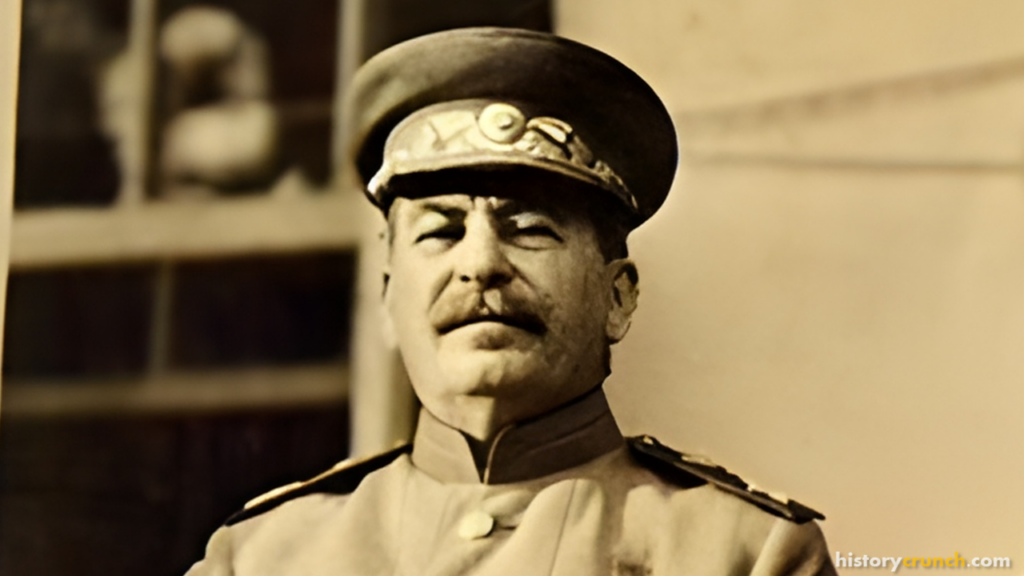
Joseph Stalin in November of 1943, during the Tehran Conference. (Enhanced by historycrunch.com)
Source: Order No. 227, Soviet People's Commissariat of Defense, 1942© factsthatcrunch.comMore World War II Facts →
World War IIMini Timeline
Facts that CrunchFactsthatCrunch
The Battle of Stalingrad began in late summer 1942 when German forces pushed into the city along the Volga River.
The opening phase covered the German advance and the first brutal weeks of street fighting inside the city.
Soviet forces held on under intense pressure while both sides poured troops into the battle.
June 28th, 1942
Germany Launches Case BlueGermany begins its summer offensive toward southern Russia, aiming to seize the Volga River and the Caucasus oil fields.
August 23rd, 1942
German Forces Reach the VolgaArmy Group B pushes to the northern edge of Stalingrad and the Luftwaffe bombs the city heavily, killing thousands of civilians.
September 13th, 1942
Street Fighting BeginsGerman infantry enters central Stalingrad and combat shifts to ruined buildings, sewers, and factory floors as Soviet troops refuse to give ground.
September 14th, 1942
Mamayev Kurgan Changes HandsSoviet and German units fight for the large hill overlooking the city because it gives artillery observers a clear view of the entire battlefield.
October 14th, 1942
Germany Attacks the Factory DistrictGerman forces launch a concentrated assault on the Tractor Factory and nearby industrial plants, pushing Soviet defenders toward the river bank.
1,000 yards
Minimum width of Soviet-held land inside Stalingrad at the worst point of the German advance
300,000
German and Axis troops committed to the Stalingrad sector by the time the main assault began in September 1942
40,000+
Estimated Soviet civilian casualties in Stalingrad during the August 23rd, 1942 air bombardment alone
Source: Smithsonian Institution© factsthatcrunch.comMore World War II Facts →
World War IITimelineInteractive
Facts that CrunchFactsthatCrunch

What were the key turning points in the Battle of Stalingrad from 1942 to 1943?

June 28th, 1942August 23rd, 1942September 13th, 1942October 14th, 1942November 19th, 1942November 23rd, 1942December 12th, 1942
June 28th, 1942 — German Advance Begins Germany launched Case Blue, a major summer offensive pushing southeast toward the Volga River and the Caucasus oil fields. Army Group South split into two forces to cover both objectives.
August 23rd, 1942 — Luftwaffe Firebombing The German Luftwaffe bombed Stalingrad heavily, killing thousands of civilians and turning much of the city into rubble. The bombing created dense ruins that would later slow the German ground advance.
September 13th, 1942 — Urban Fighting Begins German 6th Army under General Friedrich Paulus pushed into Stalingrad and began brutal street-by-street fighting. Soviet 62nd Army under General Vasily Chuikov defended the city from the western bank of the Volga.
October 14th, 1942 — Heaviest German Push German forces launched their largest single assault on the Stalingrad tractor factory district, committing five divisions in one day. Soviet defenders held a narrow strip of riverbank under extreme pressure.
November 19th, 1942 — Operation Uranus Launches Soviet forces opened a massive pincer counteroffensive north and south of Stalingrad, commanded by Generals Georgy Zhukov and Aleksandr Vasilevsky. Within four days, roughly 330,000 German and Axis troops were encircled.
November 23rd, 1942 — Encirclement Complete Soviet forces closed the ring at Kalach-on-Don, trapping the German 6th Army and parts of the 4th Panzer Army inside the Stalingrad pocket. Hitler ordered Paulus to hold the city and not attempt a breakout.
December 12th, 1942 — Relief Attempt Fails Field Marshal Erich von Manstein launched Operation Winter Storm to break through to the trapped 6th Army from the south. Soviet forces stopped the relief column about 35 miles (56 km) short of Stalingrad by late December.
June 28th, 1942 — German Advance BeginsGermany launched Case Blue, a major summer offensive pushing southeast toward the Volga River and the Caucasus oil fields. Army Group South split into two forces to cover both objectives.
August 23rd, 1942 — Luftwaffe FirebombingThe German Luftwaffe bombed Stalingrad heavily, killing thousands of civilians and turning much of the city into rubble. The bombing created dense ruins that would later slow the German ground advance.
September 13th, 1942 — Urban Fighting BeginsGerman 6th Army under General Friedrich Paulus pushed into Stalingrad and began brutal street-by-street fighting. Soviet 62nd Army under General Vasily Chuikov defended the city from the western bank of the Volga.
October 14th, 1942 — Heaviest German PushGerman forces launched their largest single assault on the Stalingrad tractor factory district, committing five divisions in one day. Soviet defenders held a narrow strip of riverbank under extreme pressure.
November 19th, 1942 — Operation Uranus LaunchesSoviet forces opened a massive pincer counteroffensive north and south of Stalingrad, commanded by Generals Georgy Zhukov and Aleksandr Vasilevsky. Within four days, roughly 330,000 German and Axis troops were encircled.
November 23rd, 1942 — Encirclement CompleteSoviet forces closed the ring at Kalach-on-Don, trapping the German 6th Army and parts of the 4th Panzer Army inside the Stalingrad pocket. Hitler ordered Paulus to hold the city and not attempt a breakout.
December 12th, 1942 — Relief Attempt FailsField Marshal Erich von Manstein launched Operation Winter Storm to break through to the trapped 6th Army from the south. Soviet forces stopped the relief column about 35 miles (56 km) short of Stalingrad by late December.

Tap a point to read its detail.

Source: UNESCO© factsthatcrunch.comMore World War II Facts →
World War IIPhoto Analysis
Facts that CrunchFactsthatCrunch
Soviet soldiers fire from a trench and ruined buildings during ground combat on the Eastern Front in World War II.
Soviet Soldiers Fighting in the Ruins of Stalingrad, World War II
Look closely
Two Soviet soldiers in the foreground fire rifles from a shallow trench cut into open ground, while a third soldier takes cover behind a shattered brick wall in the background.
The buildings around them have been reduced to rubble, with only partial walls and collapsed masonry visible.
Smoke rises in the middle distance, showing that fighting is still active nearby.
The context
The Battle of Stalingrad ran from late August 1942 through early February 1943 and became the longest and most destructive urban battle on the Eastern Front.
Soviet troops fought street by street and building by building to hold the city against German forces.
Because so many structures had been bombed or shelled flat, soldiers on both sides used rubble piles and shell craters as fighting positions exactly like the trench shown here.
What it tells us
The photo shows that by this stage of the battle, conventional cover was gone and soldiers had to use the ground itself for protection.
It also illustrates how Soviet infantry tactics at Stalingrad relied on small groups holding close to enemy lines so that German artillery and air support could not be used without hitting their own troops.
Images like this were released by Soviet state news agencies to show the determination of Red Army soldiers defending the city.
Source: National WWII Museum© factsthatcrunch.comMore World War II Facts →
Panic-mongers and cowards must be destroyed on the spot.
Joseph Stalin
Soviet leader, Order No. 227, July 28th, 1942
In the summer of 1942, German armies were pushing deep into southern Russia toward Stalingrad and the Caucasus oil fields. Stalin issued Order No. 227, known as the Not One Step Back order, which banned retreat without permission, created penal battalions for soldiers accused of cowardice, and set up blocking units behind the front lines.
Joseph Stalin in 1950. Stalin was leader of the country during the major purges of the Soviet Union. (Colorized by historycrunch.com)
Source: National WWII Museum© factsthatcrunch.com
About 5,000
German prisoners from Stalingrad who survived Soviet captivity and returned home
When the German 6th Army surrendered at Stalingrad on February 2nd, 1943, roughly 91,000 soldiers were taken prisoner by Soviet forces. Disease, starvation, and harsh camp conditions killed the great majority, and the last survivors were not repatriated until 1955.
Source: United States Holocaust Memorial Museum© factsthatcrunch.comFacts that Crunch
World War IINotebook Bio
Facts that CrunchFactsthatCrunch
Friedrich Paulus was a senior German military officer who commanded the German Sixth Army during World War II.
Friedrich Paulus
in World War II
German Field Marshal, World War II
Born: September 23rd, 1890, in Breitenau, Germany
Battle of Stalingrad: commanded German 6th Army, besieged from late 1942
Surrender: captured by Soviet forces on January 31st, 1943
Source: National WWII Museum© factsthatcrunch.comMore World War II Facts →
World War IIBy the Numbers
Facts that CrunchFactsthatCrunch

The Battle of Stalingrad, fought from July 17th, 1942, to February 2nd, 1943, left behind casualty counts by group that show just how unevenly the losses fell across soldiers, prisoners, and civilians.

~1,130,000
Soviet military casualties
~800,000
Total Axis casualties (all nations)
250,000
German and Romanian corpses recovered
91,000
German troops taken prisoner at surrender
~5,000 to 6,000
Prisoners who survived Soviet captivity
~40,000
Civilians killed inside Stalingrad city
Of the roughly 91,000 German soldiers captured at the final surrender, official estimates put the number who lived to return home at only about 5,000 to 6,000, most dying in Soviet camps from illness and starvation. The Axis losses included German, Romanian, Italian, and Hungarian forces, with Germany's 6th Army alone accounting for the largest share.
Source: US National Archives© factsthatcrunch.comMore World War II Facts →
World War IIConnections
Facts that CrunchFactsthatCrunch
Operation Uranus (November 1942)
German Sixth Army Supply Crisis (Winter 1942)
The connection

Operation Uranus, launched on November 19th, 1942, encircled Germany's Sixth Army at Stalingrad, and that encirclement directly created the Kessel, or cauldron, that cut off roughly 300,000 German troops from outside supply lines.

The Luftwaffe's airlift attempt fell far short of the daily tonnage the trapped army needed, and the supply failure forced Field Marshal Friedrich Paulus to surrender his forces on February 2nd, 1943, a defeat that permanently weakened Germany's position on the Eastern Front.

Source: Library of Congress© factsthatcrunch.comMore World War II Facts →
World War IITurning Point
Facts that CrunchFactsthatCrunch
Battle of Stalingrad
What Happened

On January 10th, 1943, Soviet forces launched Operation Ring, compressing the trapped German Sixth Army from all sides and ending any realistic hope of a German breakout or relief.

Before

Germany held the initiative on the Eastern Front and was pushing deep into Soviet territory

After

The Soviet Union held the strategic initiative on the Eastern Front for the rest of the war

Source: US National Archives© factsthatcrunch.comMore World War II Facts →
Test Yourself
World War IITrue or FalseInteractive
Facts that CrunchFactsthatCrunch

At Stalingrad, the Soviet Operation Uranus launched on November 19th, 1942 was a German offensive action designed to cut off Soviet supply lines.

ExplanationOperation Uranus was a Soviet counterattack, not a German offensive. Soviet forces struck the weaker Romanian armies on the flanks of the German Sixth Army and encircled roughly 300,000 German and Axis troops inside the Stalingrad pocket within four days.
Source: UNESCO© factsthatcrunch.comMore World War II Facts →

Sources

Explore More Topics

Battle of Kursk

In July of 1943, Germany launched what became the largest tank engagement of the war in an attempt to regain the initiative on the Eastern Front. Soviet commanders had prepared extensive defensive lines in advance, which blunted the German attack and preserved Soviet armored strength. The result confirmed that the overall momentum on the Eastern Front had shifted permanently in the Soviet Union's favor.

World War IIRecord
Facts that CrunchFactsthatCrunch
DEADLIEST ARMORED BATTLE IN HISTORY

The Battle of Kursk, fought from July 5th to August 23rd, 1943, is recognized as the deadliest armored battle in history, with the Soviet Red Army alone losing at least 1,600 tanks destroyed across the operation.

Germany committed roughly 2,700 tanks and assault guns to the offensive, while the Soviets fielded around 5,000 tanks across their fronts. Soviet tank losses far outnumbered German losses, yet the Red Army's large production reserves allowed it to absorb those losses and go on the offensive. Germany's panzer force never recovered enough to launch another major strategic attack on the Eastern Front.

Source: UNESCO© factsthatcrunch.comMore World War II Facts →
World War IINotebook Timeline
Facts that CrunchFactsthatCrunch
World War II
Battle of Kursk: July to August 1943
July 4th, 1943: German forces begin moving into position along the Kursk salient.
July 5th, 1943: Operation Citadel launches as German armor attacks from the north and south.
July 12th, 1943: Soviet and German tank forces clash near Prokhorovka in one of the largest armored engagements of the war.
July 13th, 1943: Hitler cancels the offensive after learning Allied forces have landed in Sicily.
August 5th, 1943: Soviet forces recapture Orel and Belgorod, cities that had been under German control.
August 23rd, 1943: Soviet troops retake Kharkov, marking the end of the Kursk campaign.
Source: National WWII Museum© factsthatcrunch.comMore World War II Facts →
T-34 vs Panzer IV
production numbers on the Eastern Front, 1943
Soviet factories built roughly 35,000 T-34 tanks in 1943 alone, while Germany produced about 3,000 Panzer IVs that same year. The Soviet Union's ability to outproduce Germany by more than ten to one gave Red Army commanders the numbers to absorb heavy losses and still advance.
Source: National WWII Museum© factsthatcrunch.comFacts that Crunch
World War IIDate
Facts that CrunchFactsthatCrunch

World War II
Source: NBC documentary The Decision to Drop the Bomb, 1965© factsthatcrunch.comMore World War II Facts →
World War IIDefinition
Facts that CrunchFactsthatCrunch
Panzer
German word meaning 'armor' or 'armored'

Panzer is a German term used in World War II to describe armored fighting vehicles, especially tanks, and the military units built around them. Germany organized its tanks into panzer divisions, which combined tanks, motorized infantry, artillery, and support troops into fast-moving strike forces. These divisions were designed to break through enemy lines quickly and keep moving before defenders could regroup.

"During the invasion of France in May 1940, German panzer divisions crossed the Ardennes region and reached the English Channel in less than two weeks, cutting off Allied forces in the north."
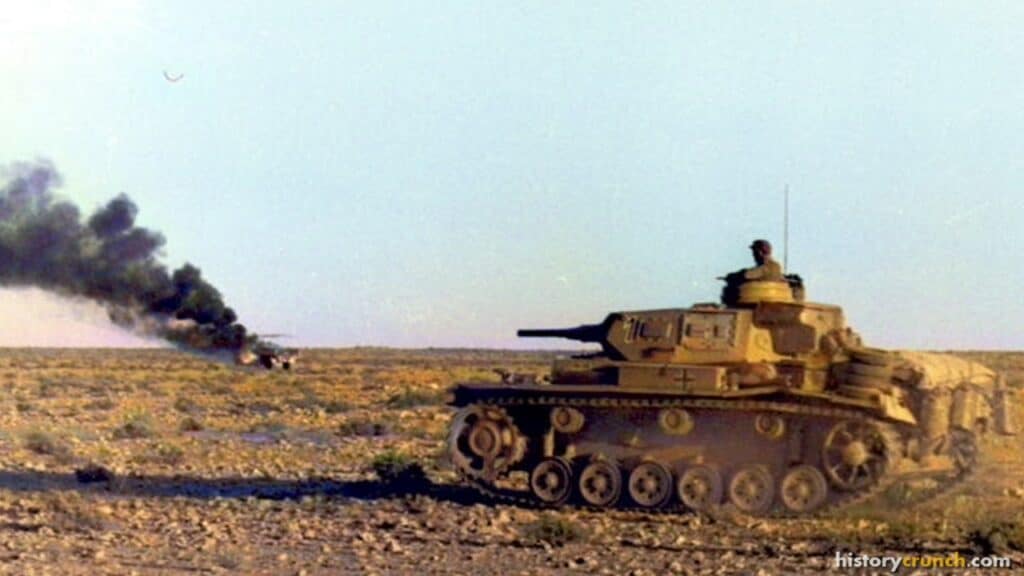
German Panzer during Operation Sonnenblume in April of 1941 in the North African Theater of World War II. (Colorized by historycrunch.com)
Source: Smithsonian Institution© factsthatcrunch.comMore World War II Facts →
World War IIRecord
Facts that CrunchFactsthatCrunch
COSTLIEST SINGLE DAY IN AERIAL WARFARE HISTORY

The opening day of the Battle of Kursk, July 5th, 1943, produced more aircraft shot down than any other single day in the history of aerial warfare.

Germany launched Operation Citadel that morning with around 777,000 troops and 2,451 tanks and assault guns, while the Soviet side had massed roughly 1,300,000 troops and 3,600 tanks to defend the Kursk salient. Both air forces threw enormous numbers of planes into the fight at once: the Luftwaffe put around 1,800 aircraft into the battle and Soviet air forces fielded roughly 2,400, leading to air combat losses on a scale never seen in a single day before or since. The battle as a whole ran from July 5th to August 23rd, 1943, and ended in a Soviet victory that permanently shifted the initiative on the Eastern Front.

Source: Smithsonian Institution© factsthatcrunch.comMore World War II Facts →
World War IICause & Effect
Facts that CrunchFactsthatCrunch
Cause

Hitler personally ordered Operation Citadel to proceed in July 1943, overriding concerns from senior commanders who warned that the German forces attacking Kursk faced heavily prepared Soviet defenses.

Effects
The German armored force lost hundreds of tanks it could not replace in time to hold the Eastern Front.
Soviet forces launched immediate counteroffensives after Kursk, recapturing Orel by August 5th, 1943, and Kharkov by August 23rd, 1943.
Germany shifted permanently to a defensive strategy in the East, giving Soviet commanders the freedom to choose when and where to attack.
Hitler's insistence on pressing the offensive despite poor odds deepened distrust between him and the German Army's senior staff.

The Battle of Kursk, fought from July 5th to July 23rd, 1943, was the last time Germany held enough armored strength to attempt a large offensive on the Eastern Front. Hitler's decision to proceed with Citadel against reinforced Soviet lines drained German tank reserves and handed Soviet forces the overall momentum for the rest of the war in the East.

Source: Library of Congress© factsthatcrunch.comMore World War II Facts →
Test Yourself
World War IIImage QuestionInteractive
Facts that CrunchFactsthatCrunch
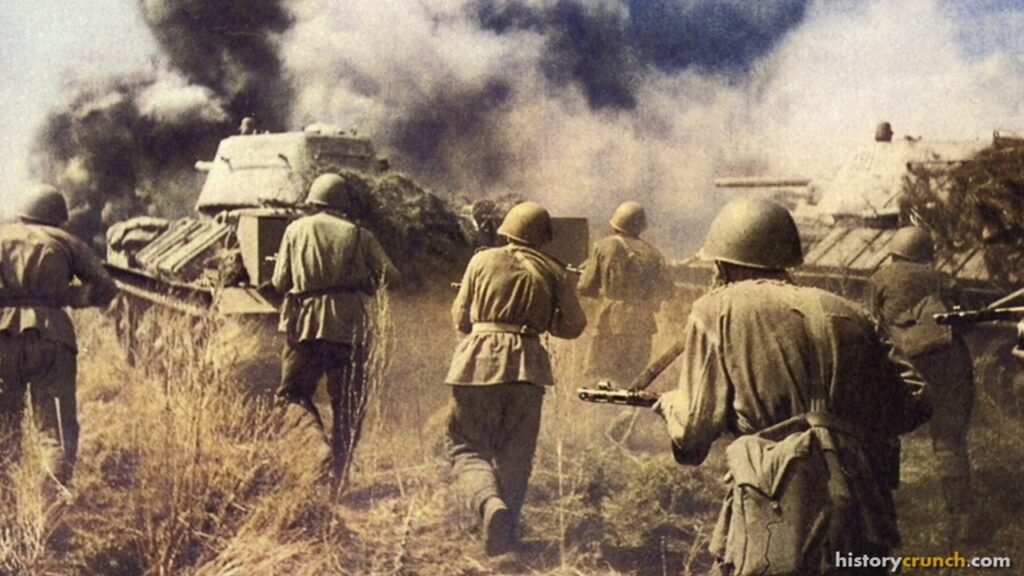
Soviet troops during the Battle of Kursk in July of 1943. (Colorized by historycrunch.com)

In this colorized photograph of Soviet infantry advancing alongside tanks at Kursk in July 1943, what does the positioning of the foot soldiers directly beside and behind the moving tanks reveal about Soviet combined-arms tactics at this stage of the war?

Tap an option.
ExplanationBy mid-1943 the Red Army had developed combined-arms doctrine that required infantry to advance with tanks. Infantry protected the tanks from close-range anti-tank weapons, while the tanks gave infantry fire support and momentum. At Kursk, Soviet forces applied this on a large scale during the counterattacks that followed the initial German push, and the visible smoke from burning or firing vehicles in the background shows this was active combat, not a drill or march.
Source: UNESCO© factsthatcrunch.comMore World War II Facts →
World War IITrue or FalseInteractive
Facts that CrunchFactsthatCrunch

At the Battle of Kursk in 1943, the Germans launched Operation Citadel with full knowledge of Soviet defensive plans, giving them a strong strategic surprise advantage.

ExplanationSoviet military intelligence and partisan networks gave Soviet commanders detailed advance warning of German attack plans. The Soviets used that time to build eight defensive belts around the Kursk salient, concentrate large armored reserves behind the front, and prepare minefields and anti-tank gun positions specifically designed to stop German armored units before any Soviet counterattack began.
Source: Smithsonian Institution© factsthatcrunch.comMore World War II Facts →
World War IIMatchingInteractive
Facts that CrunchFactsthatCrunch

Which definition fits each Battle of Kursk myth or fact?

Tap a term, then tap its match.
Source: Library of Congress© factsthatcrunch.comMore World War II Facts →
World War IIDecision PointInteractive
Facts that CrunchFactsthatCrunch
DECISION POINT

It is late June 1943, and you are Adolf Hitler, dictator of Germany during World War II. Your generals are warning you that the Soviet Red Army has spent months building massive defensive lines around the Kursk salient, a bulge in the Eastern Front roughly 150 miles (240 kilometers) wide, and that the element of surprise is gone after repeated delays to the planned offensive. If you order the attack forward, you risk destroying Germany's best armored divisions against prepared positions; if you cancel or delay again, you give up any chance of regaining the initiative on the Eastern Front.

History turned on this choice. What would you have done?
What do you do about Operation Citadel, the planned armored assault on the Kursk salient?
Choose a path. Each choice opens a different future.
Your move
Pick option A, B, or C to walk down that path.
If you choose A
German armor would strike Soviet defenses that have had months to harden, including deep minefields, anti-tank guns, and reserve armies waiting behind the lines; heavy German losses become very likely, and a Soviet counterattack could follow.
If you choose B
Germany would preserve its armored strength but abandon any plan to retake the initiative in the East; Soviet forces would remain free to plan their own offensives at a time of their choosing.
If you choose C
Further delay would give Soviet forces still more time to deepen their defenses and move reserves into place, reducing the chance of a breakthrough even with better equipment.
What really happened
Hitler ordered Operation Citadel to begin on July 5th, 1943. German forces attacked from both north and south but were stopped by the Soviet defenses after roughly a week of fighting, and Hitler halted the offensive on July 13th, 1943, partly because Allied landings in Sicily demanded attention elsewhere. The failure ended Germany's ability to launch large-scale strategic offensives on the Eastern Front, and the Soviet Union seized the initiative it kept for the rest of the war.
Source: National WWII Museum© factsthatcrunch.comMore World War II Facts →
World War II

How deep were the Soviet defensive lines built at Kursk before the German attack in 1943?

Take your best guess. Tap a range.
The real numberabout 110 miles (177 km)The Soviets built eight fortified lines of resistance stretching nearly 110 miles deep at Kursk, making it the most layered defense the Red Army had ever constructed. When German armor pushed through one line, Soviet troops were ready behind the next, wearing down the German attack before it could break through.
Source: US Army Combat Studies Institute, Army University Press© factsthatcrunch.comFacts that Crunch

Sources

Explore More Topics

Battle of Berlin

The Soviet assault on the German capital in April of 1945 was the final major operation on the Eastern Front and ended with Germany's unconditional surrender. The city was defended street by street, and the fighting continued even as the overall German command structure collapsed. The fall of Berlin closed four years of the most intense and destructive land warfare of the entire war.

World War IIRedacted FileInteractive
Facts that CrunchFactsthatCrunch
TOP SECRET
German Instrument of Surrender: Effective Date, Time, and Ceasefire Terms Assessment, May 1945
The German Instrument of Surrender required all German military forces to stop fighting at one minute past midnight on May 9th, 1945, Central European Time. The first signing took place at Reims, France, on May 7th, 1945, where German General Alfred Jodl signed on behalf of the German High Command. A second, more formal signing followed at Berlin-Karlshorst to satisfy Soviet demands that the document be signed on German soil. The surrender applied to all German forces across every theater of war, including forces still holding positions in Norway, Denmark, and parts of the Eastern Front. Field Marshal Wilhelm Keitel signed for Germany at the Berlin ceremony, while Soviet Marshal Georgy Zhukov accepted the surrender on behalf of the Allied powers.
Tap the black bars to declassify.
Excerpt of an American propaganda poster in World War II related to war bonds.Evidence Photo
VE Day declared May 8th in the West; Soviet calendar puts the victory on May 9th, creating two separate commemoration dates still used today.
Evidence Tag
SubjectGerman Instrument of Surrender: Effective Date, Time, and Ceasefire Terms Assessment, May 1945
File No.FTC-2435
Class.TOP SECRET
SourceNational Archives
Source: National Archives© factsthatcrunch.comMore World War II Facts →
World War IITimelineInteractive
Facts that CrunchFactsthatCrunch

How did the final Soviet assault on Berlin unfold from the crossing of the Oder River to Germany's surrender in May 1945?

April 16th, 1945April 17th, 1945April 19th, 1945April 20th, 1945April 21st, 1945April 23rd, 1945April 25th, 1945
April 16th, 1945 — Oder-Neisse Assault Marshal Georgy Zhukov's 1st Belorussian Front attacked across the Oder River at 3:00 AM, supported by over 140 searchlights meant to blind German defenders on the Seelow Heights.
April 17th, 1945 — Seelow Heights Stalled German Army Group Vistula, commanded by General Gotthard Heinrici, held the Seelow Heights longer than Soviet planners expected, costing Zhukov roughly 30,000 casualties in two days.
April 19th, 1945 — Heights Taken Soviet forces finally broke through the Seelow Heights defenses on April 19th after Marshal Ivan Konev's 1st Ukrainian Front pushed north to outflank the German line.
April 20th, 1945 — Hitler's Birthday Shelling Soviet artillery fired on central Berlin on April 20th, Adolf Hitler's 56th birthday, as Red Army units closed to within 10 miles (16 km) of the city center.
April 21st, 1945 — Berlin Encirclement Begins Konev's and Zhukov's forces began linking up north and south of Berlin, starting to trap the German Ninth Army under General Theodor Busse east of the city.
April 23rd, 1945 — Urban Fighting Opens Soviet rifle units entered the outer Berlin districts and began block-by-block fighting against roughly 45,000 regular German troops plus Volkssturm militia and Hitler Youth defenders.
April 25th, 1945 — Ring Closes Around Berlin Soviet spearheads met west of Berlin on April 25th, completing the encirclement and cutting off all German escape routes into the city.
April 16th, 1945 — Oder-Neisse AssaultMarshal Georgy Zhukov's 1st Belorussian Front attacked across the Oder River at 3:00 AM, supported by over 140 searchlights meant to blind German defenders on the Seelow Heights.
April 17th, 1945 — Seelow Heights StalledGerman Army Group Vistula, commanded by General Gotthard Heinrici, held the Seelow Heights longer than Soviet planners expected, costing Zhukov roughly 30,000 casualties in two days.
April 19th, 1945 — Heights TakenSoviet forces finally broke through the Seelow Heights defenses on April 19th after Marshal Ivan Konev's 1st Ukrainian Front pushed north to outflank the German line.
April 20th, 1945 — Hitler's Birthday ShellingSoviet artillery fired on central Berlin on April 20th, Adolf Hitler's 56th birthday, as Red Army units closed to within 10 miles (16 km) of the city center.
April 21st, 1945 — Berlin Encirclement BeginsKonev's and Zhukov's forces began linking up north and south of Berlin, starting to trap the German Ninth Army under General Theodor Busse east of the city.
April 23rd, 1945 — Urban Fighting OpensSoviet rifle units entered the outer Berlin districts and began block-by-block fighting against roughly 45,000 regular German troops plus Volkssturm militia and Hitler Youth defenders.
April 25th, 1945 — Ring Closes Around BerlinSoviet spearheads met west of Berlin on April 25th, completing the encirclement and cutting off all German escape routes into the city.

Tap a point to read its detail.

Source: UNESCO© factsthatcrunch.comMore World War II Facts →
World War IIThen and Now
Facts that CrunchFactsthatCrunch
Then

Before World War II, Berlin was Germany's largest city, with a population of about 4.3 million people and a downtown core of government buildings, theaters, universities, and department stores. During the war, Allied bombing campaigns and the Battle of Berlin in April and May 1945 left roughly 1.5 billion cubic feet (42 million cubic meters) of rubble across the city. Entire districts were flattened, and the population had dropped to under 2.8 million by the time Germany surrendered on May 8th, 1945.

Now

Today Berlin is the capital of a unified Germany and has a population of about 3.7 million people. Many sites bombed during the war were rebuilt, but some ruins were preserved on purpose, such as the Kaiser Wilhelm Memorial Church in western Berlin, which still stands partly destroyed as a reminder of the war. The city hosts several major memorials and museums focused on World War II and the Holocaust, drawing millions of visitors each year.

Berlin's mix of restored buildings and kept ruins shows how a city can rebuild while still holding on to the memory of what was lost.

Source: US National Archives© factsthatcrunch.comMore World War II Facts →
World War IIRedacted FileInteractive
Facts that CrunchFactsthatCrunch
TOP SECRET
Hitler's Political Testament: Blame, Succession, and Final Orders, April 29th, 1945
Adolf Hitler dictated his Political Testament in the early hours of April 29th, 1945, in his underground bunker beneath the Reich Chancellery in Berlin. In the document, he blamed the Jewish people for starting World War II and denied any personal responsibility for the war's destruction. He expelled Hermann Goering and Heinrich Himmler from the Nazi Party, accusing both men of acting without his authority during the final weeks of the war. Hitler named Grand Admiral Karl Doenitz as his successor and appointed Joseph Goebbels as the new Reich Chancellor, a position Goebbels held for less than two days before taking his own life. The testament was witnessed and signed by Martin Bormann and two others, then smuggled out of Berlin in three copies before Soviet forces completed their encirclement of the city.
Tap the black bars to declassify.
Adolf Hitler at a Nazi political rally in 1933. Adolf Hitler was a major cause of World War II. (Colorized by historycrunch.com)Evidence Photo
Successor appointments made hours before Hitler's suicide on April 30th, 1945, ending the Nazi chain of command.
Evidence Tag
SubjectHitler's Political Testament: Blame, Succession, and Final Orders, April 29th, 1945
File No.FTC-6136
Class.TOP SECRET
SourceGerman Federal Archives (Bundesarchiv)
Source: German Federal Archives (Bundesarchiv)© factsthatcrunch.comMore World War II Facts →
V-E Day
noun
V-E Day, short for Victory in Europe Day, marks the date when Nazi Germany officially surrendered to the Allied Powers, ending World War II in Europe. It is observed on May 8th, 1945, the day the surrender took effect and Allied nations declared the fighting in Europe over.
American soldiers in November of 1942 during Operation Torch in World War II. (Colorized by historycrunch.com)
Source: National World War II Museum© factsthatcrunch.com
~2,000 Tanks
Soviet tanks and self-propelled guns lost during the Battle of Berlin, April 16th to May 2nd, 1945
Declassified Soviet archival records list about 1,997 tanks and self-propelled guns lost by the Red Army during the Berlin operation. The Soviet force committed more than 6,000 tanks to the offensive, and the losses came largely from intense urban street fighting and the German defenses at the Seelow Heights.
Source: National WWII Museum© factsthatcrunch.comFacts that Crunch
World War IIBiography
Facts that CrunchFactsthatCrunch
Adolf Hitler
Chancellor and Fuhrer of Nazi Germany
Born: April 20th, 1889, Braunau am Inn, Austria
Became Chancellor: January 30th, 1933
Declared Fuhrer: August 2nd, 1934
Died: April 30th, 1945, Berlin, Germany

Hitler rose from a failed art student and World War I corporal to become the dictator of Germany, leading the country into World War II and directing the Holocaust. His decisions as supreme military commander, including the invasion of the Soviet Union in June 1941 and the declaration of war on the United States in December 1941, shaped the course of the entire conflict.

Nazi GermanyWorld War II CommanderHolocaust ArchitectThird Reich
Adolf Hitler in 1938. (Colorized by historycrunch.com)
Source: Library of Congress© factsthatcrunch.comMore World War II Facts →
World War IIRipple Effect
Facts that CrunchFactsthatCrunch
The Event

The Allied decision to divide Berlin into occupation zones in May 1945 locked the United States, Britain, France, and the Soviet Union into a direct, permanent confrontation inside a single conquered city.

Soviet forces sealed off all road, rail, and canal routes into West Berlin on June 24th, 1948, attempting to starve out the Western zones and force the Allies to leave.
The United States and Britain responded with the Berlin Airlift, flying roughly 2.3 million tons of supplies into West Berlin over 15 months before the Soviet blockade ended on May 12th, 1949.
The confrontation over Berlin hardened the division of Germany into two separate states: the Federal Republic of Germany in the west, founded on May 23rd, 1949, and the German Democratic Republic in the east, founded on October 7th, 1949.
Berlin's division became the clearest symbol of the Cold War standoff in Europe, and the city remained a pressure point through later crises, including the construction of the Berlin Wall on August 13th, 1961.
The permanent stationing of American, British, French, and Soviet troops in Germany locked the overall Cold War military structure into place for more than four decades, shaping the formation of NATO in 1949 and the Warsaw Pact in 1955.
Source: Library of Congress© factsthatcrunch.comMore World War II Facts →
World War IINotebook T-Chart
Facts that CrunchFactsthatCrunch
Battle of Berlin, April 1945: Soviet Goals vs. German Priorities
Soviet Goals
The main Soviet aim was to capture Berlin itself before Western Allied forces could reach it.
Zhukov and Konev raced each other to the city, pushing through the Seelow Heights starting April 16th, 1945.
Stalin wanted to seize the Reichstag as the visible symbol of Germany's defeat.
Soviet commanders needed to link up with American forces at the Elbe River and cut Germany in two.
Securing German rocket and nuclear research sites was a quiet but real strategic priority.
German Last Stand
German commanders knew Berlin could not be held, but Hitler ordered no surrender under any condition.
Remaining forces, including Volkssturm units of old men and boys, were sent to delay Soviet advances street by street.
The SS enforced discipline by executing soldiers who retreated without orders, keeping units fighting past hope.
Hitler's Bunker became the command center, where Hitler refused to leave even as Soviet forces entered the city.
A few units were told to break out west and surrender to Americans rather than fall into Soviet hands.
Source: National WWII Museum© factsthatcrunch.comMore World War II Facts →
Test Yourself
World War IITrue or FalseInteractive
Facts that CrunchFactsthatCrunch

During the final Soviet assault on Berlin in April 1945, German civilians and soldiers faced a choice between fighting to the last or attempting to flee west toward American and British lines.

ExplanationAs Soviet forces closed in on Berlin from the east in late April 1945, many German soldiers and civilians tried to move west to surrender to American or British forces rather than to the Soviets. Thousands of civilians were caught in the city during the street-by-street fighting, while some military units broke out westward. The German high command issued orders to defend Berlin to the end, leaving many with no legal path to surrender or retreat.
Source: Smithsonian Institution© factsthatcrunch.comMore World War II Facts →
World War IIMultiple ChoiceInteractive
Facts that CrunchFactsthatCrunch

Why did Soviet forces rather than Western Allied forces capture Berlin in April 1945?

Tap an option.
ExplanationBy early 1945, Soviet armies had fought westward from the east and were positioned on the Oder River, roughly 40 miles (64 km) from Berlin. General Eisenhower judged that pushing Western Allied forces across Germany to Berlin would cost heavy casualties for a city already within the Soviet zone agreed at Yalta. The Western Allies halted at the Elbe River and allowed Soviet forces, who launched their Berlin offensive on April 16th, 1945, to take the city.
Source: Library of Congress© factsthatcrunch.comMore World War II Facts →

Sources

Explore More Topics
Explore More Topics