Sort by type
Sort by subtopic
World War IIStat FactsthatCrunchpeople killed
World War II caused the deaths of an estimated 70 million people, making it the deadliest conflict in human history.
The war began on September 1st, 1939, when Germany invaded Poland, and fighting spread across Europe, Asia, Africa, and beyond. Soldiers and civilians alike died in huge numbers from combat, bombing raids, famine, and genocide. The scale of death was shaped in large part by the causes of the war, including the aggressive expansion of Nazi Germany under Adolf Hitler.
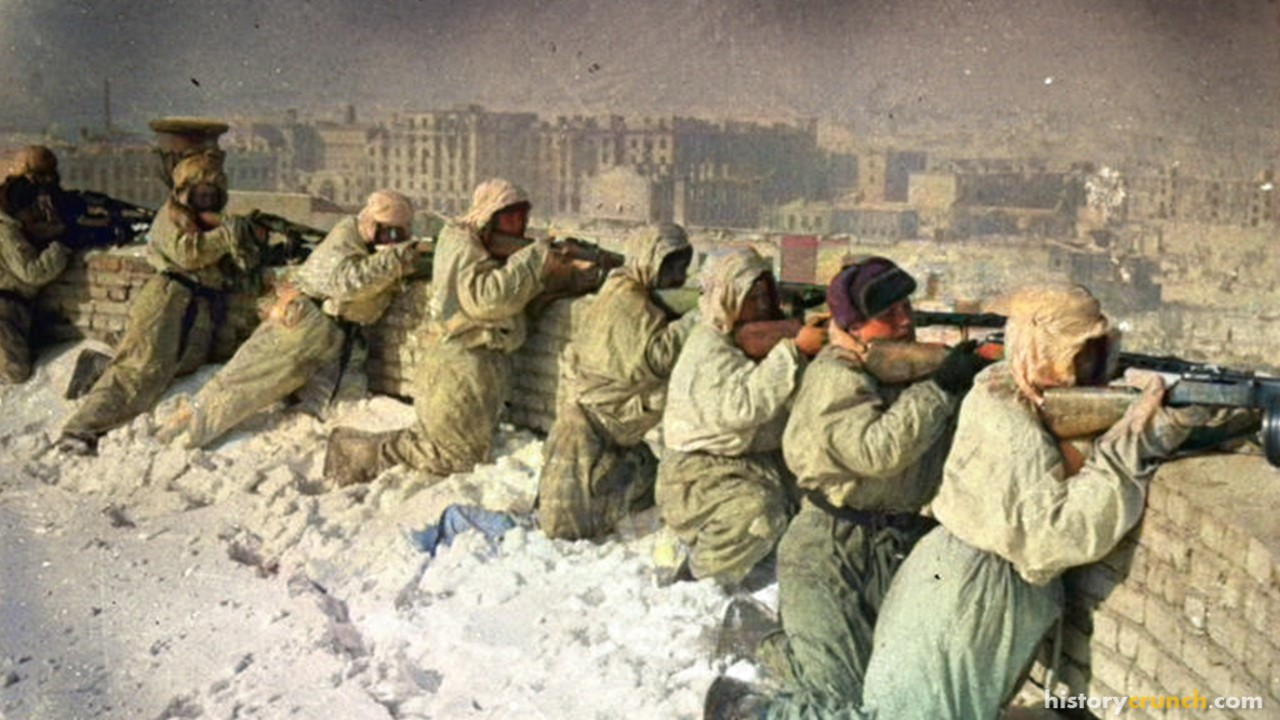 Soviets defend a position during the Battle of Stalingrad. (Colorized by historycrunch.com)
World War IIMini TimelineFactsthatCrunchWorld War II began in September 1939 and quickly spread across Europe and beyond. The opening phase saw Nazi Germany launch fast, powerful attacks against its neighbors. These early moves set the stage for a long and deadly global conflict.1939Germany Invades PolandGermany attacked Poland on September 1st, 1939, starting the war in Europe.1939Britain and France Declare WarBritain and France declared war on Germany on September 3rd, 1939.1940Fall of FranceGermany defeated France and entered Paris on June 14th, 1940.1940Battle of BritainGermany launched an air campaign against Britain starting in the summer of 1940.1941Germany Invades the Soviet UnionGermany attacked the Soviet Union on June 22nd, 1941, opening a massive new front.6 weeksTime it took Germany to defeat France in 194070 to 85 millionTotal estimated deaths across the whole war27 millionEstimated Soviet deaths, the highest of any single nation
World War IIBiographyFactsthatCrunchWinston ChurchillPrime Minister of the United Kingdom
Soviets defend a position during the Battle of Stalingrad. (Colorized by historycrunch.com)
World War IIMini TimelineFactsthatCrunchWorld War II began in September 1939 and quickly spread across Europe and beyond. The opening phase saw Nazi Germany launch fast, powerful attacks against its neighbors. These early moves set the stage for a long and deadly global conflict.1939Germany Invades PolandGermany attacked Poland on September 1st, 1939, starting the war in Europe.1939Britain and France Declare WarBritain and France declared war on Germany on September 3rd, 1939.1940Fall of FranceGermany defeated France and entered Paris on June 14th, 1940.1940Battle of BritainGermany launched an air campaign against Britain starting in the summer of 1940.1941Germany Invades the Soviet UnionGermany attacked the Soviet Union on June 22nd, 1941, opening a massive new front.6 weeksTime it took Germany to defeat France in 194070 to 85 millionTotal estimated deaths across the whole war27 millionEstimated Soviet deaths, the highest of any single nation
World War IIBiographyFactsthatCrunchWinston ChurchillPrime Minister of the United KingdomWinston Churchill led Britain as Prime Minister during the hardest years of World War II, keeping the country fighting against Nazi Germany when the situation looked very difficult. His speeches, decisions, and close work with Allied leaders like Franklin D. Roosevelt and Joseph Stalin helped shape the strategy that led the Allies to victory in 1945.
Allied LeaderWorld War IIBritish HistoryWartime Strategy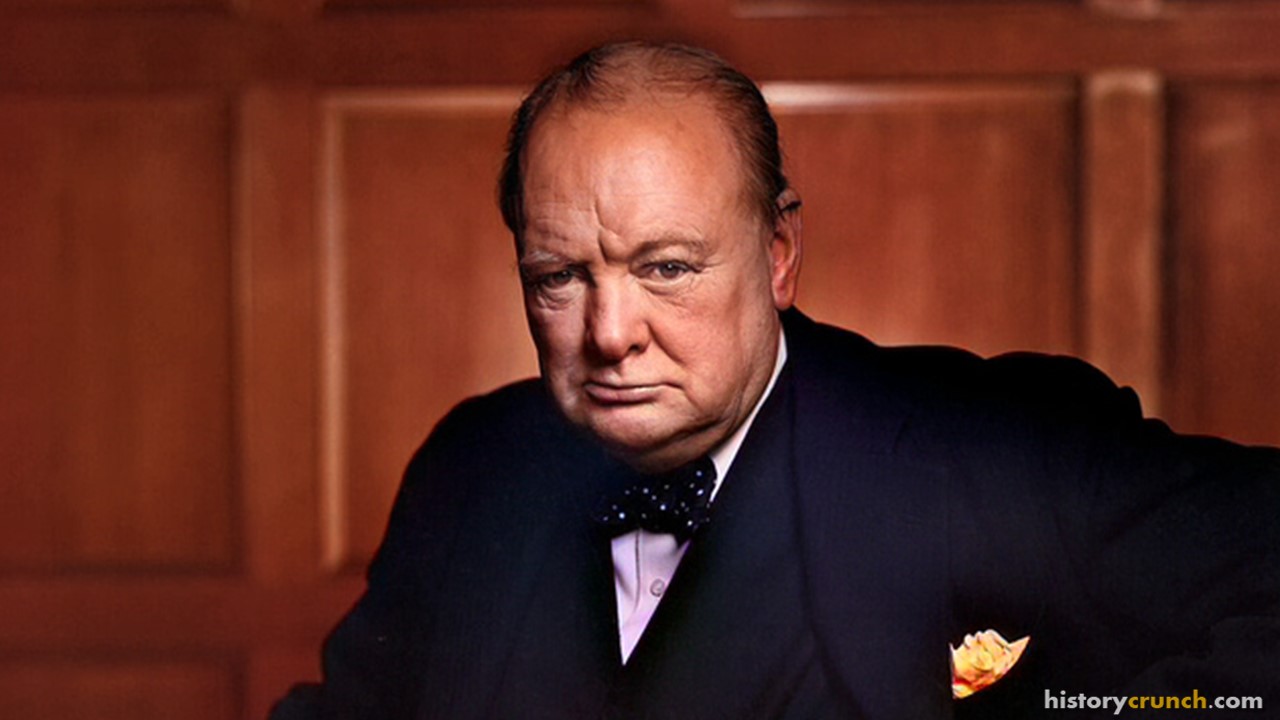 Winston Churchill in December of 1941. (Colorized by historycrunch.com)